


The Artemis Accords: A Seat at the Table
India's decision to sign the Artemis Accords in 2023 was a landmark moment, shifting its approach from staunch independence to collaborative global engagement in space. The Accords, a U.S.-led set of principles for safe and transparent exploration of the Moon
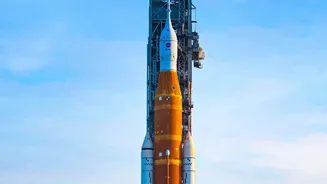
and beyond, have been signed by dozens of nations. For India, joining was a strategic move to avoid technological isolation and ensure its systems are interoperable with global standards. This alignment is crucial as it provides India access to shared scientific data and operational protocols from missions like Artemis II, which directly supports the ambitions of India's own Gaganyaan human spaceflight program by offering insights into astronaut safety and long-duration missions. The cooperation was further solidified in August 2026, when NASA formally invited ISRO to participate in its ambitious Moon Base program, an effort to build a permanent outpost near the lunar south pole. While India has not yet formally accepted, participation would align with its own goals of landing an astronaut on the Moon by 2040.
NISAR: A Joint Eye on Planet Earth
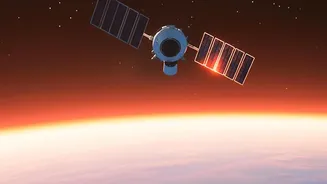
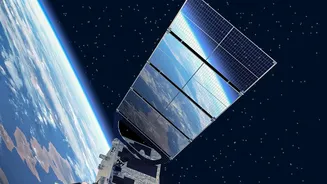
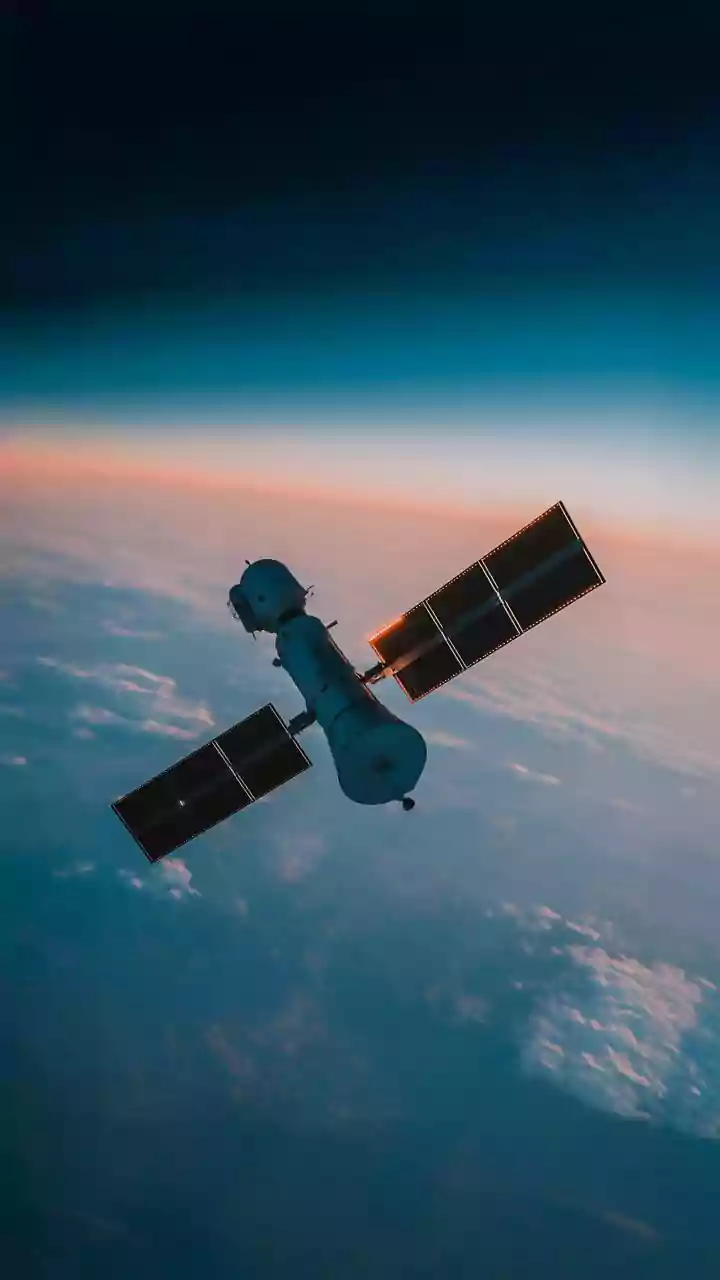
One of the most significant collaborations is the NASA-ISRO Synthetic Aperture Radar (NISAR) mission. Launched in July 2025, this sophisticated Earth observation satellite is the first of its kind, jointly developed by the two space agencies to systematically map our planet. NISAR is equipped with both an L-band and S-band radar, allowing it to measure changes in Earth's surface with incredible precision—less than a centimetre across. This technology enables it to monitor everything from the melt rate of ice sheets and the flow of glaciers to subtle ground deformations that can warn of volcanic eruptions and earthquakes. The satellite orbits the globe every 12 days, providing a constant stream of data to help manage natural resources, track disasters, and understand the impacts of climate change. ISRO provided the S-band radar, the spacecraft bus, and the launch vehicle, while NASA contributed the L-band radar and other critical systems, making it a truly balanced partnership.
The Commercial Frontier: Boosting Private Industry
Beyond government agencies, the U.S.-India space relationship is heavily focused on fostering commercial partnerships. This collaboration was a key topic of the U.S.-India initiative on Critical and Emerging Technology (iCET) launched in 2023. In February 2026, a major U.S. trade mission brought executives from 14 leading American space companies like SpaceX and Amazon to Bengaluru to explore joint ventures and market opportunities with Indian firms. The discussions centered on key priorities such as improving market access, reforming foreign direct investment rules, and addressing export controls to facilitate smoother technology transfer. The goal is to build a robust ecosystem for private sector collaboration across the entire space value chain, from satellite manufacturing and launch systems to space tourism and advanced connectivity.
Human Spaceflight: The Next Giant Leap
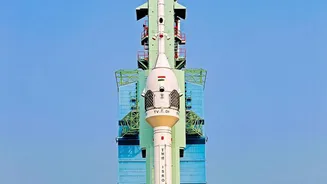
A major milestone in the partnership is the plan for a joint mission to the International Space Station (ISS). As part of their collaboration, NASA is providing advanced training to Indian astronauts at the Johnson Space Center in Houston. Following an agreement with private space company Axiom Space, this joint effort is set to mark a new chapter in human space exploration for both nations. A Strategic Framework for Human Spaceflight Cooperation was completed to deepen this interoperability. This collaboration offers invaluable experience for ISRO as it develops its Gaganyaan program, which aims to send Indian astronauts into low Earth orbit and eventually to the Moon. The partnership with NASA provides access to decades of expertise in life support systems, astronaut safety protocols, and mission planning for long-duration spaceflights.