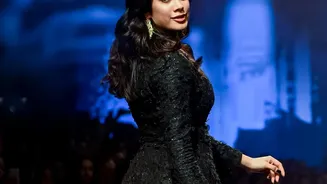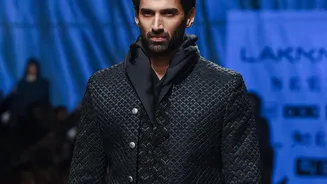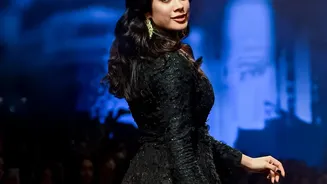







From Runway to World-Building
For years, a fashion show followed a simple formula: a raised platform, a procession of models, and an audience. This year’s India Couture Week, which ran from July 23 to 29, decisively turned that page. The country’s top designers illustrated that in
the luxury market, you aren't just buying a lehenga or a sherwani; you are buying into a story, an identity, and an experience. The presentations became theatrical productions, with designers transforming venues into historical palaces, mythical gardens, and immersive art installations. This shift acknowledges a fundamental truth about modern couture: the garment is the souvenir, but the show is the memory that gives it value.
The Venue as the Message
The most potent statements often began before a single model appeared. Anamika Khanna set the tone by opening the week not in Delhi, but at Hyderabad's 19th-century Taj Falaknuma Palace. Her 'Moonlit Palace' collection saw models move through candlelit corridors, making the venue an active participant in the storytelling. This decision to root a collection in a site of genuine historical grandeur repositioned couture within its own heritage. Similarly, Falguni Shane Peacock's 'Le Grand Voyage' transformed their Delhi runway into a conceptual train carriage, taking the audience on a journey through Byzantine mosaics and Parisian glamour. These weren't just backdrops; they were narrative devices, arguing that the environment a collection inhabits is as important as the collection itself.
When the Show Itself Is the Innovation
While many opted for grand theatricality, others redefined the presentation format entirely. Tarun Tahiliani chose to sidestep the runway altogether, presenting his 'Navaratna' collection as an immersive exhibition at Bikaner House. This allowed guests to linger over the details of his famed drapes and intricate craftsmanship, experiencing the clothes at their own pace. It was a deliberate move to pull focus from fleeting runway moments and place it squarely on the artistry that can take hundreds of hours to produce. Rahul Mishra's grand finale, 'Devi', also blended fashion with performance art, using showstopper Sobhita Dhulipala to enact a narrative on stage about the versatility of couture, transforming her look from a modern bodysuit to a traditional ghaghra. Both approaches challenged the audience to see couture not as a passive spectacle, but as an interactive art form.
Telling Stories Through Concept
Beyond grand venues, designers wove intricate narratives into their shows. JJ Valaya’s 'SIDDI' was a scholarly exploration of the cultural exchange between Africa and India, with every look feeling like a chapter in a historical saga. The House of Rohit Bal presented 'DASTKAR', a moving tribute not just to the late designer but to the artisans who were the soul of the label, shifting the spotlight from a singular creative genius to the community behind the craft. Even commercial success stories like Masaba Gupta, in her debut couture show, used the presentation to define a new kind of bride—one rooted in joy and vibrant personality rather than just tradition. Each show demonstrated that a strong concept provides an emotional anchor, transforming beautiful clothes into meaningful statements.