

A leopard prowling the outskirts of Mumbai, a monkey navigating Delhi’s rooftops. These aren’t isolated incidents, but signs of a remarkable global trend: wildlife is adapting to our expanding cities in fascinating and unexpected ways.
The City as a New Ecosystem
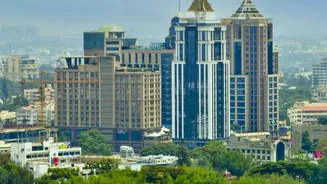
As urban areas expand,
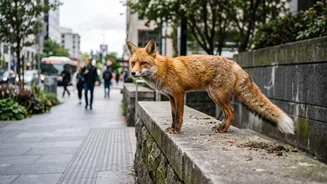
they transform natural landscapes, removing trees, plants, and water sources. But instead of disappearing entirely, many animal species are learning to navigate these new concrete jungles. For some, cities offer surprising benefits: a steady supply of food from garbage bins and gardens, fewer natural predators, and abundant artificial structures for shelter, like building ledges and drainage pipes. This has forced a rapid adjustment, where generalist species—those that can survive on a wide range of foods and in varied habitats—are finding ways to thrive. From pigeons to primates, animals are demonstrating incredible resilience, treating the urban environment not as a barren wasteland, but as a new kind of ecosystem ripe with opportunity.
Survival of the Street-Smart
The most visible adaptations are behavioural. Many animals have become bolder and less fearful of humans. Nocturnal activity has increased as animals like leopards learn to move through cities after dark to avoid human traffic. They use railway lines and overgrown lots as stealth corridors to hunt for prey like stray dogs and pigs, which are drawn to human waste. In Delhi and Jaipur, monkeys have mastered life in the city, using temples and buildings as their forests and often stealing food from markets and homes. Communication is also changing; some city birds have started singing at a higher pitch to be heard over the constant hum of traffic. These are not just quirks but calculated survival strategies learned and sometimes passed down through generations.
Evolution on Fast-Forward
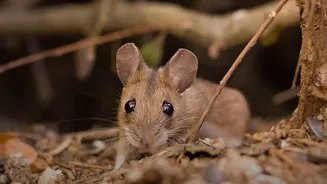
Beyond simply changing their behaviour, some species are undergoing rapid biological and genetic shifts, a phenomenon scientists call human-induced rapid evolutionary change. For example, some urban bird populations have evolved shorter, stronger beaks better suited to cracking open the processed foods discarded by humans. In another case, certain lizards have developed larger toe pads with better grip, allowing them to scale smooth, man-made surfaces like glass and painted concrete more effectively. Even smaller creatures are adapting; some insects in cities have become more resistant to pollutants, and white-footed mice in New York have shown genetic changes that help them digest fatty human foods. These changes show that evolution isn't just a process for the distant past—it's happening right now, in our backyards and on our streets.
An Uneasy Coexistence
While the adaptability of wildlife is remarkable, it also creates new challenges. The close proximity of humans and animals increases the risk of conflict, from property damage to public safety concerns and the potential for disease transmission. The story of Mumbai's leopards is a prime example. After a spike in deadly conflicts around 2010, authorities realised that simply capturing and relocating the cats was ineffective, as they would often return. This led to a shift in focus towards coexistence, educating communities on how to live alongside the predators by moving in groups at night and ensuring waste is properly managed to not attract prey animals. This approach highlights that successful urban conservation is as much about managing human behaviour as it is about managing wildlife.