
When to See the Dazzling Planet
The best time to witness Venus at its peak brightness will be in mid-to-late September 2026. Mark your calendars for the period around September 18 to September 22, when the planet reaches what astronomers call its "greatest brilliancy." During this time,
it will shine at a magnitude of -4.8, making it the brightest object in the night sky after the Moon. For observers in India, the planet will be visible each evening during this period. On any clear evening, begin your search just after sunset as the twilight glow begins to fade. The planet itself will set a couple of hours after the sun, giving you a generous window for viewing.
Finding Venus: Direction and Location
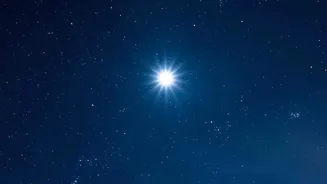
You will not need any special maps to find Venus; its incredible brightness makes it stand out. Look towards the western and southwestern sky in the hour or so after sunset. It will appear as a brilliant, steady, white point of light. Unlike stars, which twinkle, Venus shines with a constant, unwavering glow. For those in India and other Northern Hemisphere locations, Venus will appear relatively low on the horizon, so having an unobstructed view without tall trees or buildings is key. As a bonus, on September 14, a beautiful slim crescent Moon will appear near Venus, creating a picturesque pairing in the evening sky.
Why Is Venus So Bright Right Now?
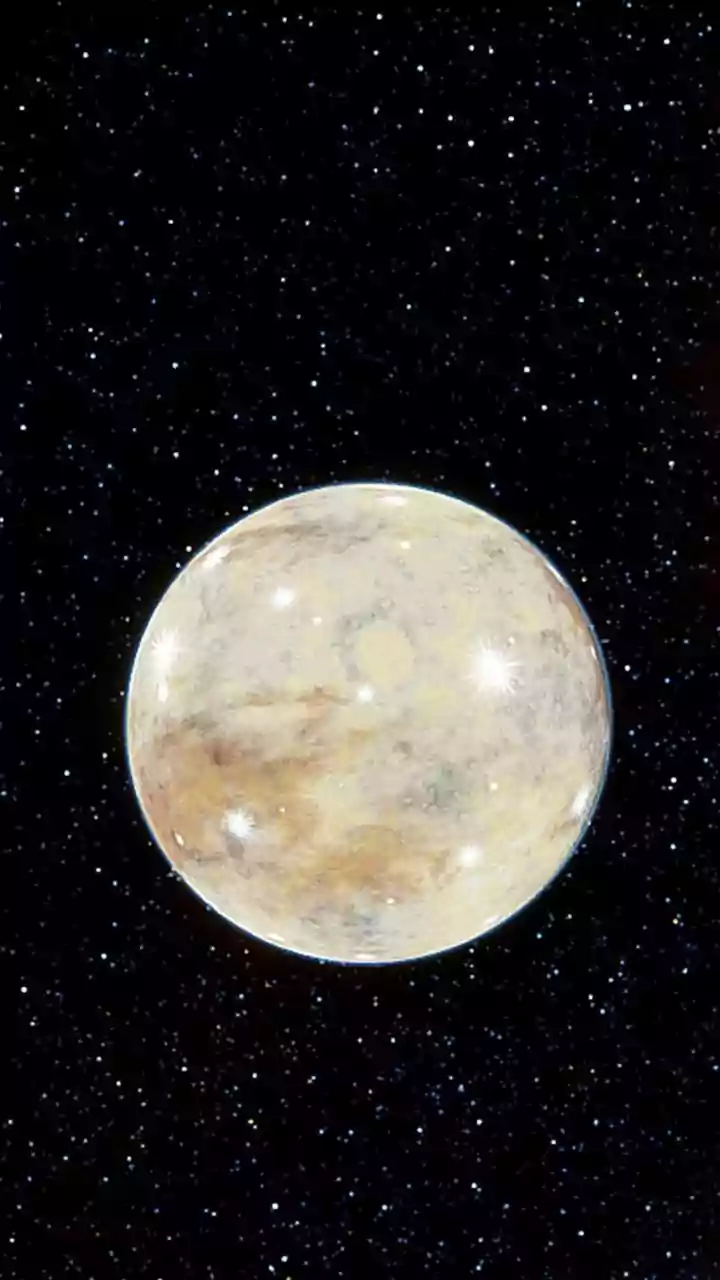
It might seem logical that Venus would be brightest when it appears as a full disk, like a full moon. However, the science is a little different. Venus's peak brightness occurs when it is relatively close to Earth in its orbit and appears as a distinct crescent. This is the point when its "greatest illuminated extent" is visible from our perspective—the perfect balance between its proximity to us, which makes it appear larger, and the fraction of its surface that is lit by the sun. So, while it's dazzling to the naked eye, anyone with a small telescope would see not a full circle, but a beautiful, slender crescent.
Tips for the Best Viewing Experience
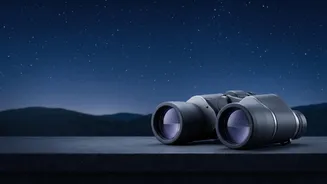
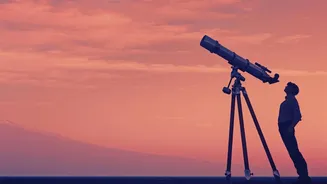
To make the most of this celestial event, a few simple tips can help. First, find a location away from the glare of city lights. Light pollution can wash out the sky, and while Venus is bright enough to cut through it, a darker sky provides a much more immersive experience. Second, give your eyes about 15-20 minutes to adjust to the darkness; this will make the planet appear even more brilliant. While no equipment is necessary, a simple pair of binoculars can enhance the view and might even give you a hint of Venus's crescent phase. Finally, use a stargazing app on your phone if you want to identify other objects nearby, like the star Spica, which Venus will be close to in early September.
The 'Morning Star' and 'Evening Star'
In many cultures, including in India, Venus holds a special significance. Known as Shukra in Hindu astrology, the planet is a prominent member of the Navagrahas. Its regular appearances as the first "star" to emerge in the evening or the last to fade in the morning have captivated humanity for millennia. Because its orbit is inside Earth's, Venus never strays far from the Sun in our sky. This is why we only ever see it for a few hours after sunset (as an "Evening Star") or before sunrise (as a "Morning Star"). This September's appearance as a brilliant Evening Star is a continuation of this timeless celestial rhythm.