







Identifying Perennial Problem Areas
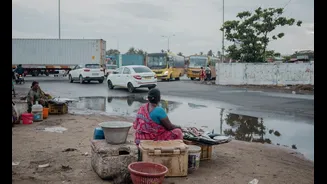
Every monsoon, certain parts of Chennai are notoriously prone to severe waterlogging, which forms the basis of the traffic police's diversion strategy. Subways are the first to be affected, with a long list of closures becoming common during heavy downpours.
Key subways that frequently shut down include the Ganesapuram, Gengureddy, Sembium, Villivakkam, Madley, and Saidapet-Aranganathan subways, among others. Roads in areas like T. Nagar, Perambur, parts of Anna Salai, and the stretch near the YMCA in Saidapet are also chronic hotspots. The police have meticulously mapped these vulnerable points, with some police districts identifying over 30 specific locations where waterlogging disrupts traffic. This proactive identification allows for the quick barricading of affected roads and subways to prevent vehicles from getting stranded.
The Core Diversion Strategy
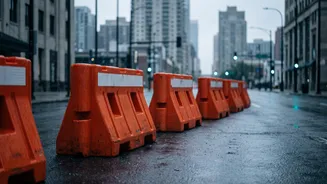
The primary goal of the monsoon traffic plan is to ensure continuous movement by redirecting vehicles away from inundated areas. The general rule is to divert traffic from low-lying roads and subways towards flyovers and more elevated, stable routes. For instance, when subways like Madley are closed, MTC buses and other vehicles are rerouted through alternative junctions like Bharathi Raja junction. During severe flooding, as seen during Cyclone Michaung, the police may establish 'green corridors' on major arterial roads like Anna Salai and the East Coast Road (ECR) for emergency travel, advising the public to avoid all other waterlogged routes. These diversions are often dynamic and respond to real-time conditions reported by field officers.
Managing Arterial Roads and Parking
Major arterial roads that connect the city are given special attention. During periods of heavy rain, roads may become partially or fully closed. Potholes and road damage from continuous rain often worsen the situation, creating dangerous conditions on vital stretches like Arcot Road and Tondiarpet High Road. Police often perform temporary patchwork to keep traffic moving until the Greater Chennai Corporation (GCC) can conduct permanent repairs. A unique challenge during the monsoon is the tendency for residents in flood-prone areas like Velachery to park their cars on bridges and flyovers to protect them from water damage. While this can obstruct traffic, the police sometimes assist with organizing this informal parking to balance vehicle safety with traffic flow, a departure from issuing fines during such crises.
Coordination and On-Ground Support
Effective traffic management is not a solo effort. The Greater Chennai Traffic Police (GCTP) works in close coordination with other civic bodies, primarily the Greater Chennai Corporation (GCC). To ensure seamless communication, a Corporation engineer is often posted at the police control room, and a traffic sub-inspector is stationed at the Corporation's control room. This allows for rapid deployment of GCC resources, such as high-powered pumps to drain water or crews to remove uprooted trees that block roads. The GCTP also deploys its own District Disaster Response Teams, equipped with rubber boats and rescue gear, to assist in emergencies and help move stranded vehicles.
How to Stay Informed: Official Channels
For residents, the key to navigating the city during the monsoon is staying updated. The GCTP uses its social media channels, particularly X (formerly Twitter) and Facebook, to provide real-time updates on waterlogged areas and active diversions. The GCC also operates a 24/7 helpline (1913) and several control room numbers for rain-related complaints and rescue requests. Key traffic control room numbers to save are 044-23452362 (South & East) and 044-23452330 (North & West). The GCTP also has a dedicated WhatsApp number (9003130103) for traffic-related information. Commuters are strongly advised to check these official sources before starting their journey to avoid getting stuck in inundated areas.