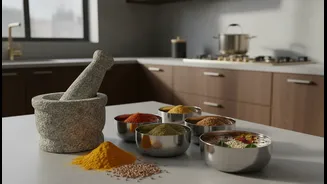









The Problem with Pinterest-Perfect Kitchens
We’ve all seen them: sleek, handleless cabinets, pristine white countertops, and a single, elegant orchid on an island. These are the showroom kitchens sold to us as the epitome of modern living. Often inspired by Western design trends, they emphasize
minimalism and aesthetics. However, for a home where the day starts with the sizzle of mustard seeds and ends with the comforting whistle of a pressure cooker, these designs often fail. The open layouts spread the potent smells of tadka and masala throughout the home, staining fabrics and lingering for days. Delicate countertops stain easily with turmeric, while weak chimneys struggle to handle the smoke from frying pooris, creating a space that is beautiful to look at but frustrating to cook in.
A Kitchen That Cooks With You
A truly functional kitchen should be a celebration of your culinary identity. Instead of chasing a generic global aesthetic, your upgrades should support your specific cooking habits. An Indian kitchen is a workshop, not a museum. It needs to be robust, easy to clean, and designed around the processes of our diverse cuisines. This means prioritizing durable materials, powerful ventilation, smart storage for a multitude of spices and grains, and dedicated zones for specific tasks. Before you pick a single tile or cabinet finish, think about the last meal you cooked. What were the pain points? What would have made the process easier? The answers to these questions are the foundation of a kitchen that truly serves you.
For the Love of Tadka and Masala
North Indian and Punjabi cuisines are characterized by their rich gravies, tandoori preparations, and the foundational art of the tadka. This style of cooking demands specific features. First and foremost is a powerful chimney with high suction capacity to manage the smoke and oil particles generated from frying and tempering spices. Countertops made of granite or quartz are non-negotiable; they resist heat from hot pans and won't permanently stain from stray turmeric or chili powder. Deep, wide drawers are essential for storing bulky items like pressure cookers, kadhais, and large pots. Ample, well-organized pantry space is also crucial for storing the wide array of dals, grains, and spices that form the backbone of these flavorful cuisines.
The Heart of a South Indian Home
South Indian cooking, with its focus on fermented batters, ground coconut masalas, and unique tempering, has its own set of requirements. A dedicated, well-ventilated spot for a wet grinder is a common need for making fresh idli and dosa batter. Some households even plan for a secondary 'wet kitchen' area to contain the messier tasks. Storage needs are different, too, requiring space for various types of rice, lentils, and fresh ingredients like curry leaves and coconut. A double-bowl sink can be incredibly practical, allowing for washing vegetables and utensils separately. Ample electrical points for appliances like mixers, grinders, and idli steamers are a must, as is good lighting for tasks that require precision.
Designing for Your Culinary Roots
Beyond the broad strokes of North and South, every region has its nuances. A kitchen in Goa might need storage for earthenware pots and large bottles of vinegar. A Bengali home would benefit from a dedicated, easy-to-clean area near the sink for scaling and preparing fish. The key is to observe your own family's cooking style. Do you roll out rotis daily? Then a durable, dedicated section of the countertop is a must. Do you make pickles annually? Plan for pantry space that can accommodate large ceramic jars. Instead of hiding these functional elements, celebrate them. They are a testament to the living culinary traditions of your home.
Making Smart, Practical Choices
When planning an upgrade, start with function, not just form. Talk to your interior designer about how you cook, not just what you want it to look like. Prioritize a layout that optimizes the workflow between your stove, sink, and refrigerator—the classic kitchen triangle. Invest in high-quality, durable materials for countertops and backsplashes that are easy to clean. Ensure you have sufficient and accessible storage, including deep drawers and tall pantry units for Indian cooking staples. And finally, do not compromise on ventilation. A powerful chimney is one of the most important investments for any kitchen that embraces the joy of Indian cooking.