



What Exactly Are eVTOLs?
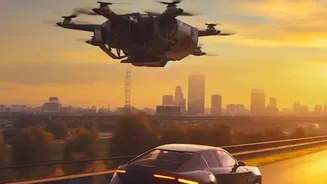
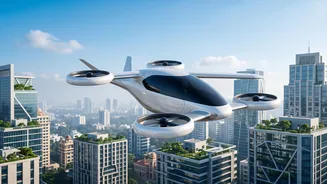
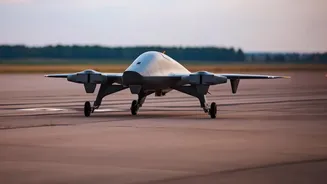
Think of a quieter, electric, and more compact cousin of a helicopter. That’s essentially an eVTOL, which stands for electric Vertical Take-Off and Landing aircraft. These vehicles are designed to transport a few passengers over short to medium distances.
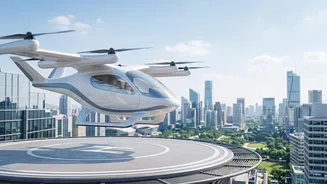
The 'electric' part is key; they use batteries and multiple rotors, which proponents say makes them safer, quieter, and more sustainable than traditional helicopters. The 'vertical take-off and landing' capability means they don’t need long runways, making them perfect for dense urban environments where they could operate from the tops of buildings, or dedicated hubs called 'vertiports'.
The Promise for Indian Cities
The most obvious benefit is speed. An air taxi could turn a 90-minute-plus road journey from Bengaluru's airport to Electronics City into a trip of under 20 minutes. For residents of Mumbai, Delhi, and other congested metros, this could be a game-changer for daily commutes and airport transfers. Beyond convenience, eVTTOLs offer significant potential for emergency services, enabling rapid medical evacuations or the swift transport of organs. They could also boost tourism by connecting cities to remote locations more easily. The government sees this as a priority, aligning with goals for smart cities and sustainable transport. The vision is not just a luxury for a few, but eventually a new mode of mass public transportation.
The Players Entering the Field
Both homegrown startups and global giants are eyeing the Indian market. Chennai-based The ePlane Company, an IIT Madras-incubated startup, unveiled its full-scale prototype, the e200X, and is targeting flight tests in 2027, initially focusing on an air ambulance version. Another prominent domestic player is Bengaluru-based Sarla Aviation, which received a Design Organisation Approval from the DGCA and aims for commercial operations around 2028. The company is developing a six-passenger aircraft and has been noted for its rapid progress. These Indian companies are developing alongside global leaders like Joby Aviation and Archer, which could also enter the Indian market as it matures.
From Dream to Reality: The Hurdles
While the vision is exciting, the path to launching air taxis is complex. A major hurdle is regulation. India's aviation regulator, the Directorate General of Civil Aviation (DGCA), is actively developing a framework for everything from aircraft certification and pilot licensing to airspace management. The DGCA has already issued guidelines for certifying eVTOLs and the vertiports they will use, a crucial first step. Infrastructure is another massive challenge. Vertiports need to be built, which involves land acquisition in already crowded cities, and a robust electrical grid is needed to support charging stations. Finally, public acceptance is key; operators must prove these vehicles are not only safe but also affordable and not just a service for the wealthy.
A Roadmap to the Skies
So, when can you expect to hail an air taxi? The timeline is ambitious but becoming clearer. The government has expressed a desire to see commercial operations by 2028. Civil Aviation Minister Ram Mohan Naidu has indicated that testing is expected to accelerate significantly starting in 2027. The initial rollout will likely be on specific, high-demand routes in major cities like Bengaluru, Mumbai, and Delhi. The first services will probably be positioned as a premium offering, similar to business class in an airline. However, as the technology scales and operational costs decrease, the long-term goal is to make air travel a widely accessible part of India’s urban mobility network.