





The Next Great Eye on the Cosmos
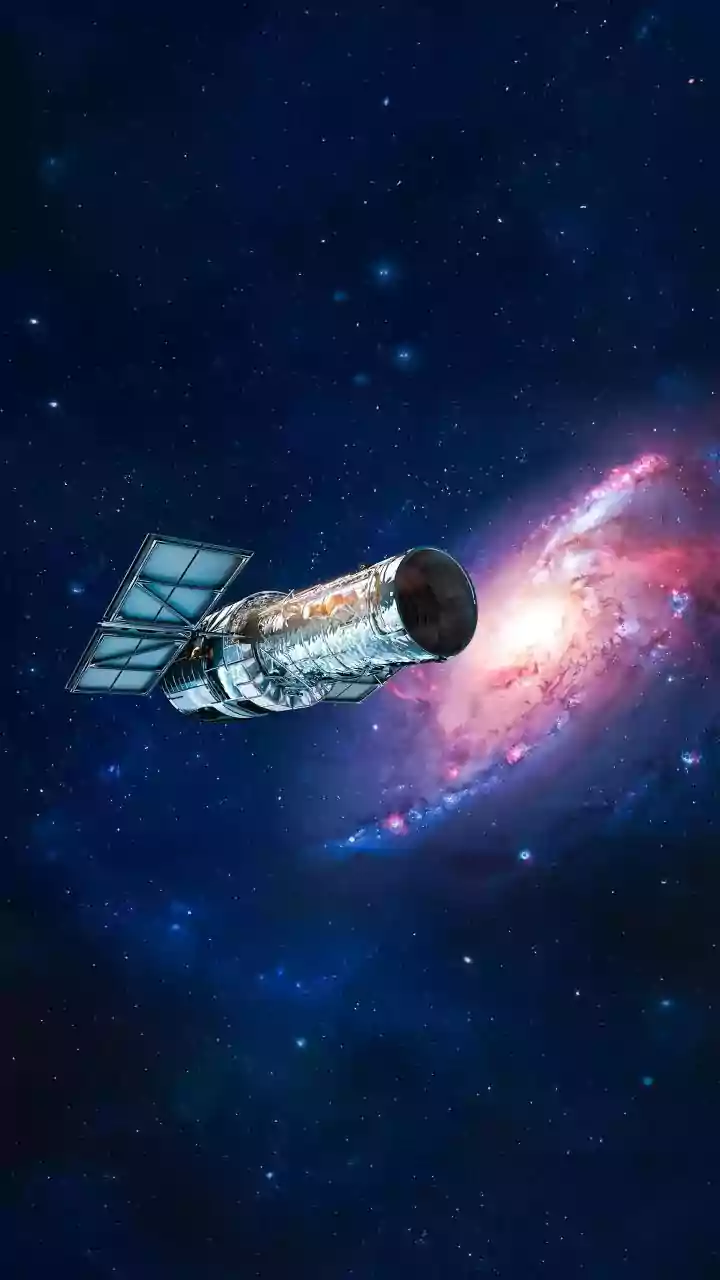
Set to launch on August 30, 2026, the Nancy Grace Roman Space Telescope is poised to become a revolutionary tool in astronomy. Named after NASA's first chief of astronomy, the 'Mother of Hubble' Nancy Grace Roman, this observatory has a unique and powerful
capability. While the Hubble and James Webb Space Telescopes (JWST) act like precision zoom lenses, peering deep into small patches of sky, Roman is a wide-angle lens. Its Wide-Field Instrument can capture an area of the sky 100 times larger than Hubble in a single shot, but with the same stunning resolution. This will allow it to conduct vast cosmic surveys with unprecedented speed, mapping the structure of the universe, hunting for the influence of dark energy and dark matter, and discovering thousands of new exoplanets through a technique called gravitational microlensing. In a sense, Webb studies the 'what' in incredible detail, while Roman will study the 'how many' and 'where' across the grandest scales.
A Long and Winding Road
The excitement surrounding Roman's imminent launch is palpable, especially with reports that it is ahead of schedule and under cost, a rarity for such ambitious projects. However, its journey to this point demonstrates the critical lesson for space fans: patience. The telescope, formerly known as WFIRST, was first conceived in astrophysics reports over a decade ago. It has navigated years of funding proposals, budget debates, and technical planning. The project's core is a 2.4-meter mirror originally built for a spy satellite and later donated to NASA, a fascinating origin story that also required significant adaptation. It even faced potential impacts from the COVID-19 pandemic, which added an estimated $400 million to its cost. This path of starts, stops, and pivots is the norm, not the exception, for flagship science missions. They are generational undertakings that require immense political will, sustained funding, and the persistence to overcome inevitable setbacks.
Lessons from James Webb
To understand why separating a mission's initial announcement from its final results is so important, we only need to look at Roman's famous sibling, the James Webb Space Telescope. Now hailed as a spectacular success, JWST's development was famously fraught with challenges. The project suffered from massive cost overruns, going from an initial concept to a final cost nearing $10 billion, and its launch was delayed by more than a decade from original estimates. Technical issues, contractor mistakes, and the sheer complexity of building and testing a foldable, deep-space observatory pushed the project to the brink of cancellation multiple times. For years, the headlines about Webb were overwhelmingly negative, focusing on budgets and delays rather than science. Yet, once it reached its destination and unfolded its golden mirrors, it began a flood of discoveries that have already reshaped our understanding of the cosmos. JWST is the ultimate proof that in big science, the final payoff is often worth the arduous, frustrating, and expensive journey.
Embracing the Process
The true 'result' of a mission like Roman isn't just the jaw-dropping images or the data that will keep scientists busy for decades. The results begin long before launch. They are found in the technological innovation required to build its advanced coronagraph, an instrument designed to block starlight to directly image exoplanets. They are found in the engineering challenges solved, the scientific collaborations forged between agencies like NASA and ESA, and the complex data infrastructure built to handle the 20 petabytes of information Roman is expected to generate. Following these missions isn't about just waiting for the highlight reel. It’s about appreciating the entire game. Understanding the budget fights, the technical hurdles, and the small victories along the way provides a much richer context for the final discoveries. It transforms us from being passive consumers of science news into informed supporters of a long, difficult, and profoundly human endeavor.