







The Surface: Water vs. Wood
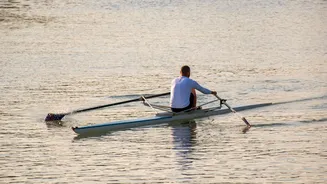
The most fundamental difference lies in the environment each athlete must master. For a rower, the challenge is water. Their primary piece of equipment, the racing shell, is a marvel of hydrodynamic engineering. These long, impossibly narrow boats, often
made of lightweight carbon fiber, are designed for one thing: to cut through water with minimal drag. Everything about a shell, from its length (an eight-person boat can be nearly 60 feet long) to its semi-circular cross-section, is built for speed and efficiency on a fluid surface. A dancer’s world is the floor. Whether it's a sprung wood surface in a studio or the stage of a theatre, the floor is a solid, predictable partner. It must provide enough grip for control but also enough smoothness for glides and turns. Unlike the unstable, ever-changing surface of water, the dance floor is a constant, designed to absorb impact from jumps and provide a reliable platform for creating lines and shapes with the body.
The Point of Connection: Oar vs. Shoe
How each athlete connects with their respective surface is where the equipment gets truly specialized. A rower connects to the water through their oars. These are not simple paddles; they are long levers, also typically made of carbon fiber, designed to 'catch' the water and propel the shell forward. The large, hatchet-shaped blade at the end maximizes the surface area grabbing the water, turning the rower's physical power into boat speed. The oar is a tool of propulsion, a means to an end: moving the boat faster than the competition. For a dancer, the connection to the floor is through their shoes, which are tools of expression and technique. Ballet offers the clearest contrast. Soft ballet slippers, made of canvas or leather, are designed for flexibility, allowing the foot to articulate fully. Pointe shoes are more complex, with a hardened box at the tip and a stiff shank, enabling a dancer to rise onto the very tips of their toes, creating an illusion of weightlessness. Other styles require different tools: jazz shoes have split soles for flexibility, while contemporary dancers might use 'foot thongs' that cover only the ball of the foot to reduce friction during turns. Each shoe is designed not for propulsion, but to enable a specific quality of movement and aesthetic line.
The Uniform: Function Over Form vs. Form as Function
The clothing worn in each discipline highlights their different priorities. A rower’s attire is all about function and safety. They wear snug-fitting synthetic garments like a 'unisuit' or spandex shorts. The reasons are practical: loose clothing like baggy shorts or sweatshirts could get caught in the sliding seat or oar handles, which is dangerous. Fabrics are moisture-wicking to handle sweat and water, and they must be stretchy to allow for the full, repetitive range of motion in a rowing stroke. There is no aesthetic requirement beyond team identification. In dance, particularly ballet, the uniform's form is its function. Dancers wear leotards and tights for several reasons. The form-fitting nature allows instructors to see the dancer’s alignment and muscle engagement clearly, which is crucial for making technical corrections. Tights also keep the leg muscles warm and supported, which can help prevent injury, and they create a clean, unbroken line from the hip to the toe, which is a key part of the art form's aesthetic. While comfort and freedom of movement are essential, the look of the clothing is inseparable from the discipline itself.
The Engine: The Sliding Seat vs. The Body Itself
At the heart of a rower's power is the sliding seat. This innovation allows the rower to use the immense strength of their legs to drive the stroke, transforming the motion from a simple arm pull into a full-body effort. The sequence of leg drive, body swing, and arm pull is a powerful, coordinated movement repeated over and over. The seat, along with the foot stretchers that secure the feet, is the core of the rower’s mechanical engine, transferring leg power into the oars. A dancer's engine is their own body, trained to its highest potential. There is no external machine to amplify their power. Their strength, flexibility, and control are the entire source of movement. The equipment—shoes and clothing—serves only to facilitate that movement, protect the body, and fulfill the aesthetic demands of the choreography. Where the rower's equipment is a system of levers and fulcrums for generating speed, the dancer's equipment is a supportive second skin for creating art.