


An All-Seeing Eye on Earth
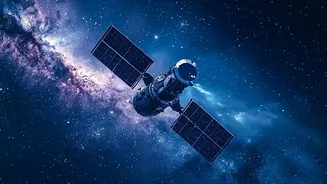
The NASA-ISRO Synthetic Aperture Radar (NISAR) mission is perhaps the most significant collaboration between the two space agencies to date. Launched in July 2025, this advanced Earth-observation satellite is a true joint effort, equipped with radar systems
built by both NASA and ISRO. Its primary job is to scan nearly all of our planet's land and ice surfaces every 12 days, providing an unprecedented, detailed view of Earth’s processes. The satellite uses two different radar frequencies to measure changes in the planet's surface with incredible precision, regardless of weather or time of day. This allows scientists to monitor everything from the slow creep of a glacier to the sudden shift of an earthquake. For India, NISAR is a game-changer. The data it provides is invaluable for managing the country's vast agricultural lands, offering insights into soil moisture and crop health. It will also be critical for disaster management, helping to monitor landslide-prone areas in the Himalayas and providing rapid data during floods or earthquakes. By tracking changes in forests, wetlands, and coastlines, NISAR directly supports India’s efforts to combat the effects of climate change and manage its natural resources more effectively.
Back to the Moon, Together
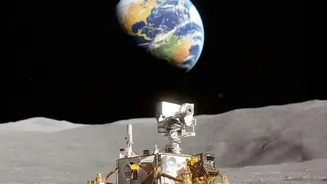
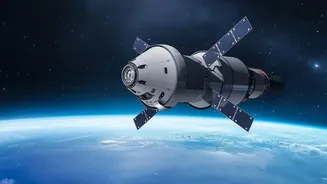
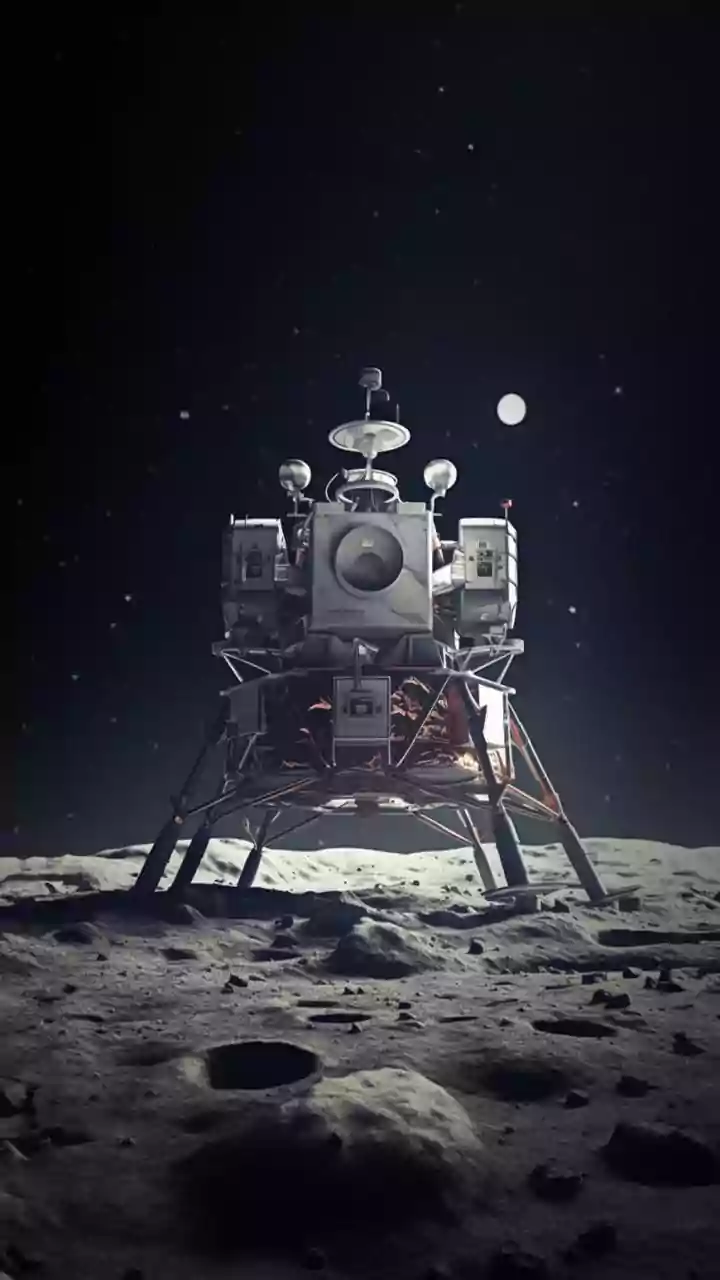
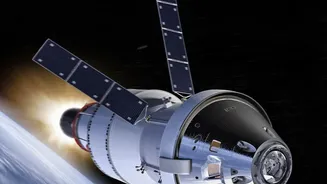
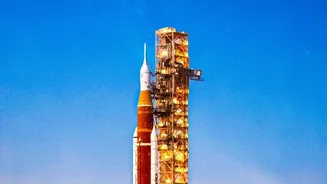
NASA's Artemis program is its flagship effort to return humans to the Moon, but this time with a goal of establishing a sustainable, long-term presence. This includes building the Gateway, a small space station in lunar orbit, and eventually a base camp on the Moon's south pole. The program is fundamentally international, built on a series of partnerships governed by the Artemis Accords—a set of principles for peaceful and transparent space exploration. India's decision to sign the Artemis Accords in 2023 was a landmark moment, cementing its place as a key partner in the future of lunar exploration. More recently, in August 2026, NASA formally invited ISRO to participate in its Moon Base program, a significant step that moves beyond accords and into active partnership. This collaboration opens the door for Indian technology and scientific expertise to be integrated into humanity's lunar outpost. For ISRO, which has its own ambitious lunar plans following the success of Chandrayaan-3, this partnership offers a chance to accelerate its goals and potentially see Indian astronauts contribute to missions on and around the Moon.
Bringing a Piece of Mars Home
One of the most ambitious robotic missions ever conceived is NASA's Mars Sample Return (MSR) campaign, a multi-stage effort in partnership with the European Space Agency (ESA). The first step is already complete: the Perseverance rover has been drilling and caching compelling rock and soil samples on the Martian surface since 2021. The next, incredibly complex phases involve sending a lander to retrieve these samples, launching them into Mars' orbit with a small rocket, and having another spacecraft capture the container for the long journey back to Earth. While India is not a direct partner in the MSR mission, its relevance to ISRO is immense. Following the monumental success of its own Mars Orbiter Mission (Mangalyaan), India is a proven player in interplanetary exploration. The technological hurdles that NASA and ESA are solving for MSR—from autonomous retrieval to interplanetary launch—provide a valuable blueprint for ISRO's future Mars ambitions. The scientific discoveries from the returned samples will be revolutionary and shared with the global community, offering Indian scientists a front-row seat to understanding the Red Planet's potential for past life and its geological history.
A Journey to an Ocean World
Launched in October 2024, NASA’s Europa Clipper spacecraft is on a long journey to Jupiter, with a scheduled arrival in April 2030. Its destination is Europa, one of Jupiter's largest moons, which shows strong evidence of a vast liquid water ocean hidden beneath its icy shell. Europa Clipper isn't designed to find life itself, but to determine if this ocean world has the necessary ingredients for it. The spacecraft will perform dozens of close flybys, using a powerful suite of instruments to measure the thickness of the ice, study the composition of the surface, and confirm the ocean's depth and saltiness. This mission is crucial for Indian and global science because it tackles one of humanity's most profound questions: are we alone in the universe? The search for habitable environments beyond Earth is a universal goal that inspires scientists everywhere. The data from Europa Clipper will inform the global scientific community, including India's growing number of astrobiologists and planetary scientists. Its findings will shape the next generation of space probes and help guide where we look for life next, a quest in which ISRO will undoubtedly play a part.