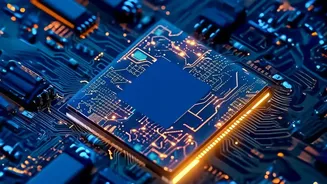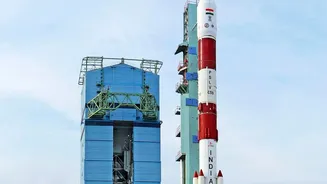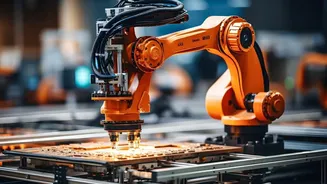







India is making a multi-billion-dollar play to become a global semiconductor powerhouse. This ambitious push, backed by significant government incentives, aims to transform the country's electronics landscape and secure a key role in global supply chains.
The Strategic Vision: The India Semiconductor Mission
At the heart of India's strategy is the India Semiconductor Mission (ISM), a program with a massive financial commitment designed to attract global players and foster a domestic ecosystem. The government has earmarked roughly $23 billion to support this push, aiming to reduce its heavy reliance on imports from East Asian nations and build supply chain resilience. The initiative, which has moved from policy to construction, is part of a broader 'Make in India' goal to capture a larger share of the global electronics market, projected to grow significantly by 2030. The plan isn't just about building factories; it's a strategic move to create high-quality jobs, deepen technology partnerships with countries like the United States, and establish India as a reliable alternative to China.
How Government Support Fuels Investment
The government's role is not passive; it's a direct financial partnership. Under the Semicon India Programme, the central government provides fiscal support for up to 50% of a project's cost for approved semiconductor fabrication plants (fabs), assembly units, and display manufacturing facilities. This aggressive cost-sharing model, comparable to the CHIPS acts in the US and EU, makes investment significantly more attractive. In July 2026, the government approved 'Semicon 2.0', a second phase with an outlay of over ₹1.27 lakh crore (about $15 billion), expanding support to include chip design, manufacturing equipment, and specialty materials. State governments in Gujarat, Assam, and others offer additional incentives like capital subsidies and cheaper land and power, creating a layered support structure for companies.
The Key Players on the Ground
Several major projects are now moving from blueprints to reality. US-based Micron Technology has inaugurated its assembly and test (OSAT) facility in Sanand, Gujarat, with a combined investment of $2.75 billion from the company and government partners. This plant, which began commercial production in early 2026, is already shipping 'Made in India' DRAM and NAND products to global customers. The Tata Group is another cornerstone of the initiative. Tata Electronics is building India's first major semiconductor fab in Dholera, Gujarat, an $11 billion project in partnership with Taiwan's Powerchip Semiconductor Manufacturing Corporation (PSMC). This plant will focus on mature-node chips (28nm and above) for the automotive, power management, and IoT sectors, with first silicon expected by late 2026 or early 2027. Tata is also establishing a separate assembly and test facility in Assam.
Beyond Factories: Building an Entire Ecosystem
India's ambition extends beyond just manufacturing and assembly. The Semicon 2.0 program is a deliberate shift to build the entire value chain, including suppliers, tools, and intellectual property. There is a significant emphasis on talent development, with the government aiming to train an additional one lakh semiconductor engineers to meet the growing demand. The strategy also includes fostering a domestic chip design ecosystem through the Design Linked Incentive (DLI) scheme. In a recent development, officials announced a goal to develop a homegrown GPU chip within two years, signaling a push into more complex design capabilities. To support this, partnerships are being forged with global leaders like ASML, which provides critical lithography equipment, ensuring access to essential technology.
The Road Ahead: Hurdles and Headwinds
Despite the momentum, the path is fraught with challenges. India has a history of failed attempts in chip manufacturing, and hurdles like weak infrastructure and unpredictable regulations remain concerns. Semiconductor fabrication requires immense and uninterrupted supplies of clean water and power, which can be a logistical challenge. Furthermore, the industry faces a shortage of highly skilled talent for running advanced manufacturing facilities, even though India has a large pool of chip designers. There is also a critical dependency on imported raw materials and gases. Competing with established ecosystems in Taiwan, South Korea, and China, which have dominated for decades, will require sustained policy focus and flawless execution.