




The Galaxy's Most Common Planets
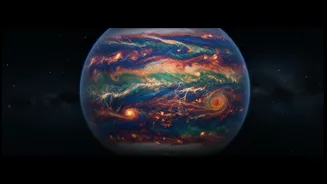
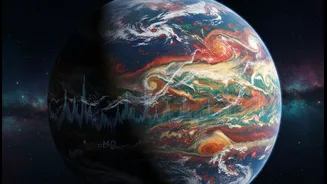
Our galaxy is teeming with planets, but the most common type found so far is one we don't have in our own solar system: the sub-Neptune. These worlds are larger than rocky Earth but smaller than gas giants like Neptune. For years, scientists have debated
what they are made of. Are they just small gas giants with thick hydrogen envelopes, or are they something more intriguing, like massive worlds packed with water? This mystery has made them a prime target for powerful instruments like the James Webb Space Telescope (JWST). The telescope analyses starlight filtering through a planet's atmosphere, a technique called transmission spectroscopy, to read its chemical composition. But what if the atmosphere we can see isn't telling the whole story?
A Theory of Hidden Water
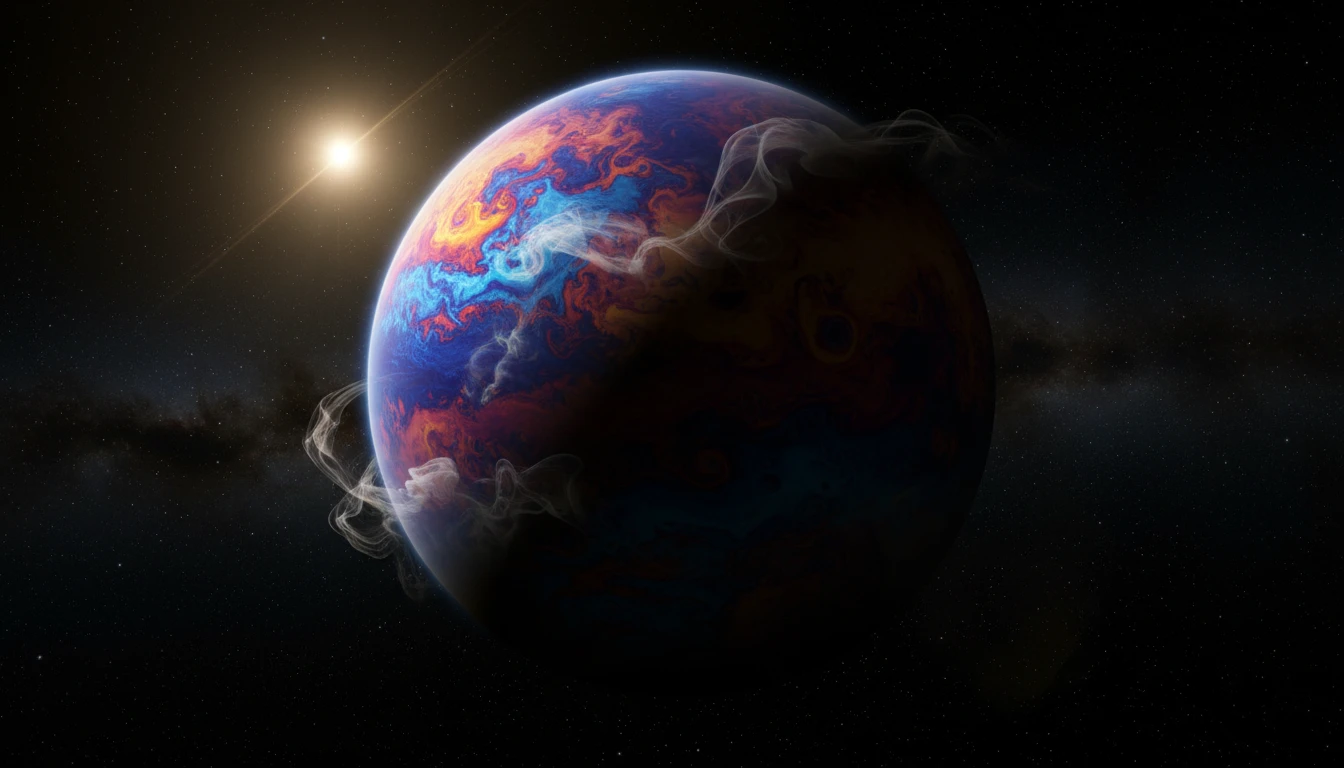
A groundbreaking new study published in July 2026 in The Astrophysical Journal proposes a fascinating idea: many warm sub-Neptunes could be concealing far more water than their atmospheres suggest. Researchers believe that under the right conditions of temperature and pressure on these planets, water, which is heavier than hydrogen and helium, could separate and sink deeper into the planet's interior. This process, known as 'demixing', would create a layered structure. The upper atmosphere, the only part visible to our telescopes, would be left relatively dry and dominated by hydrogen. Meanwhile, a massive, water-rich layer could lie just beneath, completely hidden from our current detection methods.
Rethinking What Telescopes Tell Us
This theory fundamentally changes how astronomers might interpret the data beamed back from space. Transmission spectroscopy is an incredibly powerful tool, but it's like judging a book by its cover; it primarily samples the thin, uppermost layers of an atmosphere. If water is indeed sinking on these planets, then the atmospheric readings from JWST could be systematically underestimating the total water inventory of these worlds. The planet TOI-270 d, a warm sub-Neptune that has been a subject of intense study, is a prime example. Previous observations detected signs of methane and carbon dioxide, which pointed towards a water-rich atmosphere. According to the new models, the amount of water detected in its upper atmosphere might only be a fraction of what the planet truly holds in its deeper layers.
Clues in the Habitable Zone
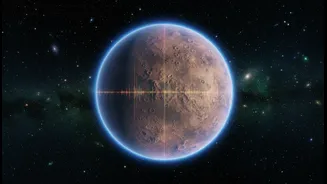
This idea of hidden or layered components isn't limited to sub-Neptunes. In another major discovery from July 2026, scientists confirmed for the first time an atmosphere around a rocky, Earth-like planet in its star's habitable zone. The planet, LHS 1140b, is about 49 light-years away and has all the key ingredients for supporting life: a rocky composition, a temperature that could allow for liquid water, and a protective atmosphere. The method used to confirm its atmosphere was itself a piece of clever detective work, involving the detection of helium escaping into space. Intriguingly, models of this planet also suggest a layered atmosphere, where heavier molecules like water may be trapped closer to the surface, beneath the lighter gases that are easier to detect from afar.
The Search for Life Continues
These discoveries don't make the search for extraterrestrial water simpler, but they do make it more exciting. They force scientists to refine their models and develop new ways to interpret complex data. The idea that entire oceans' worth of water could be lurking just out of sight on the most common type of planet in our galaxy is a powerful motivator. It suggests that the building blocks for life could be far more widespread than even our most advanced telescopes currently show. If these hidden reservoirs are common, it profoundly impacts how scientists will prioritize which of the thousands of known exoplanets to study next in the ongoing quest to answer one of humanity's oldest questions: Are we alone?