






The Anatomy of a Broken Sauce
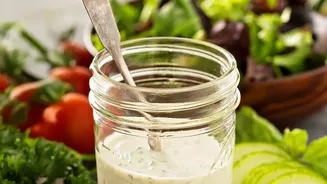
Many of our favorite sauces, from creamy hollandaise to a simple vinaigrette, are what's known as an emulsion. In simple terms, an emulsion is a mixture of two liquids that don't naturally want to combine, most commonly fat and water. Think of oil and vinegar.
You can shake them together, but they will quickly separate again. A sauce “breaks” when this separation happens, leaving you with a layer of oil or fat and a watery base. This can happen for a few reasons: the fat was added too quickly, the sauce got too hot, or it cooled down too fast. You'll know it's happening if you see little droplets of fat forming around the edges of the pan, or if the sauce looks grainy and thin instead of smooth and velvety.
The Role of the Emulsifier
To get fat and water to live in harmony, you need a third party: an emulsifier. An emulsifier is a special type of ingredient that has a water-loving end and an oil-loving end. It acts as a bridge, surrounding tiny droplets of oil and allowing them to remain suspended in the water-based liquid, creating a thick, stable, and creamy texture. You have plenty of powerful emulsifiers already in your kitchen. Lecithin, a compound found in egg yolks, is a classic choice for mayonnaise and hollandaise. The proteins in mustard make it an excellent stabilizer for vinaigrettes, while honey and even garlic paste can also do the trick. Understanding this middleman is the key to both preventing and fixing a broken sauce.
The Rescue Mission: How to Fix It
When your sauce breaks, don't throw it out. Your first instinct might be to add more butter or cream, but this often makes the problem worse. Instead, the fix is usually to rebalance the emulsion. The simplest method is to remove the sauce from the heat and vigorously whisk in a teaspoon or two of warm water. This can often be enough to bring a sauce that is just beginning to separate back together. If the sauce has completely broken, you’ll need to rebuild the emulsion from scratch. In a clean bowl, whisk a fresh emulsifier, like an egg yolk or a teaspoon of mustard. Then, very slowly—drop by drop at first—begin whisking the broken sauce into the new base. As the new emulsion forms and starts to thicken, you can gradually add the rest of the broken sauce in a thin stream. An immersion blender can also be a powerful tool to force the ingredients back together.
Prevention is the Best Medicine
Of course, the easiest way to deal with a broken sauce is to prevent it from happening in the first place. The single most important rule is to add your fat (like oil or melted butter) slowly and gradually while whisking continuously. This gives the emulsifier time to properly coat each tiny fat droplet before the next one is introduced. Temperature control is also crucial. Sudden changes in temperature, either too hot or too cold, can shock the emulsion and cause it to break. For warm sauces like hollandaise or beurre blanc, use low, consistent heat and avoid letting them boil. If you have to hold a finished sauce, it's often best to let it cool gently and then reheat it slowly, stirring constantly to maintain its structure.