





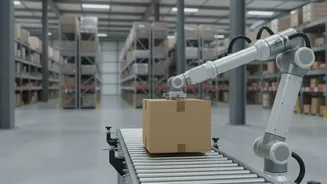

The New Reality: Augmentation Over Automation
The narrative that AI is coming for all tech jobs is proving to be a simplistic one. Industry leaders and reports from bodies like NASSCOM suggest a more nuanced reality: AI is transforming jobs rather than eliminating them wholesale. While routine tasks
like basic coding, data entry, and quality assurance are increasingly being automated, this shift is creating demand for new, higher-value roles. The focus is moving from performing repetitive tasks to designing, supervising, and leveraging AI systems for greater efficiency and innovation. Think of it less as a replacement and more as a powerful collaboration. The demand isn't just for people who can code, but for those who can integrate AI tools to solve complex business problems, making their output faster and more strategic.
Core Technical Skills: The New Foundation
To work with AI, you first need to speak its language. Foundational technical skills remain critical, but the specific demands have evolved. Expertise in Machine Learning (ML) is paramount, including understanding different models and their applications. Data Science and Advanced Data Analytics are the bedrock of AI, as quality data is what fuels intelligent systems. Another rapidly growing area is Natural Language Processing (NLP), the technology behind chatbots and language-based AI. Beyond these, skills in MLOps (Machine Learning Operations) are becoming crucial for deploying and managing AI models at scale. Companies are now hiring with a skill-focused approach, often valuing demonstrable certifications and project experience over traditional degrees alone. The goal is to build a workforce that can not only use AI but also build and maintain the infrastructure it runs on.
Human-in-the-Loop: Working Alongside AI
The most significant new skill set involves managing the partnership between humans and AI. This is where roles like 'Prompt Engineer' emerge—professionals who are experts at crafting the right questions to get the best results from generative AI systems. Beyond just giving commands, there's a growing need for AI Auditors and specialists in AI Ethics and Regulatory Compliance. These roles ensure that AI systems are used responsibly, fairly, and without bias. It’s not enough for an AI model to work; it must work in a way that is transparent and trustworthy. This requires a unique blend of technical understanding and critical thinking, focusing on supervising AI, interpreting its outputs, and ensuring its alignment with business and ethical guidelines. Many companies are now hiring AI-fluent professionals into existing roles, not just as dedicated AI specialists.
The Irreplaceables: Doubling Down on Soft Skills
As AI handles more of the routine, technical workload, uniquely human skills become more valuable than ever. These are the abilities that machines cannot easily replicate. Critical thinking, complex problem-solving, and strategic creativity are at the top of the list. The ability to ask the right questions, connect disparate ideas, and devise innovative solutions is a key differentiator. Furthermore, skills like emotional intelligence, communication, and collaboration are vital. An AI can analyze data, but it can't lead a team, negotiate a complex deal, or empathize with a client's needs. The future-proof professional is one who combines technical AI fluency with these essential human-centric skills, allowing them to lead strategy and drive innovation in ways that AI alone cannot.
Bridging the Gap: The Upskilling Imperative
The demand for AI-skilled talent in India is soaring, with projections showing a need for over a million professionals by 2026-2027, far outstripping the current supply. This creates a significant skills gap but also a massive opportunity. Companies and individuals are responding, with reports indicating nearly half of Indian tech professionals are now receiving some form of AI training at work. Initiatives like NASSCOM's FutureSkills Prime and government-backed apprenticeship programs are in place to facilitate this transition. For the individual tech worker, the path forward involves a commitment to lifelong learning. This could mean pursuing formal certifications, engaging in online courses and bootcamps, or participating in company-led upskilling programs. The key is to be proactive, not reactive, in building a skill set that is not just relevant today, but resilient for the future.