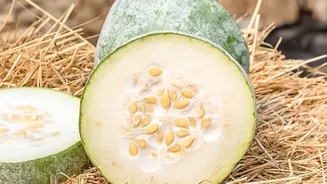







A Tale of Two Layers
A watermelon rind consists of two distinct parts: the firm, white layer closest to the flesh, and the tough, dark green outer skin. While the entire rind is technically edible, these two layers behave very differently in the kitchen. The outer green peel
is the fruit's protective barrier. It’s fibrous, waxy, and designed by nature to withstand the elements, which means it remains tough and somewhat bitter even after cooking. In contrast, the white part is much more tender. It has a crisp, neutral flavour, often compared to a cucumber or jicama, making it an ideal candidate for a wide range of culinary applications. For this reason, nearly all recipes call for peeling and discarding the tough green layer, leaving only the tender white rind to work with.
Texture, Tenderness, and Transformation
The primary reason the white rind cooks better is its cellular structure. It's firm yet porous, allowing it to soften beautifully while still retaining a pleasant, toothsome bite. When cooked, it develops a texture that can be surprisingly tender, absorbing flavours without turning to mush. Think of it as a vegetable in its own right, a member of the same family as cucumber and squash. This quality allows it to be stewed, stir-fried, roasted, or boiled. It can become soft enough to pierce easily with a fork in about 20 minutes, making it a quick-cooking vegetable for curries and sabzis. The tough green skin, however, lacks this ability to transform, often remaining chewy and unpleasantly hard no matter how long it's cooked.
A Sponge for Flavour
Beyond texture, the white rind's greatest asset is its ability to act as a flavour sponge. Its mild, slightly vegetal taste doesn't compete with other ingredients. Instead, it soaks up spices, marinades, and brines, making it incredibly versatile. In Indian cooking, this quality is used to great effect. In a savoury sabzi, it absorbs the aromas of cumin, turmeric, and garam masala. When pickled, it soaks up the tangy vinegar and sweet jaggery, resulting in a crunchy condiment. This neutrality is a clear advantage over the green peel, which can impart a bitter or 'grassy' flavour to a dish, something most cooks want to avoid. The white rind provides bulk and texture without interfering with the intended taste profile of your recipe.
How to Prepare the Rind for Cooking
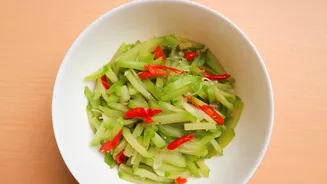
Preparing watermelon rind is simple. First, wash the outside of the watermelon thoroughly. Once you've cut the fruit and eaten the pink flesh, take the remaining rind and use a vegetable peeler or a sharp paring knife to remove the tough, dark green outer skin. You want to peel down to the pale white or light green layer. Trim away any remaining pink flesh, as it can become soft and watery when cooked. What you're left with is the firm white part, which should have a texture similar to a raw cucumber. From here, you can chop it into cubes, slice it into strips, or grate it, depending on what your recipe requires.
From Sabzi to Pickles: A World of Possibilities
In India, using watermelon rind is a time-honoured way to practice zero-waste cooking. Many regional cuisines have their own specialities. In North India, you might find a simple 'tarbooz ke chhilke ki sabji', a dry curry made with spices like fenugreek, turmeric, and amchur (dry mango powder). In Gujarat, it's used to make a sweet and sour 'shaak' with jaggery and kokum. Down south, Kerala offers 'pulissery', a yoghurt-based curry, while Karnataka has its own 'majjige huli', a similar dish that is creamy and comforting with rice. Beyond curries, the rind is perfect for making quick pickles, chutneys, and even sweet preserves or murabba.