






The Promise of Punctuality
For decades, monsoon travel in India has been synonymous with delays. Heavy rains, waterlogged tracks, and landslides can throw schedules into disarray, turning a simple journey into a lengthy ordeal. Traditional trains and buses are often at the mercy
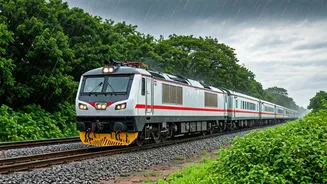
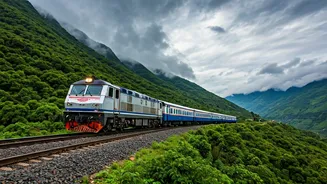
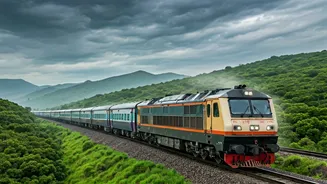
of the weather, with cancellations and significant delays being a common part of the experience. The Vande Bharat Express, however, was designed to counter this. As a semi-high-speed, self-propelled train, it boasts better acceleration and braking, allowing it to recover lost time more efficiently. While not entirely immune to severe disruptions, its modern systems offer a higher degree of reliability. However, even these advanced trains must slow down on certain vulnerable stretches, such as the Konkan route, during peak monsoon for safety, which can add hours to the journey.
A Sanctuary of Comfort
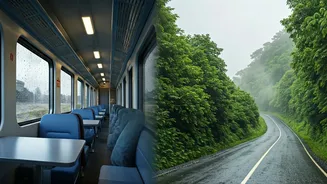
The Vande Bharat experience is defined by its controlled environment. Stepping inside is like entering a different world, sealed off from the downpour outside. These trains are fully air-conditioned, with automatic doors that keep the humidity and chaos of a wet platform at bay. The interiors are often described as premium or aircraft-like, featuring ergonomically designed seats, clean bio-vacuum toilets, and onboard Wi-Fi. This contrasts sharply with the potential hardships of conventional monsoon travel, which can involve damp compartments, crowded spaces, and a constant battle against the elements. For travellers prioritising a clean, dry, and comfortable journey, the Vande Bharat is an undisputed winner.
The View From the Window
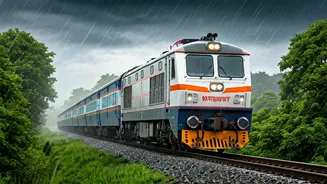
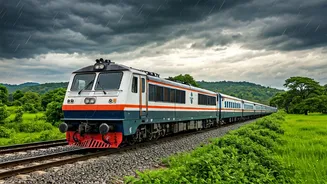
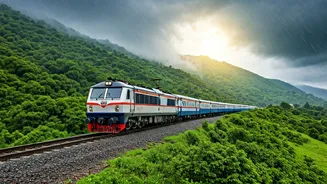
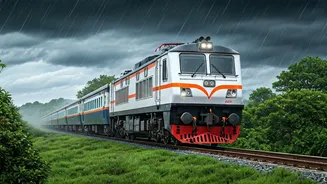
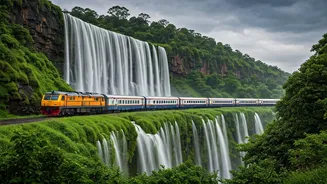
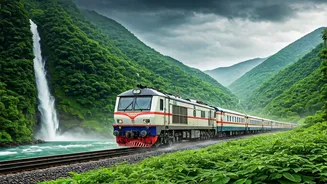
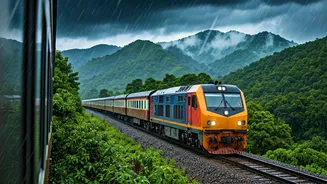
Here, the comparison becomes more nuanced. A Vande Bharat train's large, sealed windows offer a panoramic, almost cinematic view of the rain-washed Indian countryside. You can watch the emerald-green fields, overflowing rivers, and dramatic waterfalls of the Western Ghats or the Shivalik foothills glide by in air-conditioned comfort. Yet, some argue this sterile perfection misses the point. Traditional monsoon travel, perhaps on a slower train with open windows (and a mesh grate), offers a more visceral, multi-sensory experience. It’s the smell of wet earth, the spray of rain on your face, and the sounds of the countryside that many romantics and adventurers seek. The Vande Bharat offers a perfect picture; the older way offers a more immersive, if less comfortable, experience.
The Journey vs. The Destination
Ultimately, the choice between these two modes of travel reflects a traveller's philosophy. The Vande Bharat is for those who prioritise the destination. It is efficient, fast, and designed to minimise the hassles of the journey. Its purpose is to deliver you to your endpoint—be it Mumbai, Mysuru, or Madgaon—quickly and comfortably. Traditional monsoon travel, on the other hand, is often about the journey itself. It’s for those who find beauty in the chaos, who welcome the unexpected, and who believe that travel is about more than just getting from point A to B. It's an embrace of the unpredictable nature of the season, where a delay might lead to a memorable encounter or a breathtaking, unplanned view.
Cost, Reach, and Practicality
Practical considerations also play a major role. Vande Bharat tickets are typically more expensive than those for Shatabdi or other express trains, reflecting the premium amenities and speed. While proponents argue the value is justified, it places the service in a different category for budget travellers. Furthermore, while the Vande Bharat network is expanding rapidly, including the recent introduction of sleeper versions for overnight routes, it doesn't yet have the exhaustive reach of the conventional Indian Railways network. Many charming, off-beat monsoon destinations are still best accessed by older, slower train lines or by road, making the classic journey not just a choice, but a necessity.