







Why Count Your Breaths?
Breath counting is a foundational technique in many mindfulness and meditation traditions, valued for its simplicity and effectiveness. By giving your mind a simple, repetitive task—counting each breath—you create an anchor to the present moment. This
helps to quiet the endless loop of thoughts, reduce mental chatter, and cultivate a state of calm. Research suggests that focusing on the breath activates brain regions linked to attention and emotional regulation. The primary goal isn't to achieve a perfect, thought-free state, but to gently train your focus. Every time your mind wanders and you guide it back to the count, you are strengthening your ability to concentrate.
Getting Started: Posture and Place
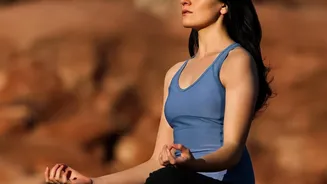
You don’t need a special cushion or a silent retreat to begin. The most important thing is to find a position where you can be comfortable and alert. Sit in a chair with your feet flat on the floor, or cross-legged on a cushion if that feels right for your body. The key is to keep your back upright but not stiff, allowing your lungs to expand fully. Let your hands rest in your lap or on your knees. You can close your eyes to minimize visual distractions or soften your gaze by looking downwards a few feet in front of you. Start by setting a timer for just three to five minutes; consistency is more important than duration when you're starting out.
The Gentle Counting Technique
Once you're settled, allow your breath to flow naturally without trying to change it. Your only job is to observe, not control. There are a few common ways to count, but a simple method for beginners is to count each breath cycle up to ten and then start again. 1. As you inhale, silently count 'one' in your mind. 2. As you exhale, silently count 'two'. 3. Continue this pattern, counting each inhale and exhale sequentially: 'three', 'four', and so on, all the way up to ten. 4. Once you reach ten, simply start over again at one. Some traditions count only the exhalations, from one to ten, which can also be a calming practice. Experiment to see what feels most natural and grounding for you.
Common Consideration: My Mind Wandered
Your mind will wander. This is not a mistake or a sign of failure; it is the very nature of the mind. You might find yourself planning your day, replaying a conversation, or simply losing count. The moment you notice your attention has drifted is the moment you are succeeding at the practice. Don’t get frustrated or judge yourself. Simply acknowledge where your mind went and then gently, patiently guide your focus back to the breath and restart the count at 'one'. Each time you do this, you are building your muscle of awareness.
Other Beginner Hurdles
It's common for beginners to face a few other challenges. One is the urge to control the breath—making it deeper, slower, or more 'perfect'. The goal is to let your body breathe naturally while the numbers simply follow along. If you feel yourself trying to force it, gently let go of that effort. Another common experience is drowsiness. If you feel sleepy, you can straighten your posture slightly or even open your eyes for a few moments. Conversely, some people feel anxious when focusing on the breath, especially with structured counts. If this happens, abandon the counting and just feel the sensation of your breath without any numbers attached. The practice should feel gentle, not tense.