








Why Is Mumbai So Vulnerable?
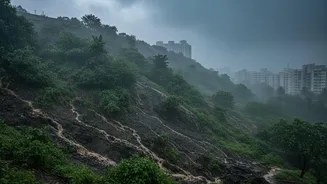
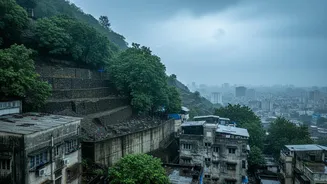
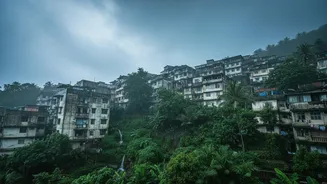
Mumbai's unique geography, a mix of coastal plains and hilly terrain, makes it inherently susceptible to landslides. Decades of development, both planned and unplanned, have led to construction on and at the base of steep slopes. During the monsoon, intense
and prolonged rainfall saturates the soil and rock, drastically increasing its weight and reducing its stability. This combination of steep slopes, saturated ground, and dense population in areas like Ghatkopar, Kurla, Malad, and Bhandup creates a high-risk environment where a slip can be catastrophic. The eastern suburbs, in particular, host a high number of vulnerable sections due to their terrain and population density.
Know If Your Area Is A Risk Zone
The first step to safety is awareness. The Brihanmumbai Municipal Corporation (BMC), with help from the Geological Survey of India (GSI), has identified and mapped hundreds of landslide-prone locations across the city. These are often areas with informal settlements on or near hillocks. Officials classify these zones based on their level of risk. Residents are often served notices to evacuate before the monsoon, especially in the most dangerous spots. You can stay informed about your specific area by following updates from the BMC's disaster management cell. Recent surveys have identified nearly 250 such locations, with dozens classified as highly vulnerable. Areas in Kurla, Mankhurd, Ghatkopar, and Vikhroli are frequently cited as being at high risk.
Spot the Physical Warning Signs
The earth often gives warnings before it moves. Being vigilant and learning to spot these signs can save lives. Look for changes around your home and neighborhood. New cracks appearing in the ground, on sidewalks, or in building foundations are a major red flag. Notice if trees, fences, or utility poles begin to tilt or lean. Sometimes, a bulge or swelling may appear at the base of a slope as the ground begins to shift. Changes in water flow are another critical indicator; be alert for new springs, seeps, or saturated ground in previously dry areas, or if clear stream water suddenly turns muddy. Inside your home, signs of ground movement can include doors or windows that suddenly start sticking, or new cracks appearing in plaster or tiles.
Listen for Alarming Sounds
Sometimes, the first warning of an imminent landslide is something you hear, not something you see. A faint rumbling that grows louder can signal moving debris approaching. Other unusual sounds like trees cracking, boulders knocking together, or a general 'groaning' from the ground should be treated as an immediate danger signal. These sounds indicate that the hillside is unstable and actively moving. If you hear any of these noises, especially during or after a period of intense rainfall, do not wait to investigate. Your immediate priority should be to move away from the area to a safer location and alert authorities.
Your Monsoon Safety Plan
Preparation is your best defense. Every family living in a risk-prone area should have a clear emergency plan. Start by downloading the BMC's disaster management app and saving emergency contact numbers. Prepare an emergency kit with a battery-powered torch, a power bank, a first-aid kit, essential medicines, and a supply of non-perishable food and clean water. Keep important documents in a waterproof bag. It is crucial to identify your evacuation route in advance and have a designated meeting point for your family. During periods of heavy rain warnings, if you are advised to evacuate by officials, do so immediately. Pro-active community planning, such as society-level coordination and checking on elderly or vulnerable neighbors, can significantly enhance collective safety.