



An Invisible Ceiling
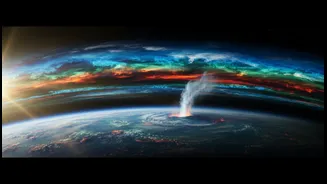
For decades, atmospheric models operated on a fundamental assumption: the upper reaches of our atmosphere, specifically the stratosphere, are extremely dry. The stratosphere, a layer extending from about 10 to 50 kilometres above Earth, is separated from the lower,
weather-filled troposphere by a thermal boundary called the tropopause. This boundary acts like a lid, and scientists believed that it was very difficult for significant amounts of water vapor to punch through it. Most models, therefore, treated the stratosphere as a realm of slow, predictable chemical processes, largely disconnected from the turbulent, water-rich weather systems below.
Nature's Stratospheric Elevators
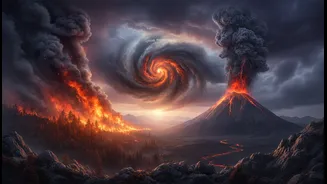
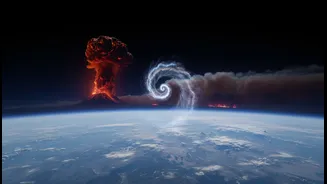
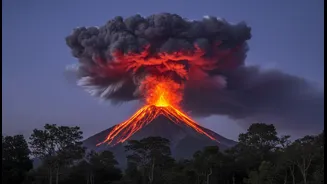
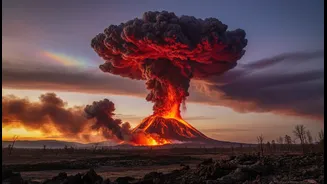
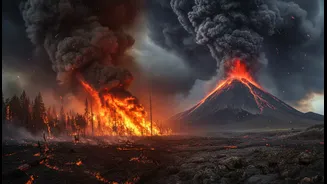
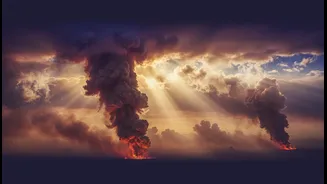
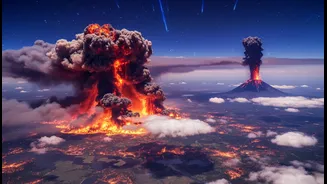
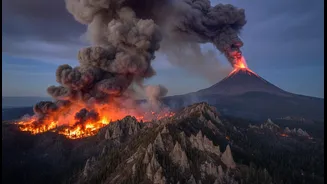
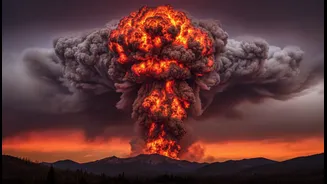
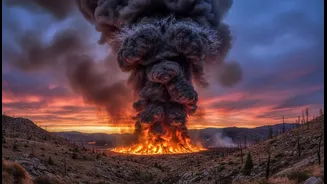
Recent, unusually powerful natural events have shattered this picture. Massive wildfires and certain types of volcanic eruptions are now understood to act as powerful atmospheric elevators. The intense heat from these events can generate enormous storm clouds called pyrocumulonimbus (pyroCbs) from wildfires, or similarly powerful plumes from volcanoes. These are not ordinary clouds; they are violent, convective engines that can blast smoke, ash, and, crucially, vast quantities of water vapor directly into the cold, dry stratosphere, bypassing the tropopause entirely. This process is far more dramatic and impactful than previously thought possible.
The Case of the Water-Logged Volcano
The eruption of the Hunga Tonga-Hunga Ha'apai underwater volcano in January 2022 provided a stunning real-world laboratory. Because its caldera was at the perfect depth—not too deep to be suppressed, not too shallow to lack water—it superheated and vaporized a colossal amount of seawater. NASA's instruments detected that the eruption injected an unprecedented plume of water vapor into the stratosphere, enough to fill over 58,000 Olympic-sized swimming pools. This single event increased the total amount of water vapor in the entire stratosphere by about 10 percent. Scientists had never seen such a rapid, massive injection of water, and its effects on atmospheric chemistry, including temporary depletion of the ozone layer, were observed almost immediately.
Fires That Create Their Own Weather
While the Tongan eruption was a singular event, increasingly intense and frequent wildfires are providing a more regular pathway for materials to reach the stratosphere. The fire-driven thunderstorms known as pyroCbs are powerful enough to inject smoke particles and moisture high above the weather. These smoke particles, once in the stratosphere, can linger for months or even years. Studies of major events like the 2019-2020 Australian wildfires showed these smoke plumes had a significant, measurable effect on the stratosphere, behaving in ways similar to volcanic aerosols by influencing temperature and atmospheric circulation. Scientists are now realizing that the impact of these fire clouds is a critical and previously underestimated factor in our climate system.
Rewriting the Climate Models
This new understanding has major implications for how we model weather and climate. A wetter stratosphere is not something current models are well-equipped to handle. Extra water vapor can trap heat, potentially leading to a temporary warming effect at the Earth's surface. It also alters chemical reactions, which can affect the fragile ozone layer that protects us from harmful ultraviolet radiation. The smoke and sulfate aerosols injected alongside the water can have their own effects, sometimes cooling the surface by reflecting sunlight. Accurately forecasting climate change requires models that can account for these dramatic, short-term injections. As a result, scientists are working to integrate these complex interactions into the next generation of Earth system models.