


In yoga, the simplest-looking postures often hold the deepest benefits. Apanasana, or the Knees-to-Chest pose, is a perfect example. But what makes this gentle hug so powerful? The secret lies in its foundation: lying flat on your back.
Understanding Apanasana's Purpose
Apanasana is a gentle,
restorative yoga posture that most practitioners will recognise. Commonly called Knees-to-Chest or Wind-Relieving Pose, its Sanskrit name offers a deeper insight into its function. 'Apana' refers to a specific type of 'vayu' or life force energy in yogic philosophy. Apana Vayu is the downward and outward flow of energy responsible for elimination—not just of physical waste, but also of mental and emotional baggage that no longer serves us. The pose is specifically designed to stimulate and support this grounding, releasing energy. When you draw your knees to your chest, you are physically embodying the act of letting go.
The Power of a Supine Foundation
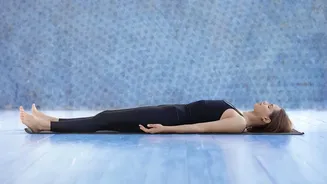
Performing Apanasana while lying on your back—a supine position—is critical to its effectiveness. This isn't just about comfort; it's about stability and surrender. When you lie down, the floor fully supports the weight of your body, particularly your spine. This removes the need to balance or engage postural muscles, allowing your body to relax completely. With the back flat and protected, the lumbar spine can gently decompress as you draw the knees inward, relieving tension from prolonged sitting or standing. Gravity becomes an ally rather than a force to overcome, helping to deepen the release in the hips and lower back. This grounded position signals to your nervous system that it is safe to shift from a state of 'fight or flight' into 'rest and digest', amplifying the pose's calming effects.
How to Practice Apanasana Safely
To begin, lie comfortably on your back on a yoga mat. You can start with your knees bent and feet flat on the floor to settle your lower back. Take a deep breath in. As you exhale, gently draw both of your knees in towards your chest. Wrap your hands around your shins, just below the knees, or clasp the backs of your thighs if that is more comfortable. Avoid pulling your head or shoulders off the floor; the goal is to keep the upper body relaxed. You can hold the pose statically, focusing on your breath, or introduce a gentle rock from side to side to massage the lower back muscles against the floor. Hold for 30 seconds to a few minutes, breathing deeply into your belly. To release, slowly lower your feet back to the floor on an exhale.
The Physical and Mental Benefits
The gentle compression of the thighs against the abdomen works as a natural massage for the internal organs, particularly the intestines. This can help stimulate digestion and relieve issues like gas, bloating, and constipation. It’s why it is often called the Wind-Relieving Pose. For the musculoskeletal system, Apanasana provides a wonderful release for a tense lower back and stretches the glutes and hip flexor muscles. On a mental and emotional level, the pose is incredibly calming. The combination of deep breathing and the secure, grounded feeling of being held by the floor helps soothe anxiety and quiet a busy mind. It’s an excellent posture to practice before bed to promote restful sleep.
Modifications and Important Considerations
Apanasana is accessible to most, but modifications can enhance its safety and effectiveness. If you have tight hips or a larger belly, try taking the knees wide apart towards your shoulders. For those with knee sensitivity, holding the backs of the thighs instead of the shins reduces pressure on the joint. You can also practice 'Ardha Apanasana' (Half Wind-Relieving Pose) by drawing just one knee into the chest at a time while the other leg remains extended on the floor. This is a great option for those with lower back pain or during the first trimester of pregnancy. However, the pose should be avoided by those recovering from recent abdominal surgery, a hernia, or significant knee or hip injuries.