
The Brightest Star That Isn't a Star
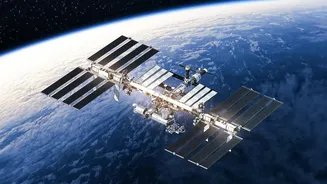
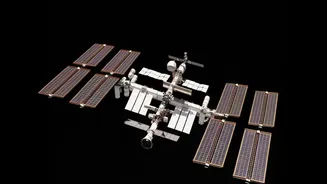
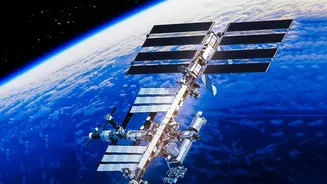
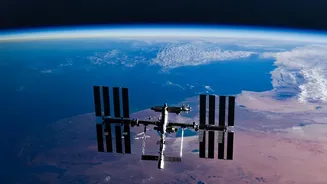
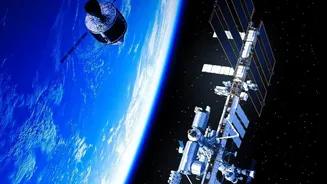
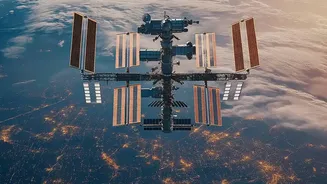
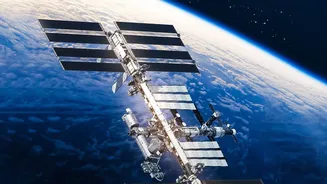
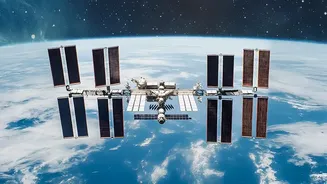
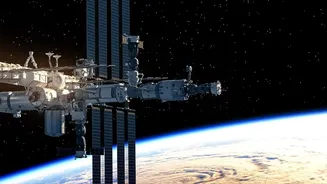
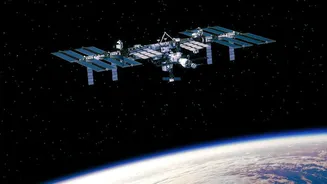
Orbiting about 400 kilometres above us, the International Space Station (ISS) is a football-field-sized laboratory in space. For over two decades, it has been continuously occupied by astronauts conducting research in microgravity. What makes it visible
to us on the ground is its sheer size and reflectivity. Like the Moon, the ISS shines by reflecting sunlight. It’s the third brightest object in the night sky after the Moon and Venus, appearing as a steady, bright white point of light moving much faster than an aeroplane. You don't need a telescope to see it; it is easily visible to the naked eye, even from a city. The best viewing times are typically at dawn or dusk, when the sky is dark where you are, but the sun is still illuminating the station as it passes overhead.
How Your Phone Pinpoints the Station
The magic behind spotting the ISS lies in a clever combination of data. Skywatching apps use your phone’s GPS to determine your exact location on Earth. They then pull publicly available orbital data, known as a Two-Line Element set (TLE), which is published multiple times a day by space tracking agencies like the United States Space Force. This data precisely describes the station's orbit—its path, speed, and altitude. The app's software, often using a standard mathematical model called SGP4, processes this information to predict the exact time and path the ISS will take across your specific sky. It calculates when the station will emerge from the horizon, its highest point, and where it will disappear, all while ensuring the viewing conditions are right (i.e., at dawn or dusk).
Top Apps to Guide Your Gaze
Several excellent apps can turn your phone into a personal ISS tracker. NASA’s official Spot The Station app is a great starting point, offering sighting alerts and a clean interface. ISS Detector is another popular choice, known for its easy-to-understand main screen that lists upcoming passes and even provides weather forecasts to let you know if clouds will spoil the view. For a more immersive experience, apps like SkyView Lite use augmented reality (AR). You can simply point your phone’s camera at the sky, and the app will overlay the station's path, showing you exactly where to look. Many of these apps also track other satellites, including the Hubble Space Telescope and Starlink satellite trains.
Your Step-by-Step Viewing Guide
Ready to see it for yourself? First, download one of the recommended apps and allow it to access your location. Set up notifications for ISS passes. These alerts will typically arrive hours or minutes before a viewing opportunity. The app will provide key information: the time the pass begins, how long it will last (usually a few minutes), its maximum height in the sky (90 degrees is directly overhead), and the direction it will appear from (e.g., 'appears WNW'). A few minutes before the scheduled time, find a spot with a clear view of the sky, especially in the direction the station will appear. Then, just watch. You’ll see a bright, unwavering light moving steadily and silently across the heavens before it fades as it enters Earth’s shadow.