






What Are Thermo-Responsive Coatings?
Imagine a window that knows when to block heat and when to let it in. That’s the core idea behind thermo-responsive, or thermochromic, glass coatings. These are advanced materials applied to glass that automatically change their properties in response
to temperature. Unlike standard tinted windows or blinds, which are static, these smart coatings are dynamic. When the temperature of the glass rises past a certain point, the coating darkens to block heat-carrying infrared rays from the sun. When it cools down, the glass becomes transparent again, allowing natural light and warmth to pass through. This passive intelligence means the windows adapt to the environment without needing any wires, electricity, or manual controls.
How the Technology Works
The magic lies in specialised materials, often based on compounds like vanadium dioxide (VO2) or embedded in a polymer interlayer between two panes of glass. These materials are engineered to undergo a reversible change in their molecular structure at a specific temperature. Below this transition temperature, the coating is transparent to both visible light and near-infrared (heat) radiation. However, once the sun heats the glass above a set threshold, say 21 degrees Celsius, the material's structure shifts. This new configuration is designed to reflect the invisible near-infrared portion of the solar spectrum, which accounts for over half of the sun's heat energy, while still allowing most visible light to pass through. The result is a window that blocks the worst of the sun's heat precisely when it's hottest outside, then reverts to full clarity on cooler days or in the morning.
The Impact on Energy Consumption
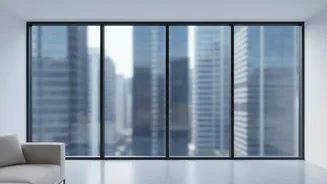
The primary benefit of this technology is a significant reduction in the need for air conditioning. Buildings with large glass facades, common in modern Indian cities, often suffer from the greenhouse effect, where solar radiation enters and gets trapped as heat, forcing HVAC systems to work overtime. By dynamically modulating solar heat gain, thermochromic coatings can keep interiors cooler naturally. Studies on dynamic glazing have shown it can reduce cooling energy needs by around 20% compared to even modern low-emissivity (low-e) windows. For businesses and homeowners, this translates directly into lower electricity bills and a smaller carbon footprint. The push for green, energy-efficient buildings is driving significant growth in the market for advanced glass coatings, which are seen as a critical component in achieving sustainability goals.
Thermochromic vs. Other Smart Glass
Thermochromic glass is part of a broader family of 'smart glass' technologies, but it has a key advantage: it's passive. The most common alternative, electrochromic glass, also tints on demand but requires an electrical voltage to do so. While this gives users manual control over the tint, it also means more complex installation with wiring and control systems, and a higher cost. Thermochromic coatings, by contrast, are self-regulating. Their main limitation is that the tint level is tied directly to temperature and cannot be manually overridden. However, for many applications where the goal is automated energy savings, this passive, 'set-it-and-forget-it' functionality is a major strength.
The Road to Widespread Adoption
While currently used more in commercial and high-end architectural projects, the technology behind thermo-responsive coatings is advancing rapidly. Researchers are focused on lowering manufacturing costs and fine-tuning the performance characteristics. One method involves applying the thermochromic material as a liquid coating that is then heat-treated, a process that could be simpler and more energy-efficient than traditional methods. Another area of development is creating window films that can be retrofitted onto existing windows, offering a path for older buildings to become more energy-efficient. As India continues to urbanise and faces increasing pressure on its energy grid, particularly during summer, technologies that passively reduce cooling loads are poised for strong demand. The market for functional and energy-saving glass coatings is expected to see significant growth in the coming years, with India being a key market.