





Your Backyard Time Machine
It sounds like something from a science fiction movie, but it's a fundamental truth of our universe. Light, while incredibly fast, does not travel instantaneously. It moves at a finite speed: about 300,000 kilometres per second. Over the vast distances
of space, this means that the light from celestial objects takes a significant amount of time to reach our eyes. When you gaze at a star, you are seeing it as it was when the light began its journey. The star could have changed, moved, or even died in the intervening years, but you wouldn't know it yet. The night sky isn’t a live broadcast; it’s a recording of cosmic history, playing out for us every evening.
Understanding the Light-Year
To measure these immense distances, astronomers use a unit called a 'light-year'. It’s a common point of confusion, but a light-year is a measure of distance, not time. It's the distance that light travels in one year. To put that into perspective, one light-year is approximately 9.5 trillion kilometres. Our nearest stellar neighbour, Proxima Centauri, is about 4.2 light-years away. This means the light we see from it tonight actually left the star over four years ago. If you were looking at it through a telescope, you’d be seeing what it looked like during the last FIFA World Cup. This time-lag effect becomes far more dramatic as we look deeper into space.
A Message From the Galaxy's Heart
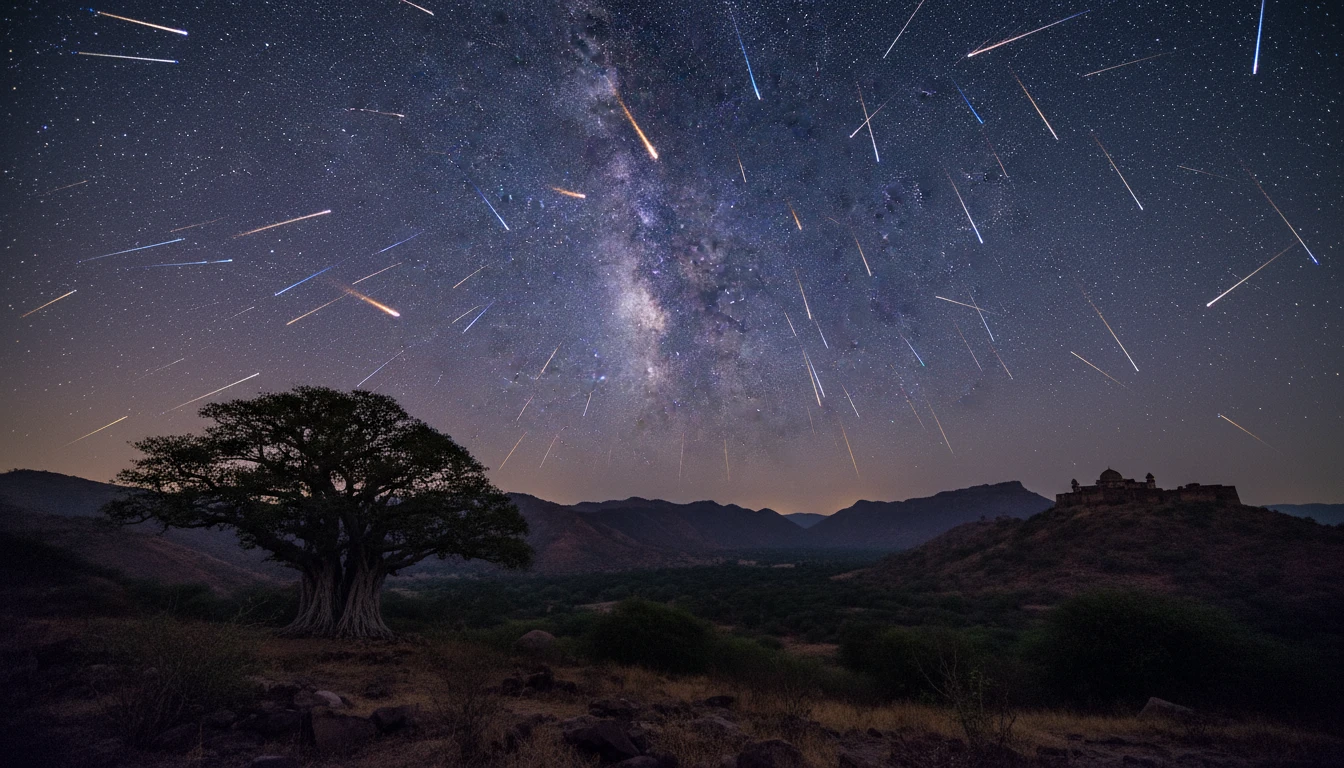
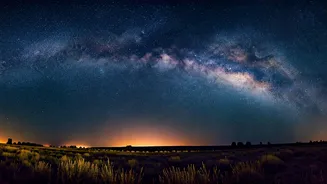
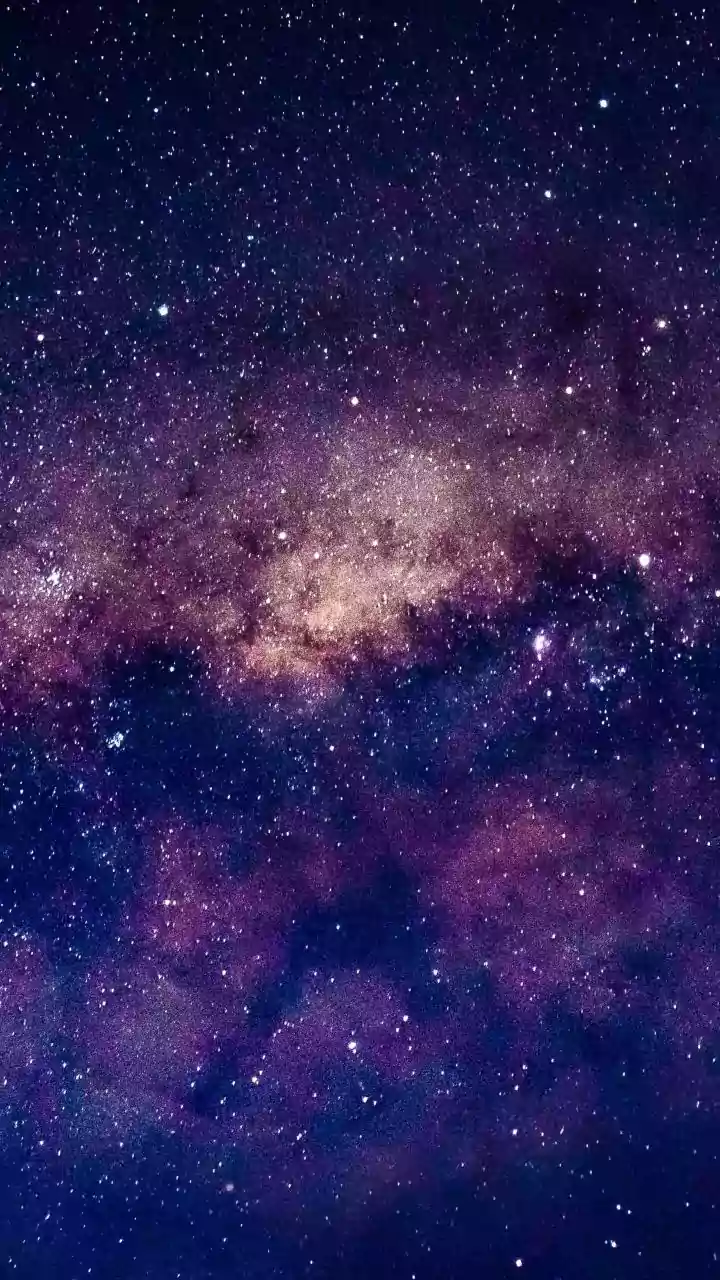
The headline’s mention of our galactic core brings this concept into stunning focus, though the timescale is even grander than mere centuries. The centre of our Milky Way galaxy is a dense, brilliant region of stars, dust, and a supermassive black hole known as Sagittarius A*. From India, this region is best viewed during the summer months, appearing as the brightest, thickest part of the hazy band of the Milky Way. This galactic core is roughly 26,000 light-years away. The soft glow reaching your backyard from that direction is ancient. It started its journey around the time early humans were painting in the Bhimbetka rock shelters, long before the first cities were built or empires rose and fell. You are, quite literally, looking 26,000 years into the past.
Seeing Centuries into the Past
While the galactic core’s light is millennia old, many other bright stars you can easily spot are indeed sending us light from centuries ago, aligning with the spirit of the headline. Take Rigel, the bright blue-white star in the constellation Orion, visible in the winter sky. It is about 860 light-years away. The light we see from Rigel tonight left the star around the 12th century, during the height of the Chola dynasty's maritime empire. Another example is Deneb, in the constellation Cygnus, which is approximately 2,600 light-years away. Its light began travelling towards us around the time of the Mahajanapadas in ancient India. Every star tells a different story from a different era.
How to Witness This Ancient Light
Unfortunately, for many of us living in brightly lit cities like Delhi, Mumbai, or Bengaluru, the full glory of the Milky Way is washed out by light pollution. To truly appreciate this cosmic spectacle, you need to get away from the city glow. India is home to some incredible dark-sky locations. The Himalayan regions of Ladakh and Spiti Valley are world-renowned for their pristine night skies. Other spots include the salt flats of the Rann of Kutch, remote areas in the Western Ghats, or even a sufficiently dark village away from major towns. On a clear, moonless night in one of these places, the Milky Way arcs across the sky like a celestial river, and the ancient light from its core is vividly visible to the naked eye.