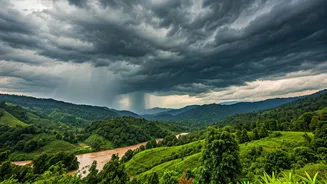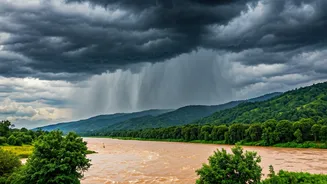









IMD Issues High Alert
The India Meteorological Department (IMD) has placed several northeastern states on high alert due to the strengthening southwest monsoon. [14, 22] A press release dated June 28, 2026, confirms that heavy to very heavy rainfall is likely across Northeast
India and Sub-Himalayan West Bengal and Sikkim for the next five days. [15] The warning highlights the potential for isolated, extremely heavy downpours, particularly in Assam, Meghalaya, and Sikkim, with some areas already recording exceptionally high rainfall totals. [15, 26] These alerts, which range from orange to red, signify the need for residents to prepare for significant weather-related disruptions. An orange alert advises residents to be prepared, while a red alert indicates that authorities should take action to mitigate risks. [14]
Which Areas Are Most Affected?
The warning encompasses a wide swathe of the region. [14] The IMD specifically forecasts heavy to very heavy rainfall for Assam, Meghalaya, Arunachal Pradesh, Nagaland, Manipur, Mizoram, and Tripura. [15, 27] Sikkim and the adjoining Sub-Himalayan West Bengal are also expected to bear the brunt of the weather system, with red alerts issued for extremely severe rainfall conditions where downpours could exceed 204.5 mm. [12, 14] Recent reports have already shown the impact, with Meghalaya's Mawsynram recording 53 cm of rain in a single day. [26] Authorities in West Sikkim have been dealing with multiple landslides cutting off district headquarters after just one night of torrential rain. [24]
Understanding the Monsoon's Fury
This intense rainfall is not an anomaly but a powerful display of the southwest monsoon's strength in the region. [14] The fury is driven by strong moisture-laden southerly and south-westerly winds blowing in from the Bay of Bengal, which are then lifted by the Himalayan topography. [28] This oro-graphic lift forces the moisture to condense rapidly, resulting in prolonged and intense rainfall. The IMD's bulletins note the presence of several atmospheric systems, including troughs and cyclonic circulations over the region, which are creating favourable conditions for this widespread and heavy precipitation to persist for several days. [28]
Key Risks: Landslides and Flooding
The primary dangers associated with this weather event are landslides and flash floods. [21] The hilly and mountainous terrain of Sikkim and other northeastern states is inherently vulnerable to slope failure, especially when the soil becomes saturated with water. [17, 26] Officials have cautioned that the rain is likely to trigger localised flooding, waterlogging in low-lying urban areas, and significant disruptions to transport networks. [21] National Highway 10, the critical lifeline connecting Sikkim to the rest of India, is particularly susceptible to blockades from debris. [12, 23] Authorities have already been active in clearing roads in West Sikkim and have urged residents to avoid travel, especially at night. [12, 24]
How to Stay Safe
State and district administrations have urged residents to take immediate precautions. [17] It is crucial to stay informed through official updates from the IMD and local disaster management authorities, and to avoid circulating unverified information on social media. [20] People in vulnerable areas should avoid travel unless absolutely necessary and stay away from structures at risk of landslides or river banks prone to flooding. [17] For farmers, advisories include ensuring proper drainage in crop fields to prevent damage to standing crops like paddy, jute, and vegetables. [21] It is also wise to prepare an emergency kit with essential supplies. Travellers are strongly advised to check road status and flight schedules before starting their journeys, as disruptions are highly likely. [12]