







A Race Against the Clock
The journey of a rose from a farm to a vase is a race against time. Roses, like many high-value flowers, are extremely perishable. In India's warm climate and often remote rural areas, post-harvest losses can be staggering, with estimates suggesting that
30-40% of floriculture produce is lost before it ever reaches a customer. Without access to immediate cooling facilities, farmers are forced into a difficult position. They must sell their entire harvest on the same day it is picked, creating a glut in local markets that drives prices down. This cycle of distress selling means that even with a successful crop, farmers often fail to realize the full value of their labour and investment, leaving them vulnerable to price volatility and economic instability. The lack of reliable electricity in many agricultural regions has traditionally made conventional cold storage an unworkable dream.
Harnessing the Sun's Power
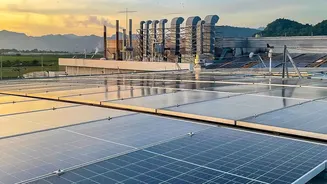
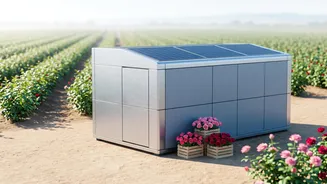
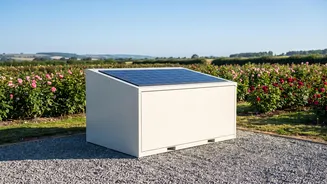
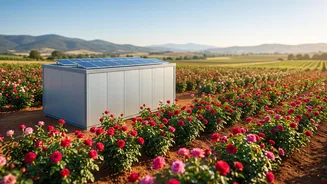
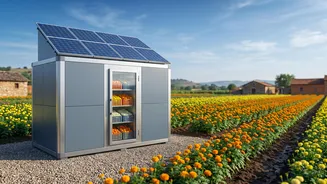
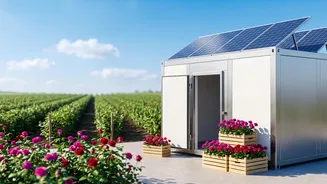
Solar-powered cold chain technology is emerging as a game-changer for this very challenge. These are not massive, centralized warehouses but smaller, decentralized cold rooms that can be installed directly at or near the farm gate. By running on solar panels, they provide a consistent and reliable source of cooling, completely independent of the often-erratic local power grid. During the day, solar energy powers the refrigeration system to maintain a precise, cool temperature, typically between 0°C and 15°C, which is ideal for preserving flowers. Advanced systems can store thermal energy, allowing them to provide uninterrupted cooling for over 30 hours, even through the night or on cloudy days, without relying on expensive and polluting diesel generators. This off-grid capability is what makes the technology so revolutionary for rural agriculture.
Extending Life and Increasing Value
The impact of farm-level pre-cooling is immediate and profound. By moving harvested roses into a cold room within hours, farmers can dramatically extend their shelf life, slowing down the natural process of decay. This crucial buffer liberates them from the pressure to sell immediately. Instead of being forced to accept low daily rates during peak harvest, they can store their flowers safely for several days. This allows them to aggregate larger quantities, negotiate better prices, and time their entry into the market to meet periods of high demand, such as festivals or weddings, when prices can be two or three times higher. Studies and farmer testimonials indicate that access to cold chain facilities can significantly boost income by reducing waste and enabling them to capture price premiums of 20-40%.
More Than Just Pretty Flowers
The benefits of solar-powered cooling extend far beyond the rose fields. For many farmers, the initial investment is made more accessible through government subsidies and innovative business models like "Cooling-as-a-Service" (CaaS), often managed by Farmer Producer Organisations (FPOs). This model allows farmers to pay for the storage they use, making the technology affordable even for smallholders. Economically, it fosters greater financial resilience in rural communities. Environmentally, it marks a significant shift away from fossil fuels. By replacing diesel generators, these solar units reduce operational costs, noise, and carbon emissions, contributing to a more sustainable agricultural sector. The success with flowers is also creating a blueprint for other perishable goods, from fruits and vegetables to dairy and fisheries, strengthening India’s overall food security.