






Waterproof and Breathable Rainwear
A high-quality rain jacket and pants are your first line of defence. Look for gear that is not just waterproof but also breathable. [10, 17] A non-breathable plastic poncho or cheap raincoat will trap sweat, leaving you soaked from the inside. [19] Many
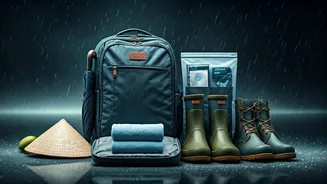
modern hiking jackets feature a 3-layer construction and pit zips for ventilation, which help regulate your temperature during strenuous climbs. [8, 15] While a poncho can be a budget-friendly option for easier treks as it also covers your backpack, a dedicated jacket and pants offer far better comfort and freedom of movement. [11, 19]
Quick-Dry Clothing Layers
What you wear under your rain jacket is just as important. Avoid cotton at all costs, as it absorbs moisture, takes a long time to dry, and can lead to a dangerous drop in body temperature. [7, 24] Instead, opt for a layering system with synthetic fabrics like polyester or natural fibres like merino wool. [7, 10] These materials wick moisture away from your skin, dry quickly, and keep you warm even when damp. [24] Pack a moisture-wicking base layer, an insulating mid-layer like a fleece jacket, and several extra pairs of synthetic or wool socks. [10, 19]
Trekking Shoes with Superior Grip
Monsoon trails are notoriously muddy and slippery. Your footwear needs to provide excellent grip to prevent falls. Look for trekking shoes with deep lugs on the soles for traction on slick rocks and muddy paths. [7, 20] While waterproof shoes are a popular choice to keep feet dry initially, some trekkers in humid conditions prefer non-waterproof mesh shoes that drain quickly and are more breathable. [8] Whichever you choose, ensure they provide good ankle support and are well broken-in before your trek to avoid painful blisters. [24]
A Fortress for Your Belongings
Keeping your gear dry is crucial for comfort and safety. Start with a sturdy backpack equipped with a reliable rain cover. [9, 24] For a second layer of protection, use dry sacks or plastic bags inside your backpack to compartmentalise and waterproof your most important items, such as warm layers, electronics, and your sleeping bag. [7, 11] Simple zip-lock bags are a great, inexpensive option for protecting your phone, power bank, and documents from moisture. [16]
The Anti-Leech Arsenal
In many of India's trekking regions, the monsoon is also leech season. [6] These creatures thrive in damp, humid conditions. [2] To protect yourself, wear leech-proof socks, which are tightly woven and extend up to your knees. [4, 9] Another effective barrier is a pair of trekking gaiters, which cover the gap between your boots and trousers. [2, 4] Tucking your quick-dry pants into your socks creates a simple but effective seal. [5, 6] As a repellent, you can apply a DEET-based spray to your shoes and clothing or try the local remedy of salt mixed with mustard oil on your boots. [2, 4]
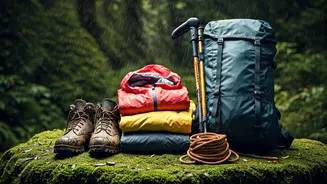
Essential Safety and Navigation Tools
Monsoon weather can change rapidly, and visibility can drop in the afternoon. [3] Always carry a basic first-aid kit that includes antiseptic wipes, bandages, and treatments for leech bites. [5, 19] A headlamp or torch is essential, as trails can get dark early. [12, 16] Trekking poles provide extra stability on slippery descents and reduce the strain on your knees. [3, 24] Finally, a wide-brimmed cap worn under your jacket's hood can be surprisingly effective at keeping rain from dripping onto your face and obstructing your view. [11, 20]