

The Galaxy with Many Disguises
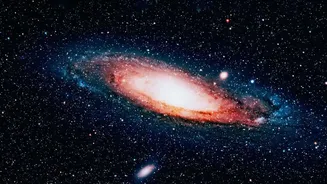
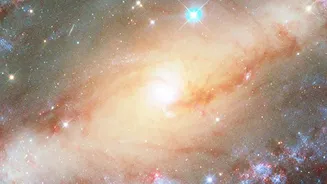
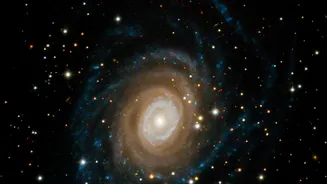
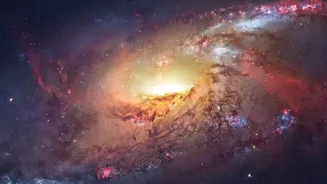
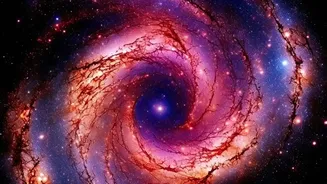
Take a galaxy like NGC 1566, a beautiful spiral located about 60 million light-years away, sometimes called the Spanish Dancer. In a typical picture taken in visible light—the kind our eyes detect—it looks like a classic pinwheel, with a bright core and
elegant arms. You can clearly see the distribution of its billions of stars. But that's just one version of the truth. When astronomers point different kinds of telescopes at it, NGC 1566 completely transforms. In one view, its active, energetic core blazes. In another, vast, cool clouds of dust that will one day form new stars become the main attraction. This isn’t a cosmic magic trick; it’s the science of multiwavelength astronomy, which gives us a more complete picture of what's happening in the universe.
Beyond the Rainbow
The light our eyes can see is just a tiny sliver of the full range of light, known as the electromagnetic spectrum. This spectrum includes everything from low-energy radio waves and microwaves, through infrared and visible light, to high-energy ultraviolet, X-rays, and gamma rays. Each type of light tells a different story because it's produced by different physical processes and objects. Cooler, less energetic things, like clouds of interstellar dust, glow in infrared light. Hotter, more violent phenomena, like matter swirling into a supermassive black hole or a star exploding, unleash high-energy X-rays and gamma rays. To see everything, astronomers need telescopes designed to capture each specific type of light. Since Earth's atmosphere blocks most of this radiation, many of these observatories, like the James Webb and Chandra X-ray telescopes, must be placed in space.
The Hot and Violent Universe
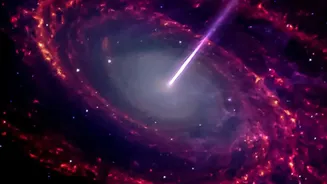
When we view a galaxy in high-energy light, we see its most dramatic and violent side. X-ray telescopes, for instance, don't see the gentle glow of older stars. Instead, they reveal areas of extreme heat, often millions of degrees. This allows astronomers to pinpoint supermassive black holes at the centers of galaxies, which give off intense X-rays as they devour gas and dust. X-ray images also highlight the remnants of supernovae and powerful stellar winds from massive stars. Ultraviolet (UV) light, which is slightly less energetic than X-rays, is a key indicator of recent star formation. The biggest, hottest, and youngest stars shine most brightly in UV light, so a galaxy that is vibrant in UV is one that is actively giving birth to new stars.
The Cool and Creative Cosmos
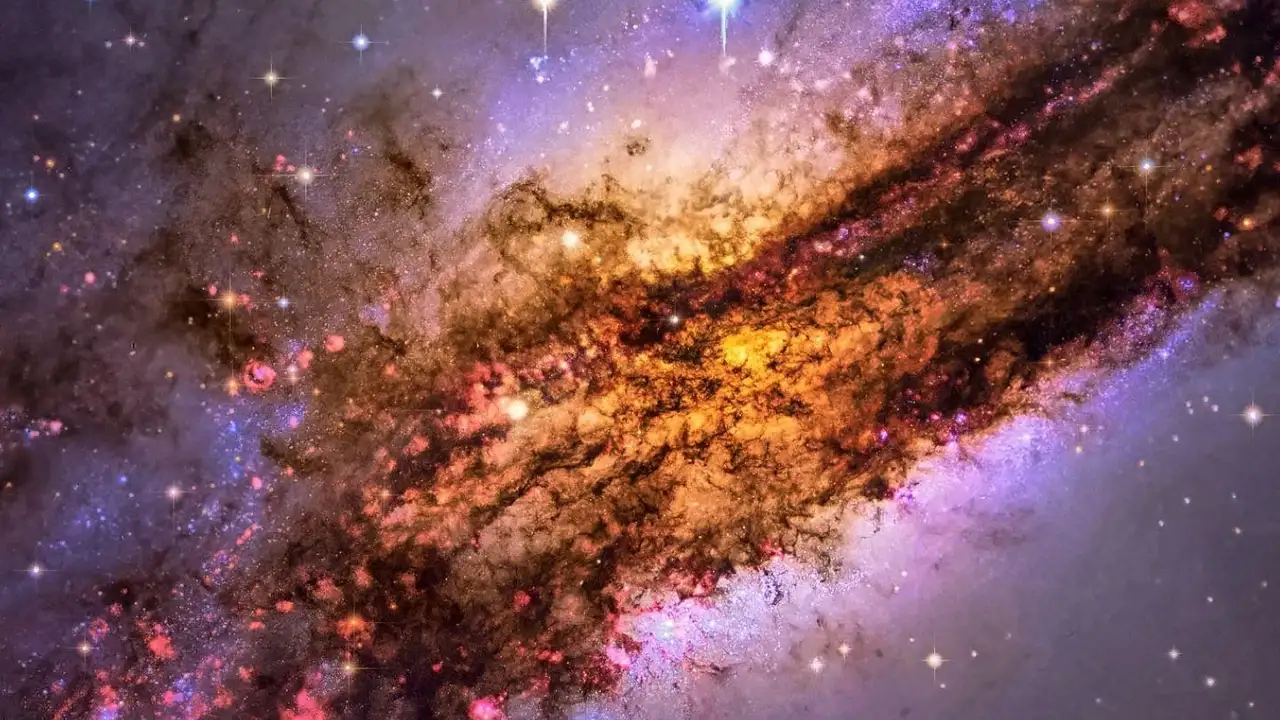
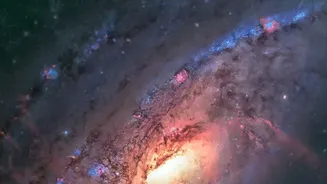
On the other end of the spectrum, infrared and radio waves show us the cool, hidden building blocks of galaxies. Thick clouds of cosmic dust normally block visible light, hiding what's inside. But infrared telescopes like the James Webb Space Telescope can peer through this dust, revealing newborn stars nestled in their cosmic nurseries. These images highlight the intricate webs of dust and gas that trace a galaxy's spiral arms, showing where future generations of stars will form. Even longer-wavelength radio waves cut through the dust entirely, mapping out vast clouds of cold hydrogen gas—the raw fuel for star formation across the entire galaxy. So while a visible-light image shows the stars that exist now, infrared and radio images show the material that will create the stars of the future.
Assembling the Complete Picture
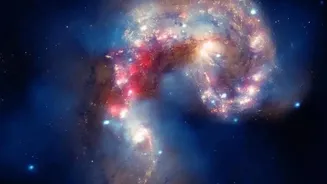
No single wavelength gives the full story. By combining images from different telescopes, astronomers can create a composite view that layers all these processes together. They can see how the hot, young stars revealed in UV light are carving out bubbles in the cold, dense gas seen by radio telescopes. They can watch how energy from a central black hole, seen in X-rays, affects star formation throughout the galaxy, seen in infrared. This holistic approach allows scientists to build a comprehensive model of a galaxy's entire life cycle—from its reserves of cold gas, through the birth of stars, to the energetic feedback from those stars and their explosive deaths. The many faces of a galaxy are not contradictions; they are complementary clues to its complex and dynamic nature.