




What Is This Gardener's 'Balm'?
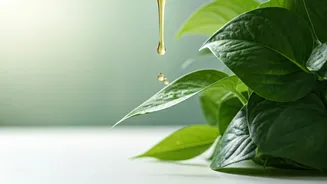
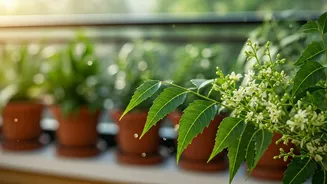
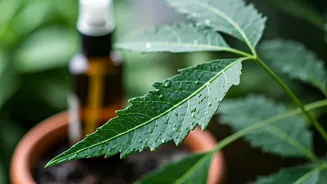
Neem oil is a naturally occurring pesticide extracted from the seeds of the neem tree (Azadirachta indica), a plant revered in India for centuries for its medicinal and agricultural properties. This isn't some new-age chemical concoction; it's a time-tested
solution rooted in nature. The key to its power lies in a compound called azadirachtin, along with other related substances. Unlike harsh synthetic pesticides that kill indiscriminately, neem oil works in a more nuanced, multi-pronged way. It acts as an antifeedant, making leaves unpalatable to chewing insects. It’s also an insect growth regulator, disrupting the life cycle of pests from larva to adult, and a repellent that simply tells pests to find another place to live and breed.
Your Balcony's Personal Bodyguard
For the typical Indian balcony garden, neem oil is a formidable ally against a host of common invaders. Think of the usual suspects: aphids clustering on new shoots, mealybugs leaving behind their cottony mess, spider mites creating tiny webs on your hibiscus leaves, and the whiteflies that rise in a cloud when you touch a plant. Neem oil helps manage all of them. It’s also effective against fungal diseases like powdery mildew, which often appears as a white, dusty coating on leaves during humid weather. Instead of needing five different bottles for five different problems, a single, properly prepared neem oil spray can act as a preventative measure and a treatment, simplifying your plant care routine significantly.
The Perfect Mix: A How-To Guide
Simply mixing neem oil with water won't work, as oil and water don't mix. You need an emulsifier to create a stable solution that can be sprayed effectively. Here is a simple, reliable recipe:
1. Gather your ingredients: You'll need cold-pressed, 100% pure neem oil (check the label), a mild liquid soap (like a basic dishwashing liquid or Castile soap), and a spray bottle.
2. Create the concentrate: In a small cup, mix 1 teaspoon (5 ml) of neem oil with ½ teaspoon (2.5 ml) of liquid soap. Stir them together until they form a milky, uniform paste.
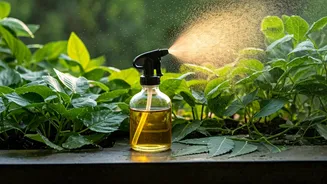
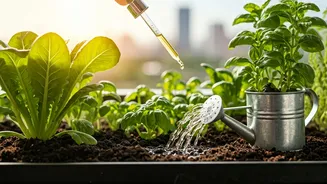
3. Dilute the mixture: Pour this concentrate into a spray bottle and add 1 litre of lukewarm water. Shake vigorously to combine everything. The liquid in your sprayer should look cloudy or milky.
It’s crucial to use this mixture within a few hours, as the neem oil will start to break down and lose its effectiveness. Always make a fresh batch before each application.
Rules of Application
How and when you spray is just as important as what you spray. To use your neem oil solution safely and effectively, follow these golden rules:
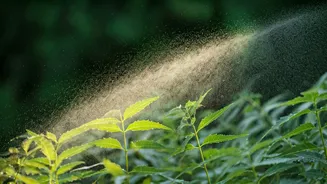
* Evening is best: Apply the spray in the late evening or on an overcast day. Spraying in direct, hot sunlight can cause the oil to heat up and burn the leaves of your plants, a condition known as phytotoxicity.
* Do a patch test: If you’re using neem oil on a plant for the first time, spray just one or two leaves and wait 24-48 hours to check for any adverse reactions like yellowing or spotting.
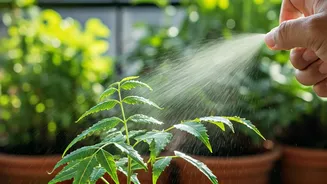
* Be thorough: Pests love to hide. When you spray, ensure you get complete coverage. This means spraying the tops of the leaves, the undersides where pests often lay eggs, and the stems.
* Consistency is key: For an active infestation, you may need to spray every 5-7 days for a few weeks to break the pest life cycle. For prevention, a light spray every 2-3 weeks is usually sufficient.
When Neem Oil Isn't the Answer
While neem oil is fantastic, it's not a magic potion. It's important to have realistic expectations. It is not an instant-kill solution; it works by disrupting an insect's system over time, so you won't see pests drop dead immediately. For very heavy infestations, you may need to physically remove the majority of the pests before starting your neem oil regimen. Furthermore, neem oil won't fix problems that aren't related to pests or fungi. If your plant's leaves are yellowing due to overwatering, underwatering, or a lack of nutrients, neem oil will not help. It is a specific tool for a specific set of problems.