




Dhanushkodi: The Land's End
For a truly unparalleled open-sea experience, nothing beats Dhanushkodi. Located at the south-eastern tip of Pamban Island, this sliver of land is bordered by the Bay of Bengal on one side and the Indian Ocean on the other. The drive itself is breathtaking,
with the sea stretching out on both sides of a narrow road. Once a bustling town, Dhanushkodi was largely abandoned after a devastating cyclone in 1964, leaving behind hauntingly beautiful ruins of a church and railway station that add to its mystical charm. Winter, from October to February, offers pleasant weather, making it the ideal time to visit. The beach here is not for swimming but for witnessing raw, untamed nature. The views are vast and unobstructed, offering a profound sense of solitude as you stand at the edge of the subcontinent.
Kanyakumari: The Confluence of Three Seas
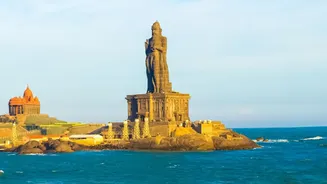
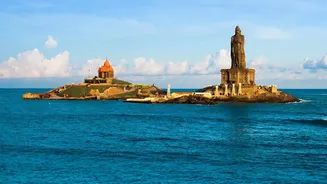
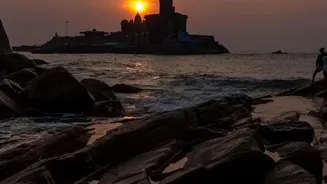
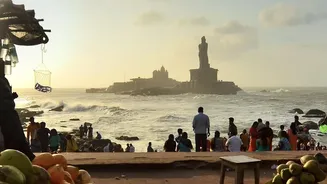
While famous, Kanyakumari offers an 'open sea view' unlike any other. It is the southernmost tip of mainland India, where the Arabian Sea, Bay of Bengal, and the Indian Ocean converge. The beach itself is rocky and pebbled rather than sandy, but the spectacle is world-class. Winter is the perfect season to visit, offering clear skies for the main events: watching the sunrise and sunset over the water. From this vantage point, you can also see the iconic Vivekananda Rock Memorial and the colossal Thiruvalluvar Statue rising from the sea. The unique geography gives you a panoramic vista that feels infinite. For a quieter experience, walk a little away from the main viewing points to find a peaceful spot along the clean, less-crowded stretches of the shore.
Tharangambadi: The Historic Danish Shore
Once known as Tranquebar, or 'the land of the singing waves', Tharangambadi offers a unique blend of history and coastal serenity. This quiet town was a Danish colony from 1620 to 1845, and its past is visible everywhere. The star attraction is the formidable Dansborg Fort, which stands right on the beach, offering stunning views of the Bay of Bengal. The beach is uncrowded and clean, protected by a long sea wall that makes for a perfect sunrise walk. The winter months, from December to February, are crisp and cool, ideal for exploring the town's heritage streets and relaxing by the sea. Partially submerged nearby is the 14th-century Masilamaninathar Temple, a testament to the coast's long history and the power of the sea.
Muttom Beach: The Rocky Retreat
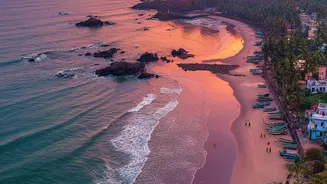
If your idea of an open view involves dramatic, rugged landscapes, Muttom Beach in the Kanyakumari district is your destination. Located in a quiet fishing village, this beach is defined by huge, majestic rocks that jut out into the sea. It’s a photographer’s paradise, especially during sunrise and sunset. While swimming is not advised due to the powerful waves and rocky terrain, the scenery is spectacular. A well-maintained park with walkways and seating makes it a comfortable spot for families to enjoy the panoramic views. The beach is less commercialised than many others, providing a peaceful atmosphere to simply sit and watch the tumultuous waves crash against the ancient rock formations. The best time to visit for pleasant weather is from October to March.
Covelong (Kovalam): The Surfer's Horizon
While increasingly known as a surfing hub, Covelong Beach, or Kovalam, still retains pockets of tranquility with beautiful, open vistas. Located about 40 kilometres south of Chennai, this fishing village offers a lively yet relaxed atmosphere. The beach is famous for its consistent, gentle waves, making it a premier destination for surf schools. Even if you're not riding the waves, the sight of surfers against the wide expanse of the Bay of Bengal is a unique spectacle. The best weather is from November to February, when the humidity is low and the days are warm. For the most open views, head to the 'Point' where the surfers congregate or simply stroll along the long stretch of sand, watching the colourful fishing boats bobbing on the horizon.