




The silent threat of space weather just got faster. While we often think of solar storms as distant events with days of warning, new findings show some disturbances can strike Earth almost instantly, posing a new level of risk to our daily lives.
More Than Just Northern Lights
When
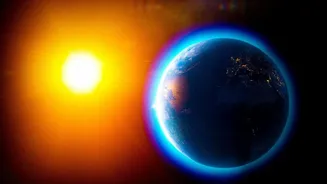
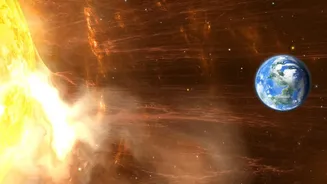
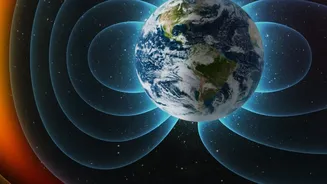
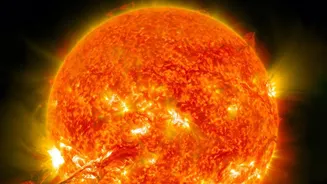
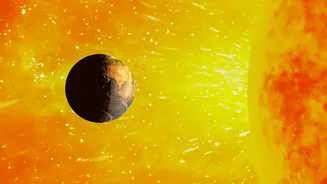
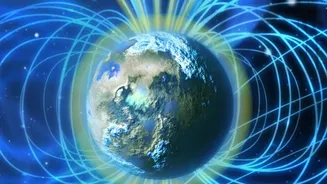
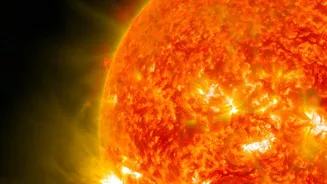
we hear 'space weather', most of us picture the spectacular aurora borealis. But its effects are far more profound and woven into the fabric of our modern world. Space weather refers to the ever-changing conditions in space, driven by the Sun. Our star constantly emits a stream of charged particles called the solar wind. Sometimes, it erupts violently, hurling massive clouds of plasma (Coronal Mass Ejections or CMEs) or intense bursts of radiation (solar flares) into space. When these events are aimed at Earth, they interact with our planet's magnetic field, or magnetosphere, creating geomagnetic storms. These are not storms in the earthly sense, but they can induce very real and damaging effects on the ground and in orbit.
The Days We Thought We Had
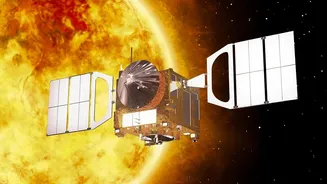
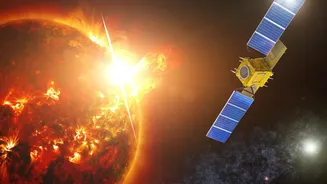
For decades, our defense against the worst of space weather has been built on time. Large CMEs, which cause the most powerful geomagnetic storms, are relatively slow. Observatories like NASA's Solar Dynamics Observatory can spot them leaving the Sun, giving us a crucial warning period of one to four days before they reach Earth. This lead time allows operators of critical infrastructure—power grids, satellite networks, and aviation systems—to take protective measures. They can re-route power, put satellites into a safe mode, and divert flights from polar routes where radiation is higher. This system has worked well for predictable, large-scale events, creating a buffer between us and the Sun's fury.
The Game-Changer: Arrival in Minutes
Recent research has uncovered a much faster and more unpredictable threat. While major CMEs take days, other types of solar events and their terrestrial impacts can be almost instantaneous. For example, intense radiation from a solar flare travels at the speed of light, reaching Earth in just over eight minutes, capable of causing immediate radio blackouts. More recently, scientists studying the intricate dance between the solar wind and our magnetosphere have found that certain sudden releases of energy, known as substorms, can trigger magnetic disturbances on the ground within minutes. These events don't rely on a massive cloud travelling from the Sun; instead, they are caused by a rapid reconfiguration of Earth's own magnetic environment, tens of thousands of kilometres away. These findings show that the impact of a space weather event can begin at lower latitudes and spread poleward in just 20 to 30 minutes, with effects varying dramatically over short distances on the ground.
Why This Matters for India's Digital Lifeline
This drastically shortened warning time poses a significant challenge for a digitally dependent nation like India. Our economy relies on a fragile web of interconnected technologies vulnerable to space weather. Geomagnetic disturbances can induce destructive electrical currents in long conductors like power lines, potentially overloading transformers and causing widespread blackouts, as happened in Quebec in 1989. The accuracy of our navigation systems, from ISRO's NavIC to the GPS in every smartphone, can be compromised as solar events disrupt their signals. This affects everything from ride-hailing apps and food delivery to precision agriculture and logistics. Satellite communications, which underpin television broadcasts, banking transactions, and remote connectivity, are also at risk of interference or even permanent damage. With only minutes of warning, the ability to manually safeguard these systems becomes nearly impossible.
Racing for a Faster Defence
The revelation that some geomagnetic disturbances arrive with such little notice forces a fundamental rethink of our preparedness strategies. The focus must now shift from long-term forecasting to rapid, automated response. This includes developing more sophisticated AI models that can predict solar activity before it even happens by detecting subtle changes on the Sun's surface. It also means engineering 'smarter' power grids that can automatically detect and isolate geomagnetically induced currents to prevent cascading failures. For satellite operators, it highlights the need for more resilient hardware and autonomous safety protocols that don't rely on commands from a ground station that may only receive a warning when it's already too late. This new research is not a cause for alarm, but a critical call to action to build a more robust technological society.