




Why Bodyweight Training Works
Using your own body as resistance is a powerful and convenient way to exercise. It's an approach that builds functional strength, improves balance, and helps with everyday movements like lifting or climbing stairs. Because you don't need any special gear,
you can do these workouts anywhere, from your living room to a hotel room, making it easier to stay consistent. This type of training is also perfect for beginners, as you can easily modify exercises to match your fitness level by adjusting your pace or position.
The Foundational Squat
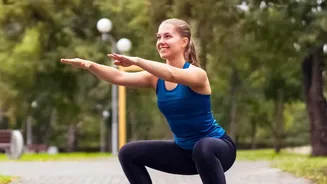
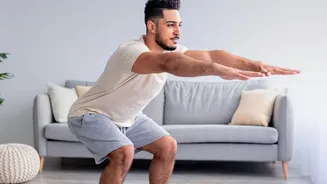
The squat is a powerhouse exercise that primarily targets your legs and glutes. To perform a bodyweight squat correctly, stand with your feet slightly wider than your hips and your toes pointing slightly outward. Keeping your chest up and your core engaged, lower your body as if you're about to sit in a chair. Aim to get your thighs parallel to the floor, ensuring your knees track over your ankles but not past your toes. Push through your heels to return to the starting position. Breathe in as you lower and out as you rise.
The Upper-Body Essential: Push-Up
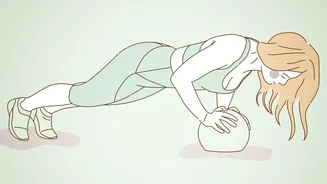
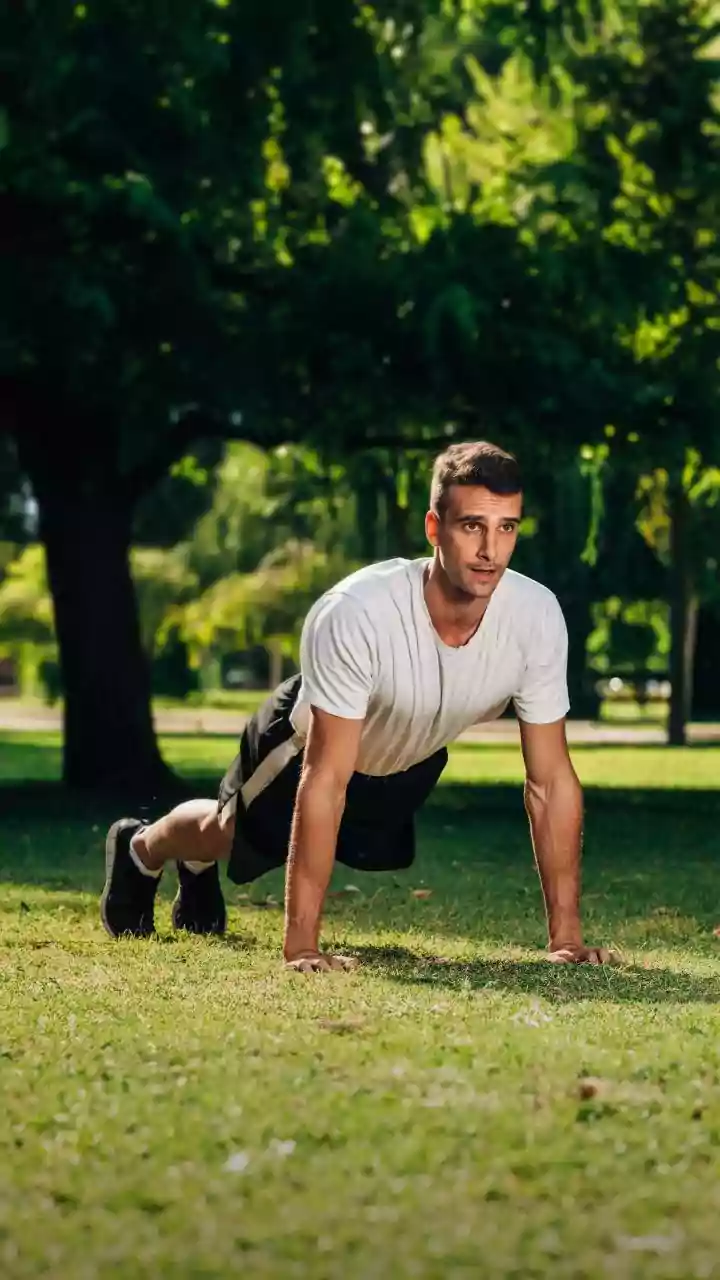
Push-ups are one of the most effective bodyweight exercises for strengthening the chest, shoulders, and triceps. Start in a high plank position with your hands directly under your shoulders. Lower your body until your chest is just above the floor, keeping your elbows at a 45-degree angle to your body. Your body should form a straight line from your head to your heels. If a full push-up is too challenging, you can modify it by placing your knees on the ground. This variation reduces the weight you have to lift while still building upper-body strength.
The Balancing Act: Lunge
Lunges are excellent for working the muscles in your legs and improving your balance. Start by standing with your feet together. Take a large step forward with one foot and lower your hips until both knees are bent at a 90-degree angle. Your front knee should be directly above your ankle, and your back knee should hover just above the ground. Push off your front foot to return to the starting position, and then repeat on the other side. Keeping your core engaged will help you maintain stability throughout the movement.
The Core-Strengthening Plank
The plank is a static exercise that does wonders for your core strength, which is vital for posture and stability. To perform a plank, position yourself as if you're about to do a push-up, but rest on your forearms instead of your hands. Your body should form a straight, rigid line from your head to your heels. Engage your abdominal muscles and glutes, and be careful not to let your hips sag or rise too high. Hold this position for as long as you can maintain good form, starting with 20-30 seconds and gradually increasing the time as you get stronger.
Putting It All Together: Your Weekly Routine
Consistency is more important than intensity when you're starting out. A simple way to structure your workouts is to perform each exercise for a set number of repetitions or a set amount of time. A good starting point for a beginner is to aim for 2-3 sets of 10-12 repetitions for each movement (like squats and lunges) and holding a plank for 30 seconds. You can combine these exercises into a full-body circuit. Try performing this routine three times a week on non-consecutive days to give your muscles time to recover and grow. As the exercises become easier, you can increase the number of reps, sets, or the speed at which you perform them to continue challenging your body.