
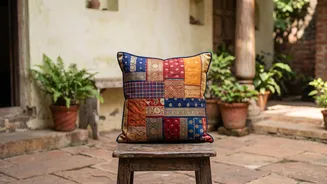
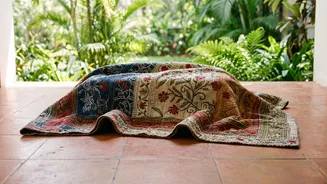
In India, the philosophy of 'nothing goes to waste' is an age-old tradition. Long before upcycling became a global trend, Indian households were giving old textiles a new life, transforming them into objects of beauty and utility.
Kantha: The Running Stitch of Bengal
Originating from Bengal,
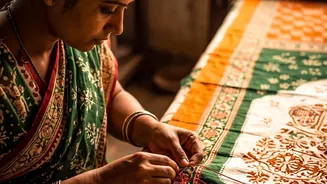
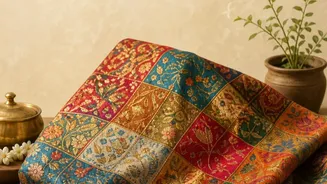
Kantha is a testament to the art of thrift and creativity. The word 'Kantha' is believed to be derived from the Sanskrit word for rags, 'kontha'. This craft was born out of necessity, where rural women would layer worn-out cotton saris and dhotis, binding them together with a simple running stitch. The thread itself was often pulled from the colourful borders of old saris, making it a true exercise in resourcefulness. This technique transforms soft, aged fabric into quilts, blankets, or wraps for newborns. What makes Kantha special is not just its recycling aspect, but the stories and emotions stitched into each piece, often depicting scenes from daily life, folklore, and nature.
Godhadi: The Layered Comfort of Maharashtra
Godhadi is the Maharashtrian art of creating warm, multi-layered quilts from old clothes. The term comes from the Marathi words for 'layer' and 'mattress'. It is a craft deeply rooted in community and family. Women traditionally gather during the summer afternoons, layering pieces of old saris and other garments and hand-stitching them together. The process is slow and meticulous, often taking months to complete. A Godhadi is more than just a blanket; it is a repository of memories, with each patch of fabric telling a story of its previous life. These quilts are made purely for functional and personal use, offering protection from the elements and symbolizing a woman's love for her family.
Sujani: The Narrative Quilts of Bihar
Sujani, or Sujini, embroidery from Bihar is another beautiful example of upcycling born from practicality. The name itself combines 'su' (easy) and 'jani' (birth), as the craft was traditionally used to make soft quilts for newborn babies by stitching together layers of old dhotis and saris. Over time, the simple running stitches used to hold the layers together evolved into intricate narrative embroidery. Women would stitch motifs depicting their hopes, dreams, and stories of village life. The designs often include symbols of life-giving forces like the sun and clouds, as well as mythical figures to ward off evil. Recognised with a Geographical Indication (GI) tag, Sujani is a powerful form of storytelling through thread.
Kawandi: The Patchwork of the Siddi Community
Kawandi is a unique quilting style practiced by the Siddi community in Karnataka. The Siddis, of East African descent, have blended their cultural heritage with Indian textile traditions to create these vibrant quilts. Unlike other quilting methods, Kawandi are made using an appliqué technique, where scraps of used clothing are arranged in geometric patterns and sewn onto a backing, often made from old saris. The stitching itself is distinctive, with wide stitches of white thread creating a rhythmic pattern. The corners are finished with small triangular patches called 'phula' or flowers. Traditionally made by women for their families, these quilts serve as mattresses, covers, and swaddles, each a unique expression of the maker's skill.