



Beyond the Monsoon: A New Kind of Threat
For states like Bihar and Uttar Pradesh, the annual monsoon brings a predictable flood risk from rivers originating in Nepal. However, experts are now sounding the alarm about a different kind of deluge: one that can arrive with little to no warning,
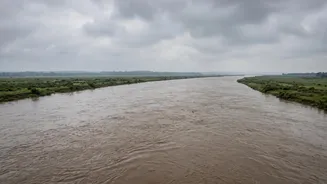
independent of rainfall. Recent flash floods in Nepal's Rasuwa district on August 26, 2026, which killed over 160 people and left hundreds missing, highlighted this very danger. The incident triggered high alerts in downstream Indian districts as authorities scrambled to respond to a surge in the Gandak river, known as the Narayani in Nepal. The cause wasn't heavy rain, but a suspected glacial event high in the mountains, a scenario that is becoming alarmingly more frequent.
The Menace of Glacial Lake Outburst Floods (GLOFs)
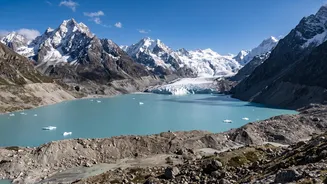
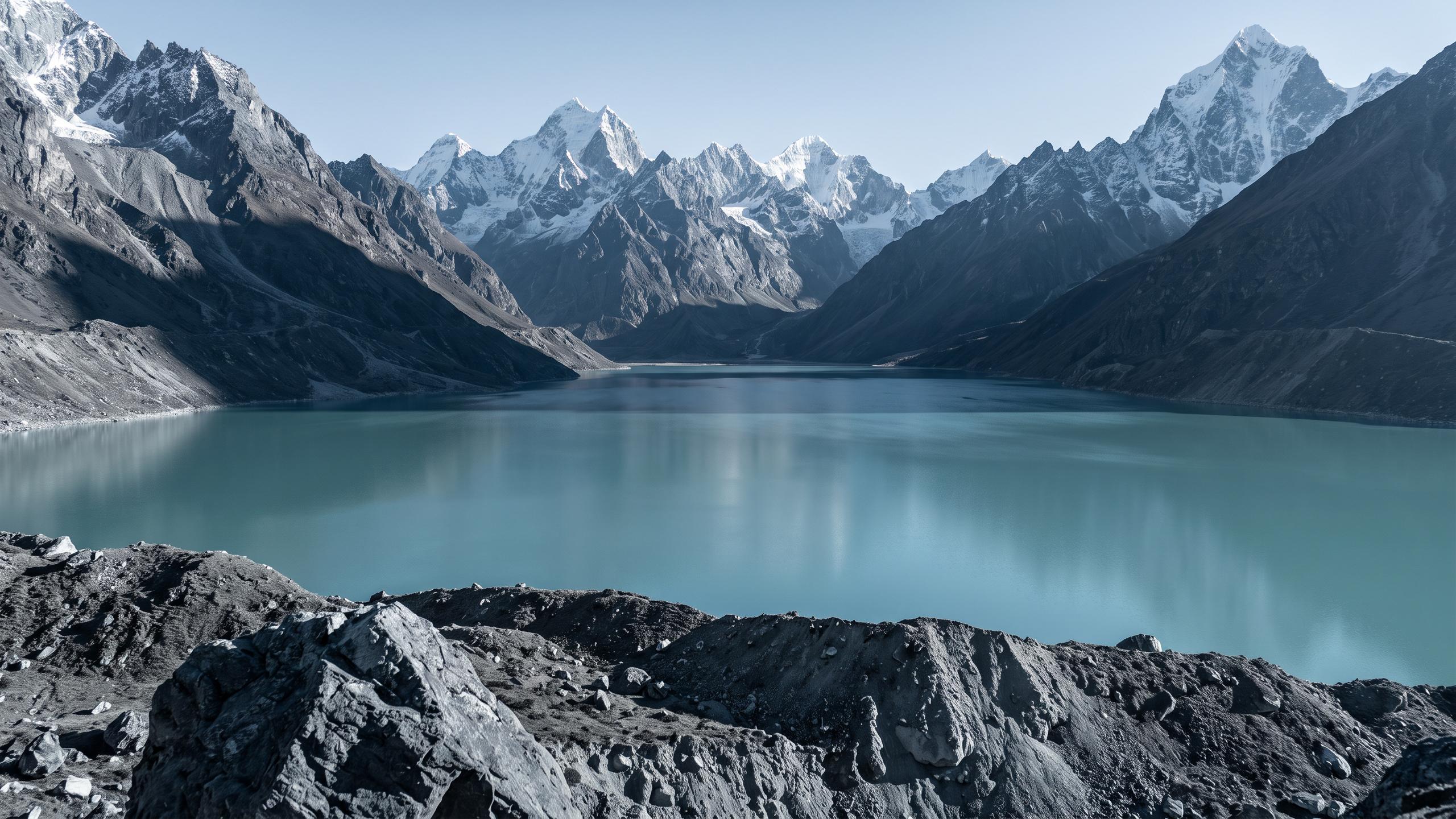
The primary cause for this heightened vigilance is a phenomenon known as a Glacial Lake Outburst Flood, or GLOF. As climate change accelerates the melting of Himalayan glaciers, vast quantities of meltwater are collecting in high-altitude lakes. These lakes are often dammed by unstable walls of rock and debris (moraines) left behind by retreating glaciers. When this natural dam fails—due to an avalanche, an earthquake, or even just the immense pressure of the growing lake—it releases a devastating wall of water, ice, and debris downstream. These events are not like typical floods; they are violent, fast-moving torrents that can destroy bridges, dams, and entire villages in minutes.
A Himalayan Climate Change Story
The science is clear: the Himalayas are warming at an alarming rate, causing glaciers to retreat and glacial lakes to swell. According to the International Centre for Integrated Mountain Development (ICIMOD), there are thousands of glacial lakes across the Hindu Kush Himalaya region, with many expanding rapidly. Scientific assessments have identified at least 47 potentially dangerous glacial lakes that threaten Nepal's river systems, 25 of which are transboundary lakes located in Tibet, at the headwaters of rivers that flow into Nepal and then India. This creates a chain of risk that starts on a remote mountaintop and ends in the densely populated plains of India.
The Cross-Border Connection to India
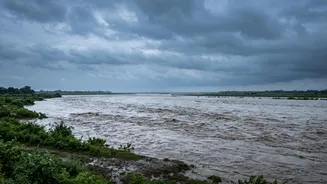
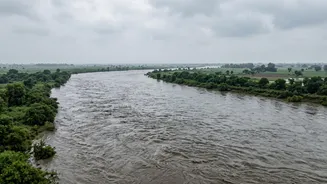
Rivers don't recognize international borders. A GLOF originating in Nepal or Tibet can have catastrophic consequences for India. The recent surge in the Bhote Koshi-Trishuli river system in Nepal directly threatened the Gandak river basin in Bihar and Uttar Pradesh. Authorities in districts like West Champaran, East Champaran, Muzaffarpur, Maharajganj, and Kushinagar were put on high alert, opening barrage gates and preparing for evacuations. This incident serves as a stark reminder of India's vulnerability. The Kosi, Gandak, and Ghaghara river systems all carry this transboundary risk, making close monitoring and information sharing with Nepal not just a diplomatic courtesy, but a life-saving necessity.
The Race for Early Warning
The sudden nature of GLOFs makes them incredibly difficult to predict. Unlike rain-induced floods, which build over hours or days, a GLOF can strike with terrifying speed. This is why experts are pushing for enhanced monitoring using satellite imagery, ground sensors, and real-time data analysis to watch for changes in these dangerous lakes. Efforts are underway to establish better cross-border early warning systems between Nepal and India, so that any upstream event can be communicated downstream instantly. The August 2026 flood, where water levels in the Trishuli rose by nine meters in just 30 minutes, underscores the critical need for a system that can provide warnings in minutes, not hours.