





The Tyranny of the Digital Calendar
Before we talk about solutions, let’s diagnose the problem. Your digital calendar, once a simple tool for noting appointments, has become a source of immense cognitive load. The constant back-and-forth of finding a time that works for five people across
three time zones, the dreaded 'Can you do 30 minutes on Tuesday?' email, and the phenomenon of 'time confetti'—those tiny, useless 15-minute gaps between meetings—all contribute to a specific kind of exhaustion. This isn't just about being busy; it's about the mental energy spent simply *managing* the being busy. This scheduling fatigue is a key driver of burnout in today's global, hybrid office.
Enter the AI-Powered Scheduler
This is where AI calendar assistants enter the scene. While the headline’s claim of 'completely erasing' fatigue might be an overstatement, the technology is a significant leap forward from passive calendar apps. Tools like Reclaim.ai, Clockwise, and Motion aren’t just digital secretaries that book slots you tell them to. They are proactive, intelligent agents that manage your time based on your priorities. Think of them less as a booking tool and more as a time management strategist working 24/7 in the background. Their goal isn't just to fill your calendar, but to build a smarter, more sustainable schedule for you.
How It Actually Works
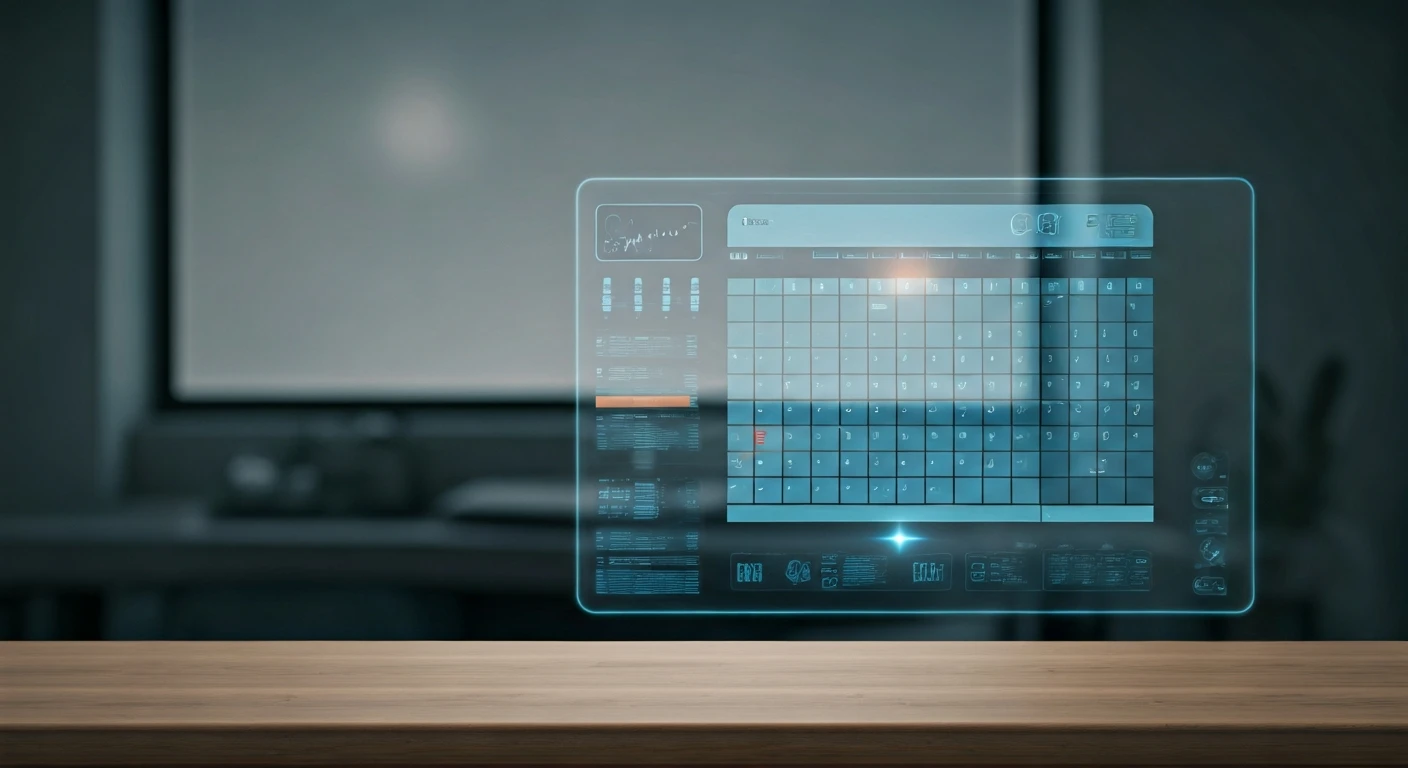
The magic of these tools lies in their ability to understand context. You tell the AI your priorities: 'This report is high priority and needs 4 hours of deep work before Friday', or 'I need to exercise three times a week'. The assistant then scans your calendar, finds optimal, flexible slots for these tasks, and blocks them out. If an urgent meeting request comes in, the AI can automatically 'defend' your focus time by suggesting alternative slots, or intelligently reschedule a lower-priority task to make room. It negotiates on your behalf, turning your calendar from a rigid grid into a fluid, responsive system.
The Real Superpower: Reclaiming Deep Work
Perhaps the most powerful function of an AI calendar assistant is its ability to automatically carve out and protect 'focus time'. In a world of constant pings and interruptions, deep work—the ability to concentrate on a cognitively demanding task without distraction—is the rarest commodity. By automatically blocking two- or three-hour chunks of uninterrupted time, these tools make deep work the default, not the exception. The AI finds the best windows for this, treating your concentration as a critical resource to be managed, just like a meeting. This single feature goes a long way in reducing the feeling of being busy but unproductive.
Beyond the Individual: The Team Advantage
While incredibly useful for individuals, the true potential of these platforms is unlocked at the team level. When everyone on a team uses an AI assistant, the dreaded scheduling chain is broken forever. The AI can see everyone's preferences, priorities, and protected focus times, and instantly find the optimal slot for a group meeting that inconveniences the fewest people. For global teams in India working with counterparts in the US or Europe, this is a game-changer. It eliminates the tedious timezone math and the endless 'what time works for you?' polls, reducing friction and speeding up collaboration.
Reality Check: A Tool, Not a Cure
So, do these assistants 'completely erase' fatigue? No. No software can solve a toxic work culture that glorifies overwork, or erase the stress of an impossible deadline. Fatigue is a complex issue rooted in culture, workload, and personal well-being. However, what these AI tools do is eliminate a significant and unnecessary source of stress: the administrative drudgery of time management. By automating the negotiation and defense of your time, they free up your most valuable resource—your mental energy—to be spent on the work that actually matters. They don't erase fatigue, but they fight the cognitive load that causes it.