



From Data Messenger to Onboard Analyst
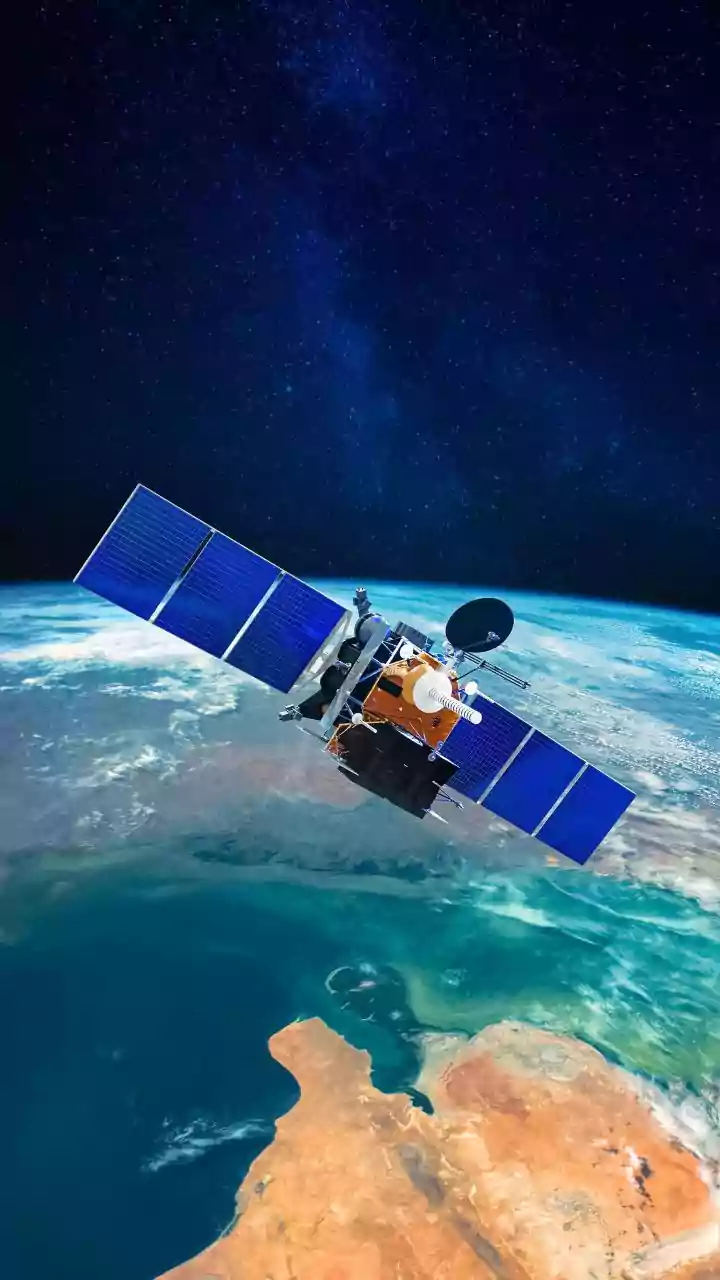
Traditionally, a satellite’s job is to collect enormous amounts of data—images, signals, and measurements—and beam it all back to Earth. Here, powerful computers and human analysts sift through everything to find what’s important. This process works,
but it’s slow and expensive, requiring massive bandwidth to transmit raw data, much of which might be useless, like images of heavy cloud cover. Experts at the Indian Space Research Organisation (ISRO) recently confirmed they are moving toward a new model powered by AI. The goal is to embed AI and machine learning capabilities directly onto the satellites themselves. This concept, known as on-board or edge computing, allows the satellite to analyze data the moment it's collected. Instead of sending terabytes of unprocessed information, the satellite can make its own judgment calls: filtering out irrelevant images, identifying key events, and sending back only the most critical, pre-analyzed insights.
Why 'Smarter' Satellites Matter
This shift from a simple data collector to an intelligent analyst in orbit has profound implications. For one, it dramatically speeds up response times. During a natural disaster like a flood or wildfire, an AI-equipped satellite could autonomously identify the most affected areas and transmit actionable maps to emergency crews in near real-time, bypassing hours of ground-based processing. ISRO officials note that this capability would be instrumental in governance, policymaking, and more effective disaster management. It also makes satellite operations more efficient. By processing data in space, ISRO can reduce its reliance on costly ground station infrastructure and data transmission bandwidth. In deep space missions, where communication delays can stretch for minutes or hours, autonomy isn't just a bonus—it's a necessity. An AI could independently navigate hazards, conduct experiments, and decide what data is worth collecting, making missions more resilient and scientifically productive.
From Agriculture to National Security
The applications for these intelligent satellites span a wide range of sectors vital to India’s economy and security. The country already uses its vast constellation of Earth observation satellites to monitor agriculture, water resources, and urban development. AI can supercharge these efforts by automatically detecting patterns like crop disease, illegal deforestation, or the effects of climate change. There are also significant national security advantages. India’s Defence Research and Development Organisation (DRDO) has already developed an AI-powered system called 'Prajna' to analyze satellite imagery for security agencies. This technology helps in monitoring sensitive border regions and tracking suspicious activities. Future AI-enabled satellites will enhance these capabilities, providing a more integrated and responsive security apparatus without constant human oversight.
A New Frontier for Space Agencies
India’s push into satellite AI is part of a broader global trend. NASA, for example, is already experimenting with similar technology. Its 'Dynamic Targeting' system allows a satellite to decide for itself whether to take a picture based on conditions on the ground, such as spotting a fire or recognizing clear skies. This move toward autonomous systems represents the next major evolution in space technology. For decades, the model has been one of remote control, with spacecraft acting as puppets for their masters on Earth. Now, agencies like ISRO and NASA are working to cut the strings, creating a future fleet of federated, intelligent assets that can collaborate and respond to events on their own. While challenges related to power consumption and the harsh radiation of space remain, the direction is clear: the future of space exploration and observation is not just about going further, but about getting smarter.