


The High Cost of Going Electric
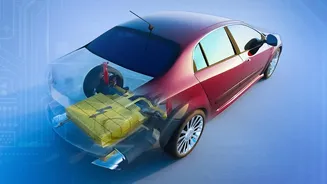
For years, the biggest hurdle to widespread electric vehicle adoption in India has been the price tag. A significant portion of an EV's cost, often between 40% to 60%, is its battery pack. The dominant technology, lithium-ion, relies on materials like
lithium, cobalt, and nickel. The prices of these materials are volatile, and their supply chains are often concentrated in a few countries, creating geopolitical and economic risks for a nation like India that imports most of its lithium. This dependency has kept the cost of entry-level EVs stubbornly high, putting them out of reach for many prospective buyers.
Enter Sodium-Ion: A Cheaper Alternative
Sodium-ion batteries operate on a principle similar to their lithium-ion cousins, shuttling ions between a cathode and an anode to store and release energy. The crucial difference lies in the core element: sodium. Sodium is the sixth most abundant element on Earth, readily and cheaply available everywhere, from sea salt to mineral deposits. This starkly contrasts with the relative scarcity of lithium. By swapping out the expensive, supply-constrained materials for something far more common and affordable, sodium-ion technology presents a fundamental shift in battery economics.
Breaking Down the Cost Savings
The cost advantage of sodium-ion batteries is multi-faceted. The raw material itself, sodium carbonate (soda ash), is a fraction of the cost of battery-grade lithium carbonate. This alone can make the raw material costs for a sodium-ion cell 15-40% lower than for a comparable lithium-ion battery. Furthermore, some sodium-ion designs can replace the copper components used in lithium-ion batteries with cheaper and more sustainable aluminum, adding to the savings. Crucially, this technology doesn't require a complete manufacturing overhaul. Sodium-ion batteries can be produced on existing lithium-ion production lines with only minor modifications, lowering the barrier to entry for manufacturers and accelerating the path to mass production.
Performance, Safety, and Trade-Offs
Of course, cost isn't everything. The primary trade-off with current sodium-ion technology is lower energy density. This means that for the same amount of energy storage, a sodium-ion battery is typically bulkier and heavier than a lithium-ion one. While this makes it less ideal for premium, long-range cars, it's a more acceptable compromise for the two- and three-wheeler segments that dominate India's EV market, as well as for entry-level city cars where an ultra-long range is not a priority. On the plus side, sodium-ion batteries offer significant safety advantages, with better thermal stability and a lower risk of fire. They also perform better in extreme temperatures, a key benefit for India's diverse climate, and have shown potential for very fast charging and long cycle lives of over 3,000 charges.
India's Push for Sodium-Ion Technology
The strategic advantages of sodium-ion batteries align perfectly with India's 'Make in India' initiative and its goals for energy security. Reduced dependence on imported lithium would be a major geopolitical and economic victory. Recognizing this, a number of Indian companies are racing to develop and commercialize the technology. Firms like Reliance New Energy (through its acquisition of Faradion), KPIT Technologies, Sodion Energy, and Indi Energy are actively developing their own sodium-ion solutions. Hyderabad-based Sodion Energy has already launched a commercial range of sodium-ion batteries, while Pune's KPIT Technologies has unveiled its own proprietary technology developed over eight years. This local R&D and manufacturing push is vital to creating a domestic supply chain and capturing the benefits of this next-generation technology.