

The Persistent Problem of Martian Dust
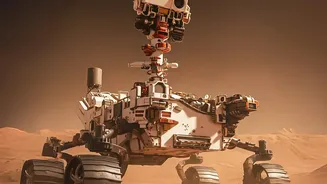
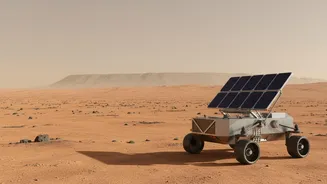
Mars is a world defined by its dust. This fine, reddish powder gets everywhere, kicked up by winds into planet-circling storms or swirling in localized dust devils. For NASA's solar-powered explorers, this dust is a persistent threat. As it settles, it blankets
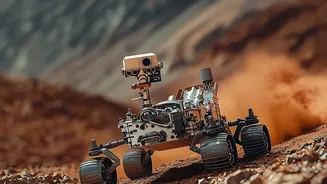
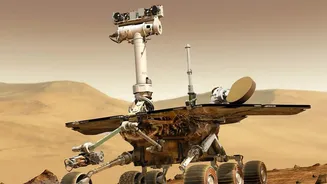
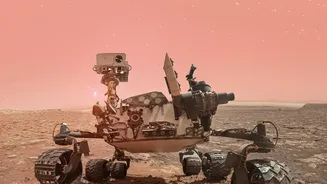
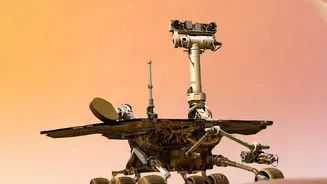
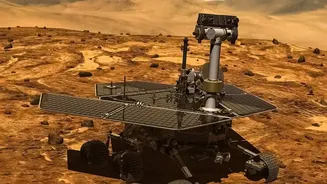
the solar panels that provide life-giving energy, slowly starving the machine. This isn't a theoretical problem; it has ended missions. NASA's InSight lander, which studied Mars quakes for four years, gradually lost power as its panels became caked in dust, sending its final message in late 2022. Similarly, the long-lived Opportunity rover, designed for a 90-day mission that lasted 15 years, finally succumbed after a massive 2018 dust storm blotted out the sun and prevented its batteries from recharging. Unlike their nuclear-powered cousins Curiosity and Perseverance, which are unaffected by dust on their power source, solar-powered missions are in a constant battle against the encroaching grit.
An Eye in the Martian Sky
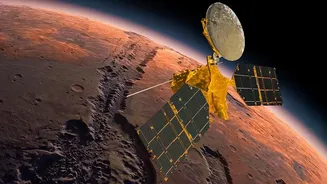
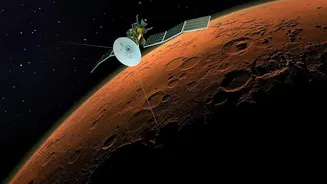
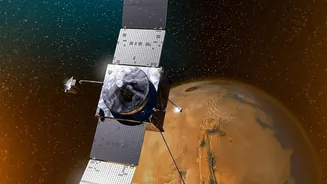
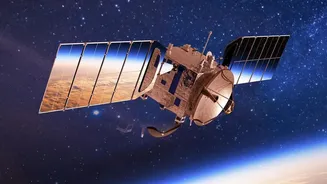
Hundreds of kilometers above the surface, another robot plays a critical role in this saga: the Mars Reconnaissance Orbiter (MRO). Since 2006, MRO has been mapping the Red Planet in stunning detail. One of its key instruments is the High Resolution Imaging Science Experiment, or HiRISE camera, the most powerful camera ever sent to another planet. While its primary job is geology, HiRISE has become an essential weather-watcher. It can spot the tell-tale tracks of dust devils scarring the Martian landscape and even capture breathtaking images of the whirlwinds themselves, which can tower kilometers high. By repeatedly imaging the same areas, scientists can monitor how dust is being moved around, which storms are growing, and where the most active wind corridors are located. This orbital perspective provides invaluable context that a rover on the ground simply cannot get on its own.
A Surprising Savior: The Dust Devil
While large dust storms are mission-killers, their smaller, more chaotic relatives can be saviors. Dust devils are rotating columns of air that form when the ground heats up, creating rising currents. They are a double-edged sword: they contribute to the atmospheric dust, but they can also clean. The very first Mars rovers, Spirit and Opportunity, owed their incredible longevity to what mission scientists call "cleaning events." On multiple occasions, after watching power levels steadily decline for weeks, the team would arrive one morning to find the solar panels mysteriously wiped clean, boosting energy output dramatically. The culprit was a passing dust devil, whose winds were just strong enough to blow the accumulated dust off the arrays, effectively giving the rover a new lease on life. InSight's mission ended largely because it was unlucky; despite detecting thousands of nearby whirlwinds, none passed directly over it to provide a cleaning.
From Observation to Prediction
This is where the orbiter's role becomes crucial for protecting and forecasting a rover's performance. The data from MRO's cameras doesn't just create a photo album of Mars; it builds a comprehensive weather model. By tracking the frequency, location, and paths of dust devils over many years, scientists can create maps of where these cleaning events are most likely to occur. This knowledge helps in multiple ways. Firstly, it can inform the selection of future landing sites for solar-powered missions, steering them toward areas with a higher probability of helpful wind gusts. Secondly, for active rovers, it helps mission planners forecast the vehicle's energy budget. If a rover is in a region known for dust devil activity, they can better anticipate when a power boost might arrive. This allows them to make more strategic decisions about when to conduct energy-intensive science experiments or when to conserve power, ultimately extending the mission's operational life. It’s less about actively shielding the rover and more about providing the intelligence needed to manage its resources effectively.