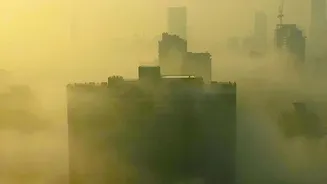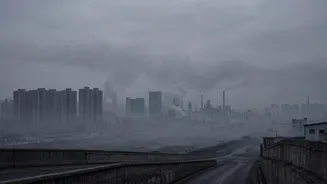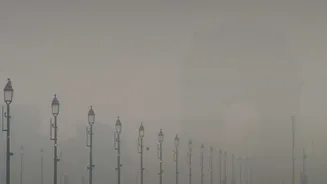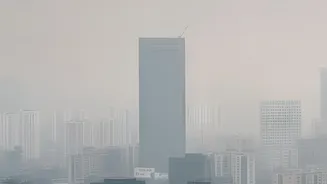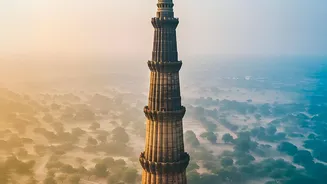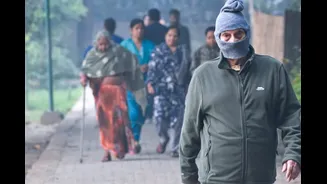





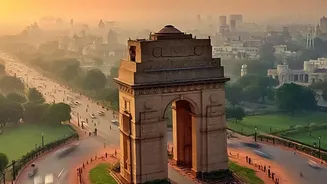


For most, Delhi's air pollution evokes images of a city choked by winter smog. But this is a dangerously incomplete picture. The reality is a year-round crisis that simply changes its form, not its presence, with every turn of the season.
Winter: The Familiar Foe
The winter chapter
of Delhi’s pollution story is grimly familiar. From October to January, the city is enveloped in a toxic haze dominated by fine particulate matter (PM2.5). These microscopic particles, originating from stubble burning in neighbouring states, vehicular emissions, and industrial output, get trapped near the ground. A phenomenon called temperature inversion, where a layer of warm air sits atop cooler, denser air, acts like a lid, preventing pollutants from dispersing. This leads to hazardous Air Quality Index (AQI) levels, forcing school closures and a spike in respiratory emergencies as PM2.5 particles penetrate deep into the lungs and even enter the bloodstream. Studies have shown this annual exposure can cause irreversible lung damage, particularly in children.
Summer: An Invisible Threat
As winter's particulate haze recedes, a new, invisible threat takes its place: ground-level ozone. Unlike PM2.5, ozone is a secondary pollutant, not emitted directly but formed when nitrogen oxides (NOx) and volatile organic compounds (VOCs) from vehicle exhaust and industrial emissions react under intense sunlight and high temperatures. The searing heat of Delhi's summer provides the perfect conditions for this toxic gas to flourish. While less visible than smog, ozone is a powerful lung irritant that can trigger asthma, reduce lung function, and cause chest pain. Recent analyses show ozone levels in Delhi-NCR now frequently and persistently exceed national standards throughout the summer, making it a serious public health crisis that is often overlooked.
Monsoon: A Deceptive Respite
The monsoon rains bring a welcome, though misleading, sense of relief. While rainfall does wash a significant amount of particulate matter from the air, the clean-up is temporary and incomplete. Studies show that even with heavy showers, Delhi's baseline pollution remains high, and PM2.5 levels can rebound to pre-rain concentrations within 48 hours. Furthermore, the monsoon introduces its own set of problems. High humidity can contribute to the formation of secondary pollutants, and on sunny days between rainy spells, ozone levels can still spike. The damp conditions also lead to a surge in airborne mould and fungal spores, which are major triggers for allergies and asthma attacks.
Post-Monsoon: The Downward Spiral
The period from late September to October marks a rapid and ominous transition. As the monsoon withdraws, the air-scrubbing rains cease. Wind patterns shift to northwesterly, carrying the first plumes of smoke from agricultural stubble burning in Punjab and Haryana towards the capital. Simultaneously, falling temperatures and decreasing wind speeds set the stage for temperature inversions to return. This convergence of factors causes a swift deterioration in air quality, with PM2.5 levels beginning their steep climb back towards the 'Severe' category. This season acts as the gateway to the winter pollution peak, completing the year-long cycle of toxic air.
The Year-Long Health Toll
Thinking of Delhi's pollution as a seasonal issue masks the cumulative damage from constant, year-round exposure. The body never truly gets a break. From winter's particulate assault to summer's ozone irritation and monsoon's mould spores, the lungs are perpetually under siege. This chronic exposure is linked not just to acute issues like coughing and breathlessness but to a frightening array of longterm health problems. These include reduced lung function, heart disease, stroke, and even cognitive impacts. Research suggests that living in Delhi significantly reduces life expectancy, a direct consequence of breathing air that is rarely, if ever, truly safe.