




An Icon's Slow Descent
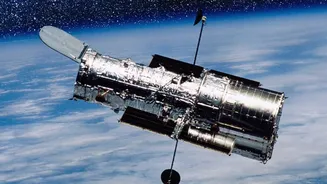
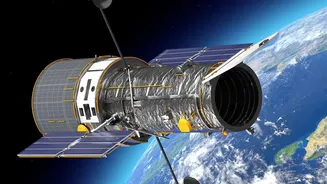
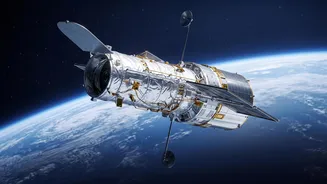
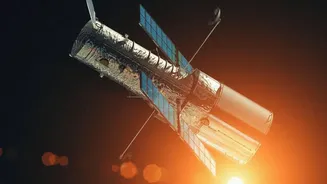
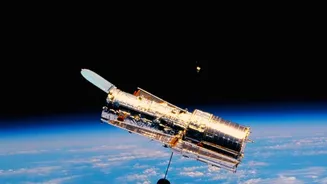
The Hubble Space Telescope is arguably the most important scientific instrument ever launched. Since its deployment in 1990, it has fundamentally changed our understanding of the universe, delivering breathtaking images of distant galaxies, nebulae, and planets.
It has become a cultural icon, a symbol of human curiosity and ingenuity. However, this priceless asset is facing a slow, invisible threat: orbital decay. Like any object in low-Earth orbit, Hubble is subject to minuscule amounts of atmospheric drag. Over the years, this friction has been gradually pulling the telescope closer to Earth, causing it to lose altitude. Launched at a height of over 600 kilometres, it now orbits at around 535 kilometres and continues to fall, albeit very slowly. Without intervention, it is projected to re-enter and burn up in Earth's atmosphere sometime in the mid-2030s.
The Challenge of a Reboost
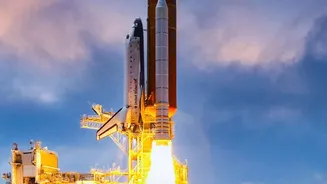
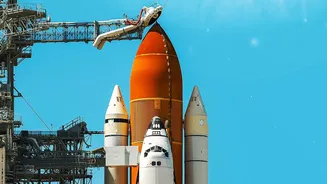
In the past, extending Hubble's life was a task for NASA's Space Shuttle fleet. Astronauts visited the telescope five times between 1993 and 2009, performing critical repairs, upgrading instruments, and using the shuttle's engines to provide a much-needed push back into a higher, more stable orbit. These servicing missions are why Hubble has remained operational for so long. But with the Space Shuttle program retired in 2011, NASA no longer has a ready-made vehicle to perform such a manoeuvre. Building a new, custom robotic mission just for a reboost would be incredibly expensive, likely costing hundreds of millions, if not billions, of dollars — money that is difficult to secure in a budget focused on new flagships like the James Webb Space Telescope and the Artemis program's return to the Moon.
A New Partnership Model
Faced with this challenge, NASA has opted for a modern solution that reflects the changing landscape of the space industry. Instead of designing a mission itself, the agency issued a formal 'Request for Information', essentially asking the burgeoning commercial space sector: 'What ideas do you have?' This move opens the door for private companies to propose their own concepts, using their own technology and spacecraft, to visit Hubble and give it the boost it needs. This approach leverages the innovation and cost-efficiencies of the private market, potentially saving a national treasure at a fraction of the cost of a traditional government-led mission. It marks a significant shift, treating legacy space hardware not as a liability to be decommissioned, but as an asset to be sustained through commercial services.
The Polaris and SpaceX Proposal
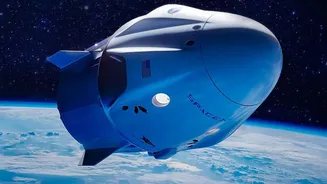
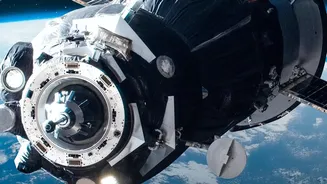
The idea gained significant public attention thanks to a proposal from the Polaris Program, a private spaceflight initiative led by billionaire entrepreneur Jared Isaacman, in partnership with SpaceX. They proposed a mission, potentially at no cost to the US taxpayer, that would use a SpaceX Dragon spacecraft to rendezvous with Hubble. The mission could involve the first ever commercial spacewalk, with astronauts physically attaching a device to the telescope to allow it to be gently pushed into a higher orbit. This plan was born out of a joint study with NASA to determine the feasibility of such a mission. While this is just one of several possibilities NASA is reviewing, it highlights the new capabilities that commercial players bring to the table.
More Than Just a Nudge
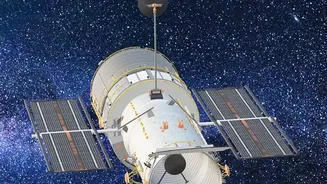
A commercial mission could offer more than just an orbital reboost. While a primary goal is to extend Hubble's operational life by another 15 to 20 years, a servicing mission could also address other issues. The telescope's gyroscopes, which allow it to point with incredible precision, are a known point of failure. A sophisticated mission could potentially service or replace these components, further ensuring the health of the observatory. It would be a demonstration of advanced robotic or human--in--the--loop capabilities for in--orbit servicing, a market that is expected to grow significantly in the coming decades. Proving that a commercial company can safely approach and interact with a high--value satellite like Hubble would be a landmark achievement, paving the way for future satellite life--extension,' repair,' and even recycling missions.