




The 'One-Bag Rule' Is Now Universal
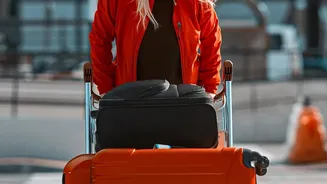
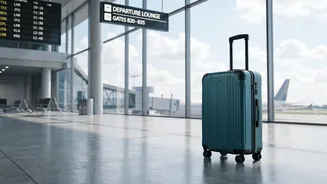
The most significant change affecting Indian travellers isn't a new law, but the strict enforcement of an existing one: the 'one cabin bag' rule. The Bureau of Civil Aviation Security (BCAS) has mandated that passengers are permitted to carry only one primary
piece of hand baggage. This isn't just a guideline anymore; Central Industrial Security Force (CISF) personnel at security checkpoints are actively enforcing it for all domestic and international departures from Indian airports. Previously, many travellers could board with a roller bag, a separate laptop bag, and perhaps a small handbag. That practice is now largely over. Your laptop, purse, and other personal items must now be consolidated into your single allowable cabin bag. If they don't fit, you will likely be asked to check the extra items, often for a significant fee.
Why the Sudden Crackdown?
This renewed focus on baggage limits is primarily driven by a need for efficiency and safety. Indian airports have seen a massive surge in passenger traffic, with domestic carriers flying over 146 million people in just the first 11 months of 2024 alone. This growth led to significant congestion at security checkpoints and slower boarding times, with excess cabin baggage identified as a major culprit. By enforcing the one-bag rule, authorities aim to speed up security screening, reduce clutter in the cabin and aisles, and ensure flights can depart on time. Officials report that since the stricter enforcement began, major airports have been running more smoothly, with a notable drop in cabin-baggage non-compliance.
Decoding the Allowances: Weight and Size
While the 'one-bag' concept is simple, the specifics of weight and size still depend on your airline and class of travel. For most domestic carriers like IndiGo, SpiceJet, and Akasa Air, the economy class cabin bag limit is 7 kg. Air India is slightly more generous for some domestic fares and international routes, allowing 8 kg in economy. Business and First Class passengers typically have a higher allowance, often around 10 kg or 12 kg. The standard dimensions for a cabin bag are roughly 55 cm x 35 cm x 25 cm, but this can vary slightly, with Air India sometimes using a slimmer 20 cm width limit. It is crucial to check your specific airline's rules before you fly, as gate agents are increasingly using weighing scales and baggage sizers at boarding.
The 'Personal Item' Exception
There is some nuance to the one-bag rule. In addition to your main cabin bag, most airlines officially permit one small personal item. This could be a ladies' handbag, a small laptop sleeve, or a camera bag that can fit under the seat in front of you. However, this is where it gets tricky. Some sources indicate this personal item can weigh up to 3 kg. But gate agents have the final say and may still require you to consolidate everything into your main bag if boarding seems congested. To avoid issues, a slim laptop sleeve is less likely to be challenged than a bulky backpack. Relying on this as a guaranteed second bag is a risk.
Smart Packing Strategies for 2026
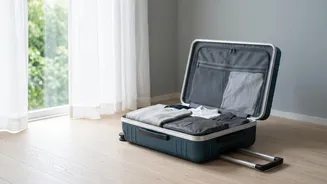
These rules demand a new approach to packing. First, invest in a lightweight cabin bag to maximize what you can carry within the 7 kg limit. Second, be strategic. Wear your heaviest items, like a jacket or boots, on the plane. Third, consolidate electronics. Instead of a separate bag, use a padded compartment within your main suitcase for your laptop. The liquid rule remains unchanged: all liquids, aerosols, and gels must be in containers of 100ml or less and fit within a single, transparent, resealable one-litre bag. Consider solid toiletries like shampoo bars to bypass this rule entirely. Finally, remember that power banks must be carried in your cabin baggage and not in your checked luggage.
What About Exemptions?
Some necessary items do not count against your primary allowance. These typically include a blanket or wrap, a book, or an umbrella. Most importantly, passengers travelling with infants are usually allowed an additional bag for baby food and necessities. Similarly, essential medical equipment like crutches or a collapsible wheelchair is permitted. If you have prescription medication, especially in liquid form over 100ml, it's allowed, but you should carry the prescription to show at security.