







The Rise of the Robotic Resume
For the last couple of years, generative AI tools have felt like a magic bullet for job seekers. The pitch was simple: paste your work history, add a job description, and watch as a perfectly polished, keyword-optimised CV appears in seconds. Facing a competitive
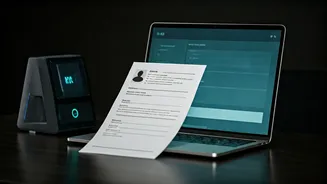
job market, professionals in India and globally embraced these tools. In fact, recent data shows that around half of all job seekers now use AI to help write or improve their resumes. The goal was to save time and, more importantly, to beat the Applicant Tracking Systems (ATS) that many large companies use to filter the deluge of applications, which have more than doubled for open roles in India since 2022.
When 'Polished' Becomes a Problem
The problem is that when everyone uses the same tool, everyone starts to sound the same. Recruiters are now reporting a surge in low-effort, generic applications. These CVs are often filled with confident but hollow phrases like "results-driven professional" and "leveraging cutting-edge technologies" without providing the specific, measurable achievements that actually prove competence. An experienced hiring manager can now spot the tell-tale signs of an unedited AI draft: a perfectly consistent structure, vocabulary that seems slightly off for the candidate's real experience, and a distinct lack of personality. The result is that while an AI-optimised CV might pass the initial ATS filter, it often fails the crucial human review that follows.
The Recruiter's Response
Hiring teams have adapted quickly. A 2026 report found that a significant number of employers are moving away from relying solely on CVs, viewing them as less reliable indicators of actual talent in the age of AI. Many recruiters have updated their interview techniques to probe deeper into the claims made on a resume. They will ask specific follow-up questions about bullet points, and if a candidate can't speak confidently about an achievement their AI ghostwriter invented, it's an immediate red flag. Some candidates have even tried to trick AI screening tools by hiding commands in white text, a tactic that recruiters are now actively looking for and penalising. The consensus among hiring professionals is clear: they don't reject a CV simply because AI was used; they reject it because it feels inauthentic, inflated, or generic.
How to Use AI the Smart Way
This doesn't mean you should abandon AI altogether. When used as an assistant rather than a replacement, it can be a powerful ally. The key is to maintain control and ensure the final product is authentically yours. Start by writing the core of your CV yourself, focusing on your unique accomplishments and career story. Then, use AI for specific, targeted tasks. Ask it to help you rephrase a bullet point for greater impact, check for grammatical errors, or make your language more concise. You can also use AI to analyse a job description and compare it to your CV, helping you identify which of your existing skills and experiences to highlight. This ensures you are tailoring your application based on your real history, not inventing new skills to match keywords.
The Human Touch Still Wins
Ultimately, a CV's purpose is to tell a compelling story about your professional journey. It should communicate not just what you did, but how you did it and the impact you made. AI cannot replicate your personality, your passion, or the specific context behind your achievements. While AI is becoming integral to how companies source and screen candidates, hiring managers consistently state that the final decision remains a human one. They are looking for candidates who can clearly articulate their own value. Your CV is the first step in that conversation. By combining your genuine experience with the polishing power of AI, you can create an application that is both professional and, most importantly, true to you.