


An Icon of Lightness and Flavour
At its heart, Dhokla is a steamed savoury cake made from a fermented batter. The result is a wonderfully porous, airy, and light texture that melts in your mouth. Originating from the state of Gujarat, this dish has travelled far beyond its home, finding
a permanent place on menus and in kitchens across India. Unlike many of its fried counterparts in the world of Indian snacks (we’re looking at you, samosa and kachori), Dhokla’s primary cooking method is steaming. This not only contributes to its signature lightness but also makes it a relatively healthy option, perfect for those who want to indulge without the guilt. It’s the kind of snack that satisfies your cravings for something tangy and savoury but doesn't leave you feeling heavy or lethargic. This delicate balance is precisely why it’s hailed as a masterpiece of culinary engineering.
The Khaman vs. Dhokla Debate
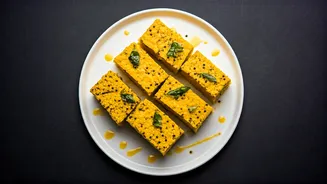
For the uninitiated, the world of Dhokla can be slightly confusing, primarily because of its close cousin, Khaman. While the names are often used interchangeably in restaurants outside Gujarat, they are traditionally distinct dishes. The classic Dhokla (often called Khatta Dhokla) is made from a fermented batter of rice and split lentils like chana dal. It has a whitish or pale-yellow colour, a slightly sour tang from the fermentation, and a denser, more bread-like texture. Khaman, on the other hand, is made purely from gram flour (besan) or soaked chana dal. It’s known for its instant preparation (using Eno or baking soda for aeration), vibrant yellow colour, and incredibly soft, spongy texture that soaks up chutneys and tempering beautifully. Today, what most people across India recognise as 'Dhokla' is technically Khaman. But whether you’re having the traditional version or its more popular cousin, you’re in for a treat.
The Magic is in the Tadka
A plate of plain, steamed Dhokla is pleasant, but what truly elevates it to legendary status is the *tadka*, or tempering, that’s generously poured over it just before serving. This final flourish is non-negotiable and provides a complex layer of flavour and aroma. The process is simple yet transformative. A bit of oil is heated in a small pan, and once hot, mustard seeds are added until they pop and crackle. This is followed by a handful of fresh curry leaves and slivered green chillies, which sizzle and release their incredible fragrance. Sometimes, a pinch of asafoetida (hing) and sesame seeds are also added. This fragrant, sizzling mixture, often with a little sugar and water to create a light syrup, is then evenly drizzled over the cut pieces of Dhokla. The spongy cake absorbs the tempered oil and moisture, creating a perfect harmony of tangy, sweet, spicy, and savoury in every single bite.
A Snack for Every Occasion
The sheer versatility of Dhokla is a huge part of its appeal. It’s a true all-rounder in the Indian culinary landscape. In Gujarati households, it’s a common breakfast item, served warm with a side of green chutney and a cup of chai. It’s also a tiffin-box champion for both kids and adults, as it tastes just as good at room temperature. Having guests over? A platter of freshly made Dhokla is a guaranteed crowd-pleaser, serving as the perfect appetiser before a larger meal. It’s a staple at parties, picnics, and festive gatherings. Its light nature means you can enjoy a few pieces without ruining your appetite. This adaptability has allowed it to seamlessly integrate into daily life, becoming a go-to option when you need something quick, delicious, and satisfying.