

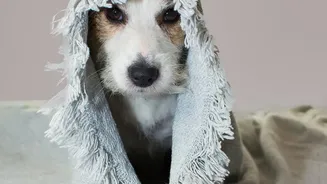

Master the Post-Walk Routine
The most crucial step in monsoon pet care is managing what happens after you come indoors. A non-negotiable post-walk routine can prevent a host of problems. Always have an absorbent microfibre towel ready at the door. The primary goal is to dry your
pet thoroughly, paying special attention to paws, the underbelly, and skin folds where moisture can get trapped. Letting a pet air-dry is a common mistake that creates a breeding ground for fungal and bacterial skin infections. For thick-coated breeds, a blow dryer on a low, cool setting can be a lifesaver.
Prioritise Paw Protection
Your pet’s paws are on the front lines, constantly in contact with wet, muddy, and potentially contaminated surfaces. This exposure can lead to painful infections between the toes. After every walk, clean their paws with lukewarm water and wipe them dry. Inspect for any cuts, redness, or debris. For extra protection on walks, consider waterproof pet booties or applying a protective paw balm or wax. Trimming the hair between the paw pads also helps, as it reduces moisture retention and makes cleaning easier.
Beware of Puddles and Pests
That innocent-looking puddle might be teeming with dangers. Stagnant water can harbour harmful bacteria and parasites, leading to serious illnesses like leptospirosis and giardia if ingested. Always steer your pet away from puddles and ensure they have access to fresh, clean drinking water at home to discourage them from drinking outside. The monsoon is also peak season for ticks and fleas, which thrive in warm, humid conditions. Stick to your vet-recommended prevention schedule, whether it's a spot-on treatment, collar, or oral medication. Daily checks of their coat, especially around the ears, neck, and paws, are essential.
Adjust Their Diet and Hydration
The damp weather can sometimes lead to a reduced appetite or digestive issues. It's important to provide an immunity-boosting diet to help them fight off seasonal illnesses. Easily digestible, home-cooked meals like boiled chicken and rice can be gentle on the stomach. High-quality wet food is another excellent option as it also helps with hydration, which is crucial because some pets drink less water in cooler weather. Always ensure food and water bowls are cleaned regularly to prevent bacterial growth.
Manage Monsoon Anxiety
The flash of lightning and the boom of thunder can be terrifying for many pets, causing significant anxiety. Signs of stress include hiding, pacing, panting, or excessive barking. Create a safe, quiet space for them in your home where they can retreat during a storm. This could be a crate covered with a familiar blanket or a quiet room with some background noise to muffle the sounds from outside. Staying calm yourself can also reassure your pet. If their anxiety is severe, speak with your veterinarian about potential solutions.