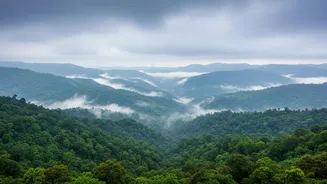









The Unsettled Sky
For centuries, the rhythm of India has been set by the monsoon. These life-giving rains have dictated everything from agriculture to the life cycles of its vast, diverse forests. Now, that predictability is fading. Scientists are observing significant
changes not just in the total amount of rain, but in its timing, intensity, and distribution. A growing body of research shows that the monsoon is becoming more unstable, with delayed onsets, longer dry spells, and sudden, extreme downpours becoming the new norm. This volatility poses a profound threat to ecosystems that evolved in step with a stable climate. For India's forests, this means the very foundation of their existence is being reshaped, forcing them to adapt or face decline.
Science on the Front Lines
To understand these complex changes, researchers are deploying an array of tools, from satellite imagery to on-the-ground data collection. By analysing decades of climate data from sources like the India Meteorology Department alongside satellite observations, scientists can map out long-term trends in both precipitation and forest health. One study by researchers from the Central University of Jharkhand and Banaras Hindu University analysed 50 years of climate data in the Panchmarhi Biosphere Reserve in Madhya Pradesh. They found that rising temperatures and altered rainfall patterns have led to increased forest fire risk and a tangible loss of forest cover. This kind of evidence-based research is critical for predicting future changes and developing effective management and adaptation strategies for these vital ecosystems.
Vulnerability in Biodiversity Hotspots
Not all forests are affected equally. The Western Ghats, a global biodiversity hotspot, are showing particular vulnerability. These mountains act as a crucial barrier for the monsoon winds, influencing rainfall across the peninsula. Studies project that changes in climate could lead to significant shifts in vegetation, with some evergreen and moist deciduous forests potentially shrinking. One model projected a significant decline in habitat suitability for evergreen forests in the Tamil Nadu segment of the Ghats, while thorn forests are expected to expand due to rising temperatures and changing rain patterns. Similarly, in Central India, dry teak forests have shown a much higher loss of canopy cover compared to their moist deciduous counterparts, as they operate closer to their moisture limits and are more vulnerable to drought.
A Cascade of Consequences
When rainfall patterns change, the effects ripple through the entire ecosystem. The lifecycle of trees—a field of study known as phenology—is disrupted. Changes in moisture and temperature can cause trees to alter their leaf development, which in turn affects the forest's overall productivity and ability to act as a carbon sink. This can weaken the forest's resilience. The loss of specific types of trees also threatens the animals and birds that depend on them for food and shelter. Furthermore, increased temperatures combined with lower precipitation create drier conditions, significantly raising the risk of forest fires, which can devastate large tracts of land and further degrade the ecosystem.
From Forest Health to Human Well-being
The fate of India's forests is inextricably linked to the well-being of its people. These ecosystems are instrumental in moderating hydrological cycles, ensuring water security for countless communities downstream. The destruction of forests can affect rainfall distribution in a country where the economy remains heavily reliant on agriculture. For communities living in and around these areas, forests are a direct source of livelihood through non-timber forest products. Studies in the Western Ghats show that this dependence is significant, and climate-induced changes in forest composition could directly impact the flow of these products, affecting household incomes and local economies.
Charting a Resilient Future
The research tracking these climatic shifts is more than just a warning; it is a roadmap for action. Understanding which ecosystems are most vulnerable allows for targeted conservation and management. Experts suggest that biodiversity is a key driver of resilience; the more diverse a forest is, the more likely it is that some species will survive structural changes, keeping the ecosystem intact. The data gathered can inform evidence-based policies, from creating climate-adaptive forest management plans to designing restoration programmes. While climate change presents a formidable challenge, proactive land management, strategic afforestation, and conservation policies can still have a powerful influence on whether India's landscapes transition towards resilient forests or degraded savannas.