


The Golden Age of Appointment Television
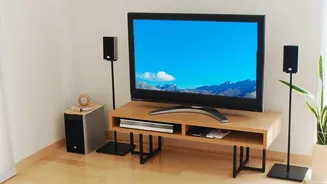
For decades, Indian television was dominated by daily soap operas. Starting with foundational shows like 'Hum Log' in the 1980s, the medium truly exploded in the 2000s with the 'K-serials'. Shows like 'Kyunki Saas Bhi Kabhi Bahu Thi' became cultural phenomena,
making their characters household names from Mumbai to Kabul. This was the era of 'appointment viewing'—audiences had to tune in at a specific time or risk missing a crucial plot twist in the lives of their favourite 'saas' and 'bahu'. The content, often revolving around joint family dynamics, was formulaic but deeply resonant, designed for a collective viewing experience and driven by Television Rating Points (TRPs).
The Twin Engines of Change: Data and Devices
The ground began to shift in the mid-2010s. The primary catalysts were not creative, but technological. The rollout of affordable high-speed internet and the mass adoption of smartphones created a new ecosystem. Suddenly, entertainment was no longer tethered to the living room television. This digital revolution empowered a new generation of Indian viewers, particularly younger, urban audiences who were growing restless with the repetitive and often regressive nature of daily soaps. They had access to global content and craved stories that were more realistic, diverse, and reflective of their own lives. The stage was set for a new player to enter.
Enter the Originals: A New Storytelling Canvas
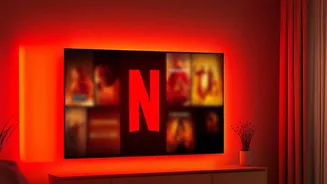
Over-the-Top (OTT) platforms like Netflix, Amazon Prime Video, and Hotstar (now Disney+ Hotstar) recognised this gap. Instead of just offering a library of old movies, they began investing heavily in 'Originals'—high-quality, finite series produced exclusively for the platform. Shows like 'Sacred Games' and 'Mirzapur' were game-changers. Free from the constraints of television censorship and the pressure of daily episodes, creators could explore complex themes, nuanced characters, and grittier narratives. Storytelling became more compact and ambitious, with production values that often rivalled cinema. This was content designed not for passive family viewing, but for an engaged individual viewer.
The Viewer is Crowned King
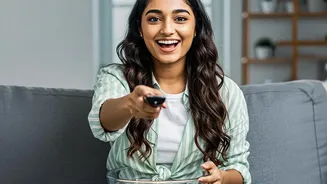
The rise of originals fundamentally altered audience behaviour. The power shifted from the broadcaster's schedule to the viewer's whim. On-demand access introduced the culture of 'binge-watching', with entire seasons consumed in a single weekend. This changed the very definition of a hit show; it was no longer about daily ratings but about driving subscriptions and dominating social media conversations. Viewers became curators of their own entertainment, exploring niche genres and regional content with subtitles, something traditional TV rarely offered. Platforms like ZEE5 and SonyLIV further bolstered this by bringing a massive library of regional TV content online, catering to diverse linguistic audiences.
A New Ecosystem, Not a Replacement
While the rise of OTT is undeniable, it hasn't completely erased traditional television. TV viewership remains significant, especially in rural areas and among older demographics who prefer the comfort of scheduled programming. Instead of a replacement, what has emerged is a hybrid media landscape. Broadcasters themselves have launched their own OTT apps, creating a symbiotic relationship between linear TV and on-demand streaming. The shift is less about the death of television and more about the expansion of choice. Indian entertainment is now a vast ecosystem where a blockbuster family drama on a GEC (General Entertainment Channel) can coexist with a dark, psychological thriller on a streaming app, each finding its own dedicated audience.