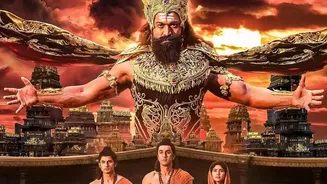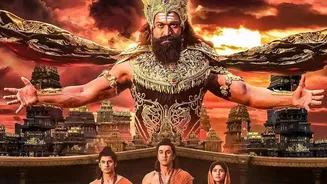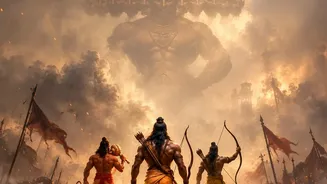





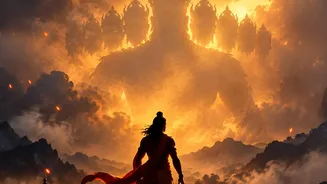
An ancient epic of gods, demons, and dharma is meeting the pinnacle of modern cinema technology. Nitesh Tiwari's 'Ramayana' isn't just a film; it's a global event, and its massive success on large-format screens is proving a decisive strategy.
An Epic Canvas for an Epic Tale
The story
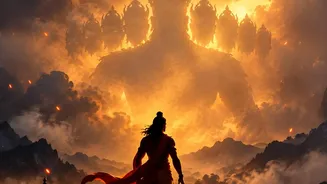
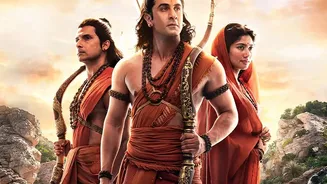
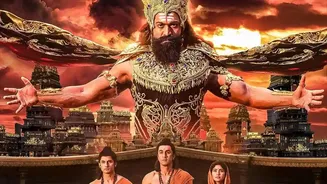
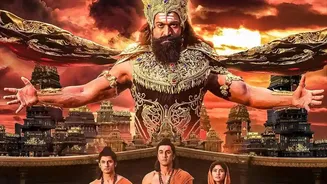
of the Ramayana—with its sprawling kingdoms, divine beings, colossal battles, and breathtaking landscapes—is inherently built for a grand scale. For generations, its telling has been limited only by the imagination of the storyteller. Now, with premium large formats (PLFs) like IMAX, filmmakers have a canvas that can finally do justice to the epic's inherent spectacle. Director Nitesh Tiwari's adaptation, starring Ranbir Kapoor as Lord Rama, Sai Pallavi as Sita, and Yash as Ravana, was conceived as a visual marvel. It was designated as the first Indian movie to be 'Filmed for IMAX', a technical and creative decision signaling its ambition to deliver an unparalleled immersive experience. The results speak for themselves: the film has shattered records, becoming the highest-grossing Indian film in IMAX both domestically and globally.
More Than Just a Bigger Screen
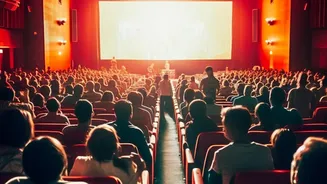
The appeal of PLFs goes far beyond just a larger picture. Formats like IMAX offer a completely different viewing experience, with enhanced screen resolution, a wider aspect ratio that fills your peripheral vision, and a powerful, precision-tuned sound system. This combination creates an immersive environment that transforms watching a film into feeling it. For a story as culturally significant as the Ramayana, this is crucial. The thundering footsteps of a Vanara army, the celestial glow of divine astras, and the soaring score from Oscar-winners Hans Zimmer and A.R. Rahman become visceral experiences. This premium experience justifies higher ticket prices, and audiences have responded enthusiastically. 'Ramayana' earned a record-breaking $6 million worldwide from IMAX screenings in its opening weekend alone, demonstrating a clear appetite for this elevated presentation.
A Proven Strategy for Global Success
Using large-format screens to amplify a film's impact is a strategy that has already paid dividends for Indian cinema on the world stage. Films like 'Baahubali 2: The Conclusion' and 'RRR' proved that Indian storytelling, when combined with world-class production values and a spectacular presentation, can captivate audiences far beyond the diaspora. 'Ramayana' has taken this playbook and expanded it. With a global release across more than 130 countries and 10,000 screens handled by Sony Pictures, the film was strategically positioned as a worldwide event from day one. The results have been phenomenal, with North America contributing over $28 million to a worldwide gross that has surpassed Rs 1,700 crore. The film’s success in markets like the UK, Australia, and even Thailand and Vietnam highlights how the 'event film' strategy, centered on PLFs, is crucial for crossing cultural barriers.
Turning a Movie into a Cultural Moment
Releasing a film like 'Ramayana' in large formats does more than just enhance the visuals; it signals to the audience that this is a must-see cinematic event. This sense of occasion drives urgency, compelling viewers to see it on the biggest screen possible before it leaves theatres. This was evident from its opening, where it sold over 11 million tickets and became the most-watched film globally during its Diwali holiday release. The film’s marketing, world premiere in Los Angeles, and the 'Filmed for IMAX' branding all contributed to building immense buzz. For a story as universally known in India as the Ramayana, the challenge was to make it feel new and essential. The large-format experience became a key differentiator, promising a version of the epic that had never been seen before, turning a familiar tale into an unmissable cultural moment.