



The Silent Toll of Sitting Still
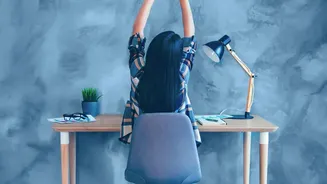
Our bodies are designed for movement. When we remain in a fixed seated position for hours, we're essentially telling our muscles and joints to lock down. Prolonged sitting has been linked to a range of health issues, including increased blood pressure,
high blood sugar, and musculoskeletal disorders. More immediately, it causes your hip flexor muscles to shorten, places stress on your spine, and encourages poor posture, which can lead to premature degeneration and chronic pain. Research shows that a majority of workers now spend most of their day sitting, which can contribute to neck pain, lower back issues, and stress. This sedentary behaviour isn't just about a lack of exercise; it's about the negative impact of inactivity itself, even if you work out regularly.
What Is Active Recovery?
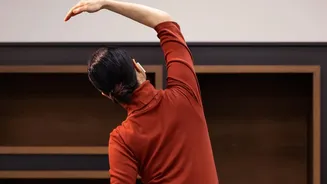
The term "active recovery" refers to low-intensity movement performed to help the body restore itself. Unlike passive recovery (like collapsing on the sofa), active recovery involves gentle exercises that keep blood flowing, which helps clear metabolic waste from muscles, reduce soreness, and maintain flexibility. For a desk worker, this doesn't mean a full workout. It means intentionally moving in ways that counteract the static, flexed posture of sitting. Just one to two minutes of simple stretches, performed several times a day, can improve physical comfort and mental focus without you ever having to leave your workspace.
Your 10-Minute Mobility Toolkit
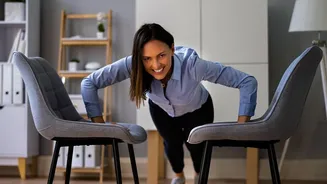
The key to combating desk-bound stiffness is consistency. You don't need an hour at the gym; you just need a few minutes to reset your body. The following movements are designed to be done right at your desk and target the areas most affected by sitting. Set a reminder to get up and move every hour, dedicating just a couple of minutes to one or two of these exercises. Over a day, you'll have easily completed a 10-minute routine.
1. Seated Spinal Twists
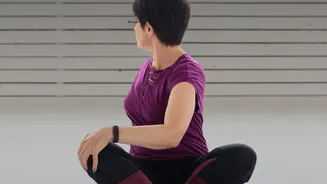
Your mid-back, or thoracic spine, is built for rotation but gets very little of it during desk work. To perform a seated twist, sit tall at the edge of your chair. Gently rotate your torso to the right, placing your left hand on your right knee and your right hand on the back or arm of the chair. Hold for 20-30 seconds, breathing deeply to open up the ribs. Return to the center and repeat on the other side. This simple move helps relieve tension and restores mobility to a part of your spine that often becomes rigid.
2. Seated Hip Flexor Stretch
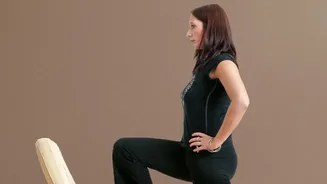
Sitting causes your hip flexors to shorten, which can pull on your lower back and create discomfort. To stretch them, slide to the edge of your chair. Extend your left leg straight back as far as you can, keeping your right leg bent at a 90-degree angle. You should feel a stretch in the front of your left hip. Squeeze your left glute to deepen the stretch. Hold for 30 seconds and switch sides. This helps lengthen those tight muscles and can provide immediate relief for your lower back.
3. Neck Tilts and Rotations
Staring at a screen often leads to a forward-head posture, straining the muscles in your neck and upper back. To counteract this, sit up straight and gently tilt your right ear toward your right shoulder, holding for 15-20 seconds. Repeat on the left side. Follow this by slowly turning your head to look over your right shoulder, then your left. These gentle movements help release stiffness and prevent the tension headaches that often accompany long hours of screen time.
4. Wrist and Forearm Stretch
Constant typing and mouse use can lead to tension in the wrists and forearms. To stretch them, extend your right arm in front of you with your palm facing up. With your left hand, gently pull your right fingers down toward the floor until you feel a stretch in your forearm. Hold for 20 seconds. Then, flip your hand so your palm faces down and repeat the stretch. Switch arms. This helps reduce the risk of overuse injuries.
5. Doorway Chest Opener
Desk work encourages a rounded, hunched-forward posture that tightens the chest muscles. A doorway stretch is a perfect antidote. Stand in a doorway and place your forearms on the frame, with your elbows just below shoulder height. Step forward with one foot until you feel a gentle stretch across your chest and the front of your shoulders. Hold for 30 seconds. This movement helps reverse the dominant flexion pattern of sitting and opens up your posture.