






AI’s Unquenchable Thirst for Energy
Artificial intelligence, particularly the large language models and generative platforms capturing global attention, is not just a software revolution; it's an energy-intensive one. Unlike traditional computing, training and running complex AI models requires
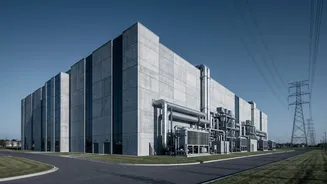
immense computational power, primarily from power-hungry graphics processing units (GPUs) housed in massive data centres. An AI server rack can consume up to 10 times more power than a standard one. As a result, the global electricity consumption from data centres is projected to more than double by 2030. For India, this is not a distant problem. The country’s data centre capacity has already surged from 375 megawatts (MW) in 2020 to over 1,500 MW in 2025. Projections show this is just the beginning. The Ministry of Power estimates that AI data centres alone could add over 26 gigawatts (GW) of electricity demand to the grid by 2031-32, an amount that dwarfs earlier forecasts.
A Challenge for India’s Grid
This explosive growth in demand poses a significant challenge. While India's power grid has become more robust, a sudden concentration of high-density load from new data centre hubs could strain local infrastructure. Power now accounts for up to 70% of a data centre's operating costs, making reliable and affordable electricity a critical factor for investment, even more so than land or fibre connectivity. The question is no longer just about generating more power, but about generating it cleanly and delivering it reliably. Simply building more fossil-fuel plants would run counter to India's ambitious climate goals, including its target to achieve net-zero emissions by 2070 and have 60% of its installed power capacity from non-fossil fuel sources by 2035. This tension between digital ambition and climate commitment is forcing a strategic pivot.
The Green Energy Imperative
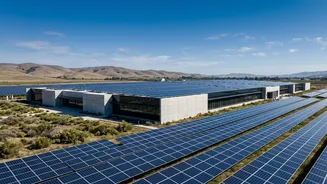
The solution, increasingly, is green. The immense power needs of the AI industry are creating a powerful business case for renewable energy. Major companies are already making huge bets on this synergy. Adani Group, for example, has pledged a massive $100 billion investment in AI infrastructure, with a key component being the development of renewable energy-powered data centres. Other recent announcements include ReNew's plan for a ₹70,000 crore green data centre park in Maharashtra and Trentar's MoU for a 500 MW facility targeting at least 51% renewable power. The government is also catalysing this shift. The Green Energy Corridor Phase-III, a massive project with an outlay of ₹1.86 lakh crore, is designed to build the transmission infrastructure needed to integrate large volumes of renewable energy and battery storage into the national grid, making it easier for power-intensive industries like data centres to go green.
Smarter Hardware and Cooling Solutions
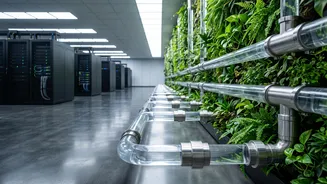
The push for sustainability isn't just about the power source; it's also about making the computing itself more efficient. Up to 40% of a data centre's energy is used for cooling, a number that rises with the heat generated by dense AI hardware. This has spurred investment in more efficient equipment. Beyond standard CPUs and GPUs, the market is seeing a rise in specialised AI accelerators like Tensor Processing Units (TPUs) and Neural Processing Units (NPUs), which are designed to perform AI tasks with greater energy efficiency. At the same time, innovations in cooling, such as liquid cooling systems, are being explored to manage the intense heat generated by high-density server racks without consuming as much electricity as traditional air conditioning. This focus on hardware efficiency is the other side of the coin, reducing the total power demand from the outset.