
A Glimmer of Water, Light-Years Away
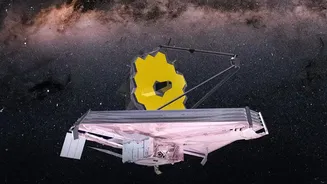
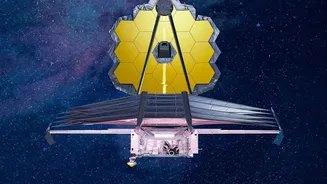
In a series of groundbreaking observations, the James Webb Space Telescope has confirmed the presence of water vapour in the atmospheres of several exoplanets, which are planets orbiting stars other than our Sun. While water has been detected before,
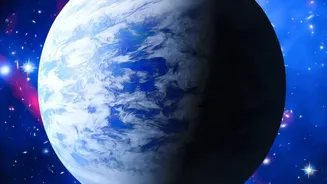
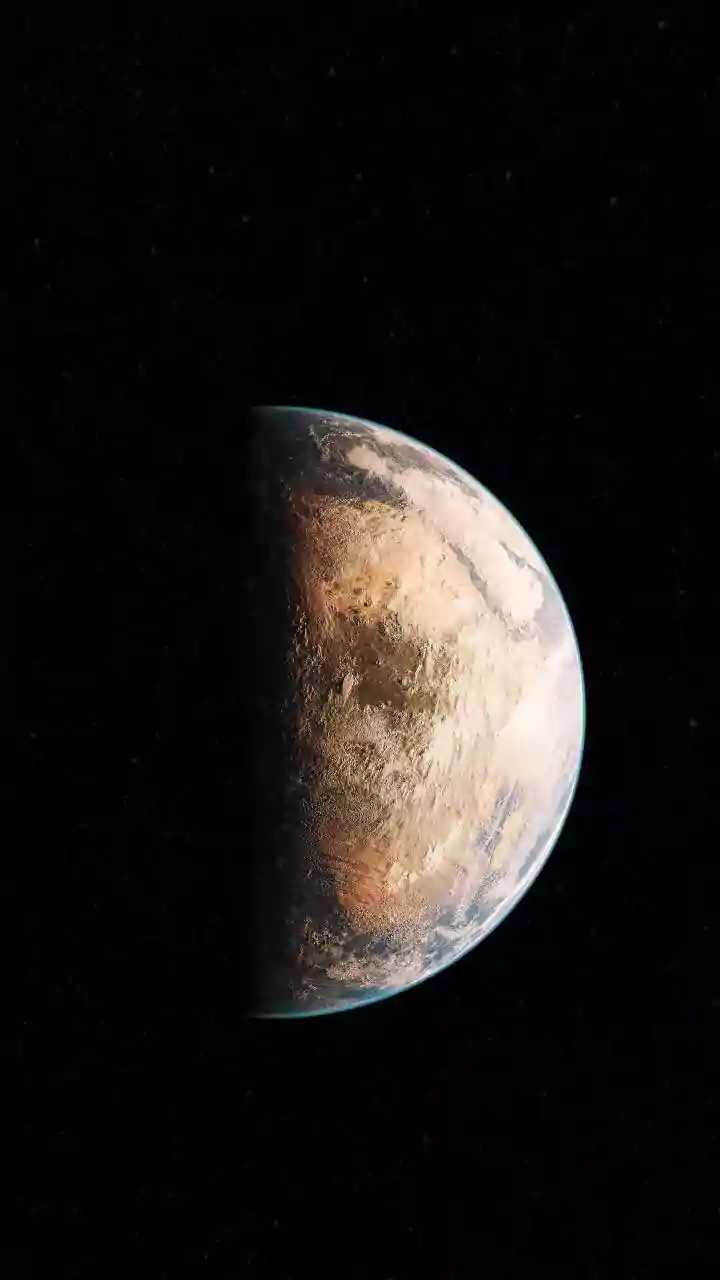
the precision of Webb's instruments is providing a much clearer picture. For example, observations of planets like GJ 486 b, a rocky world, have shown tantalising hints of water. Though scientists are still working to confirm if the signal comes from the planet or its star, the possibility of a rocky planet retaining an atmosphere is a huge development. In another case, studying the inner disk of the PDS 70 system, Webb detected water in the very region where rocky, Earth-like planets are thought to be forming. This suggests that the essential ingredients for life might be available right from the very beginning of a planet's existence.
How to Read an Alien Sky
So, how does the telescope 'see' water from trillions of kilometres away? The technique is called transmission spectroscopy, and it's an ingenious way of analysing a planet’s air. When an exoplanet passes in front of its host star from our perspective, an event known as a transit, a tiny fraction of the starlight filters through the planet's atmosphere. Different molecules in the atmosphere absorb specific colours, or wavelengths, of light. Water, for instance, has a unique 'fingerprint' it leaves on the light spectrum. The JWST's powerful infrared instruments can read this filtered starlight, breaking it down into a rainbow-like spectrum and identifying which colours are missing. Those missing pieces reveal exactly what molecules, like water vapour, carbon dioxide, or methane, are present in that distant world's sky.
Does This Mean We've Found Aliens?
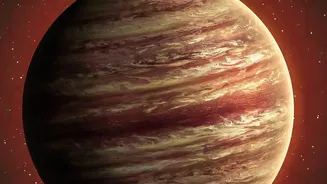
This is the big question, and the short answer is no. Finding water vapour is a monumental step, but it is not direct evidence of life. Water is one of the most common molecules in the universe and is crucial for life as we know it, acting as a universal solvent for the chemical reactions necessary for biology. However, its presence alone doesn't guarantee a habitable environment. Many of the planets where water has been detected are 'hot Jupiters' or scorching rocky worlds far too extreme for life to survive. For example, GJ 9827d has water, but its surface is a blistering 430 degrees Celsius. Think of it this way: scientists have found the kitchen, but they don't know if anyone is home or if there's anything cooking. The discovery of water is a sign that a planet has one of the most critical ingredients for life, making it a prime candidate for further study.
The Hunt for Habitable Worlds Continues
Each detection of water vapour refines our understanding of how planets form and where we should look next. These findings from the JWST are transforming exoplanet science from an act of discovery to one of characterisation. We are moving beyond simply finding planets to understanding what they are actually like. Scientists can now compare the chemical makeup of different exoplanet atmospheres to see what’s common and what’s rare across the galaxy. This helps them build better models of planetary formation and evolution. The goal is to eventually find a rocky, Earth-sized planet in the 'habitable zone'—the just-right distance from a star where liquid water could exist on the surface—and then analyse its atmosphere. Finding both water vapour and other biosignatures, like oxygen and methane together, would be the strongest indication yet that we are not alone.