






Chasing Away the Plague
Every July, as the rains drench the Jaintia Hills, the Pnar community gathers to celebrate Behdienkhlam. Held principally in the town of Jowai, this is not a festival designed for tourists; it is a deeply significant cultural and religious event. The
name itself, from the Pnar language, translates to “chasing away the demon of cholera” or plague with sticks. It is an annual ritual of communal cleansing, a prayer for a bountiful harvest after the sowing season, and a reaffirmation of the indigenous Niamtre faith. The festival is a four-day affair, culminating in a public spectacle that is visceral, chaotic, and utterly captivating. It is recognised as a state holiday in Meghalaya, underscoring its immense local importance.
A Symphony of Rituals
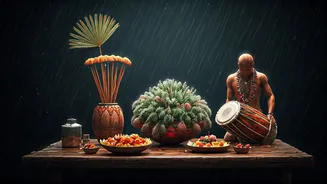
The festival is a complex tapestry of sacred rites. It begins with the 'Daloi' (chief) performing rituals, and young men symbolically drive away evil spirits by beating the roofs of houses with bamboo poles. Women, while not part of the public dancing, play a crucial role by preparing sacrificial food for the ancestors. The festival’s visual climax involves the ‘rots’—enormous, brightly decorated tower-like structures made of bamboo. Each locality crafts its own rot, often with designs commenting on social or political issues. These are paraded through the streets with immense energy, accompanied by the hypnotic beat of drums and pipes, before being ceremonially immersed in a sacred pool called Aitnar. This act symbolises the final banishment of sickness and evil, a collective release enacted with mud-splattering joy.
The Beautiful Game, Jaintia Style
One of the most unique aspects of Behdienkhlam is a game called ‘Dad-lawakor’. Played on the final day, it resembles football but is played with a small wooden ball. Teams from the northern and southern parts of Jowai compete fiercely to push the ball to the opposing side. More than just a sport, the game has a divinatory purpose. Local belief holds that the winning side’s region will be blessed with a more bountiful harvest in the coming year. It’s a moment of intense, friendly rivalry that encapsulates the festival's connection to the agricultural soul of the community, where hopes for the year ahead are played out in the mud and rain.
An Authentic Monsoon Experience
In an age of curated travel, Behdienkhlam remains profoundly authentic. There are no ticketed enclosures or polished stage sets. The drama unfolds on the streets, in the rain, and among the people. The monsoon isn't an inconvenience to be avoided; it's a vital and welcome part of the proceedings, with rainfall on the final day seen as a good omen. This makes it a quintessential monsoon festival, where the atmosphere is charged with the energy of the downpour and the devotion of the participants. While many travellers flock to see waterfalls or lush landscapes during the rains, Behdienkhlam offers something far deeper: a chance to witness a living culture where nature, faith, and community are inextricably linked.
Putting It on the Map
While destinations like Kerala have their snake boat races and Rajasthan has Teej, Meghalaya's Behdienkhlam offers a monsoon experience that is arguably more raw and immersive. It provides a powerful window into the culture of the Pnar people and their Niamtre faith, which holds nature and ancestral spirits sacred. For the discerning traveller in India, moving beyond the well-trodden path means seeking out these moments of genuine cultural expression. The festival is not just a colourful distraction; it is a profound expression of a community's relationship with its environment, its history, and its spiritual well-being. It’s a vibrant, chaotic, and meaningful spectacle that truly deserves a prominent place on any serious monsoon travel map.